Bookshelf Styling · THE GUIDE
Accent Neutral Book Spines with Simple Dried Floral Grasses
Neutral book spines create a calm, cohesive backdrop, but repetitive horizontal and vertical lines can occasionally appear flat across an expansive shelving unit. Introducing organic elements introduces warmth without disrupting an understated palette. A small matte ceramic bud vase holding a modest cluster of dried wheat or oat stems offers gentle vertical contrast against cream, beige, and tan covers. Because dried botanicals require no water, they pose zero moisture risk to adjacent paper bindings. This styling method softens angular joinery, introduces subtle tactile variation, and provides a balanced focal pause along any shelf.
Jump to the checklist ↓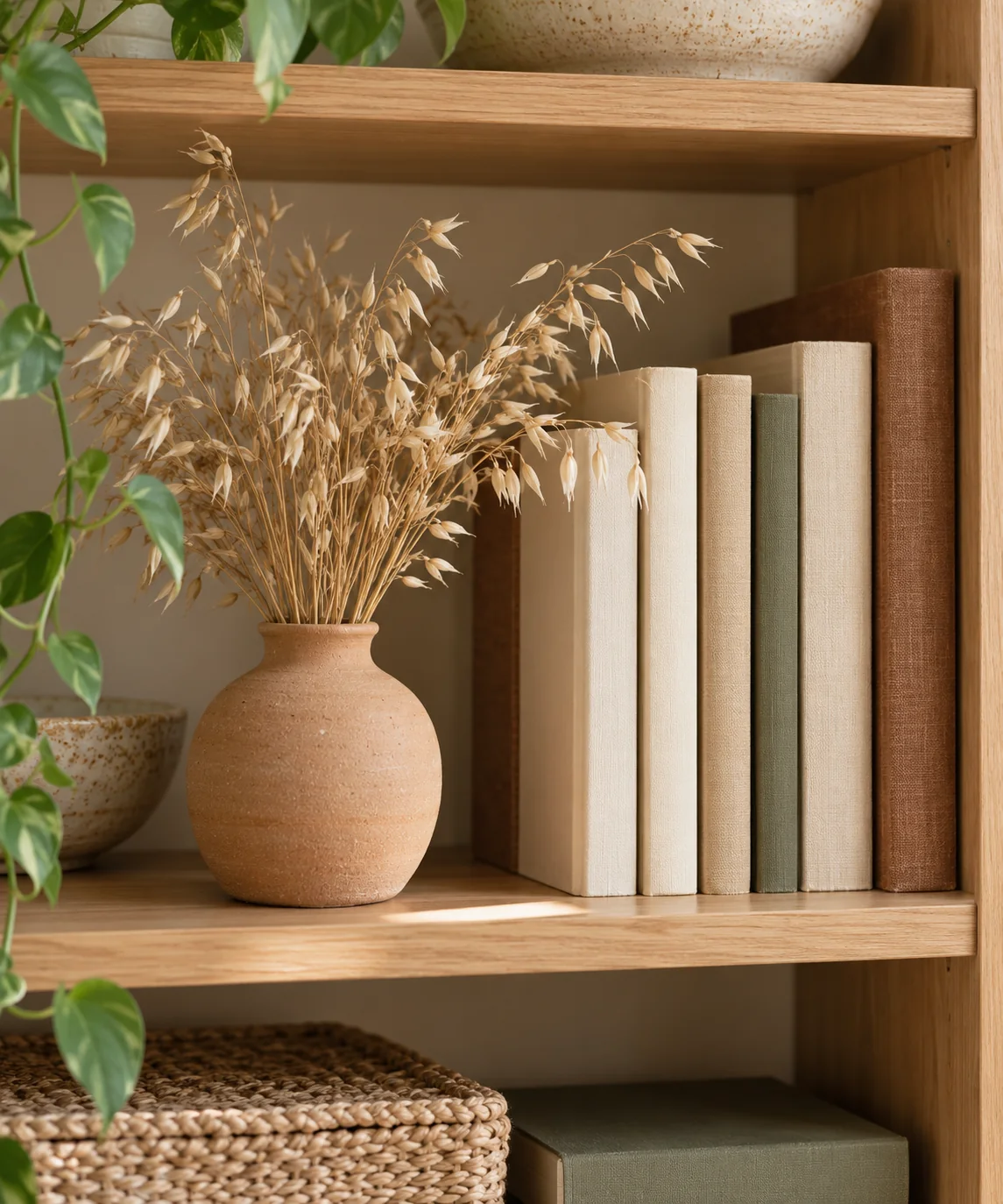
Selecting Stable Ceramic Vessels for Bookshelves
When pairing dried botanicals with book spines, the stability of the container is paramount to prevent accidental tipping against paper covers. Choose small ceramic or stoneware bud vases with broad, heavy bases and a low center of gravity rather than tall, tapered, or top-heavy designs. Matte, unglazed earthenware or subtle satin glazes in tones of oat, sand, or warm grey complement cream and neutral book bindings without competing for visual attention. Ensure the vessel height balances comfortably against nearby volumes—generally standing around one-half the height of adjacent upright book covers—so the overall shelf profile feels grounded and proportional.
Preparing and Sizing Dried Botanical Stems
Naturally dried cereal grasses like wheat, oats, or meadow barley bring organic texture to rigid shelf lines. Choose thoroughly cured, untreated stems that show no signs of residual moisture or dampness. Using clean bypass shears, trim stem bases incrementally until the feathery seed heads rise gracefully above the vase opening without looming over the surrounding books. Restrict the arrangement to a modest grouping of three to five stems. A sparse display allows individual silhouettes to show clearly against the shelf backboard while preventing excess physical bulk from brushing against adjacent volumes.
Positioning Stems Beside Book Groupings
Place the botanical vessel at natural pause points across the shelving layout, such as beside a small horizontal book stack or between distinct book clusters. Setting the vase next to two or three flat volumes creates a smooth stepped transition that leads the eye naturally from low horizontal spines to upright books. Leave sufficient breathing room around the vase so that taking out a nearby book does not snag brittle seed plumes. Avoid crowding dried stems directly beneath low overhanging shelf decks where plumes might bend or snap under contact.
Environmental Considerations for Bookshelf Botanicals
Dried botanicals offer the distinct advantage of requiring zero water, eliminating the spill hazards and localized moisture risks that fresh floral arrangements present near paper bindings. However, dried grasses remain vulnerable to high humidity and direct ultraviolet light. Position the arrangement away from windows receiving strong sun, which can bleach natural golden hues and cause fibers to become excessively brittle. Similarly, keep the display clear of active heating registers, air conditioners, or damp exterior walls that could accelerate degradation or introduce unwanted moisture to both plants and books.
Care and Dust Removal for Fragile Plumes
Over time, static electricity and ambient air currents cause household dust to settle on dried seed heads and ceramic surfaces. Avoid using feather dusters or damp cloths on delicate botanical plumes, as abrasive wiping can easily shatter fragile seed pods. Instead, use a gentle manual rubber squeeze bulb—similar to those used for camera lenses—to puff dust away from the stems. Wipe the ceramic container base with a dry microfiber cloth during routine shelf dusting. If stems become brittle or shed excessively after prolonged seasonal display, replace the bunch with fresh cured botanicals to keep the shelf tidy.
YOUR STARTING POINT
A little checklist.
Original editorial guidance. Images are AI-generated concepts, not photographs of completed projects. Our sources and approach.
Questions to consider
Can preserved or artificially colored grasses be placed directly next to book bindings?
Naturally dried, untreated stems are safest for bookshelves because glycerin-treated, dyed, or bleached florals can sometimes leach pigments or oily residues onto porous book cloth and paper covers. If you choose to display treated botanicals, position the vessel with generous clearance so stems never make direct physical contact with book edges.
How can I add extra weight to a small bud vase to keep it upright?
Pour a small quantity of dry, clean aquarium gravel or washed decorative sand into the base of the vessel before inserting your stems. This significantly lowers the vessel's center of gravity and adds stability without introducing moisture, oils, or chemical risks to neighboring paper collections.
Do dried grasses attract insect pests to home book collections?
Properly cured commercial dried grasses rarely attract pests if kept completely dry and clean. However, field-gathered or improperly dried plant materials may harbor insect eggs or fungal spores. Source cured stems from reputable suppliers, inspect them thoroughly before bringing them indoors, and discard any arrangements that show signs of shedding husks, dampness, or insect activity.