Indoor Plant Styling · THE GUIDE
Adapt a Tiered Shoe Rack into an Indoor Plant Nursery Stand
Propagating indoor houseplants often results in a scattered collection of small jars, nursery containers, and starter pots crowding dining tables and windowsills. A compact, two-tier slatted wooden shoe rack positioned adjacent to a balcony door provides a structured, multi-level staging area for juvenile plants without requiring dedicated furniture purchases. The slatted shelves encourage perimeter airflow, while narrow dimensions preserve clear passageways toward outdoor spaces. By arranging plants systematically by light preference, lining tiers against water runoff, and minding weight limits, you can easily repurpose this common household organizer into an efficient plant nursery station.
Jump to the checklist ↓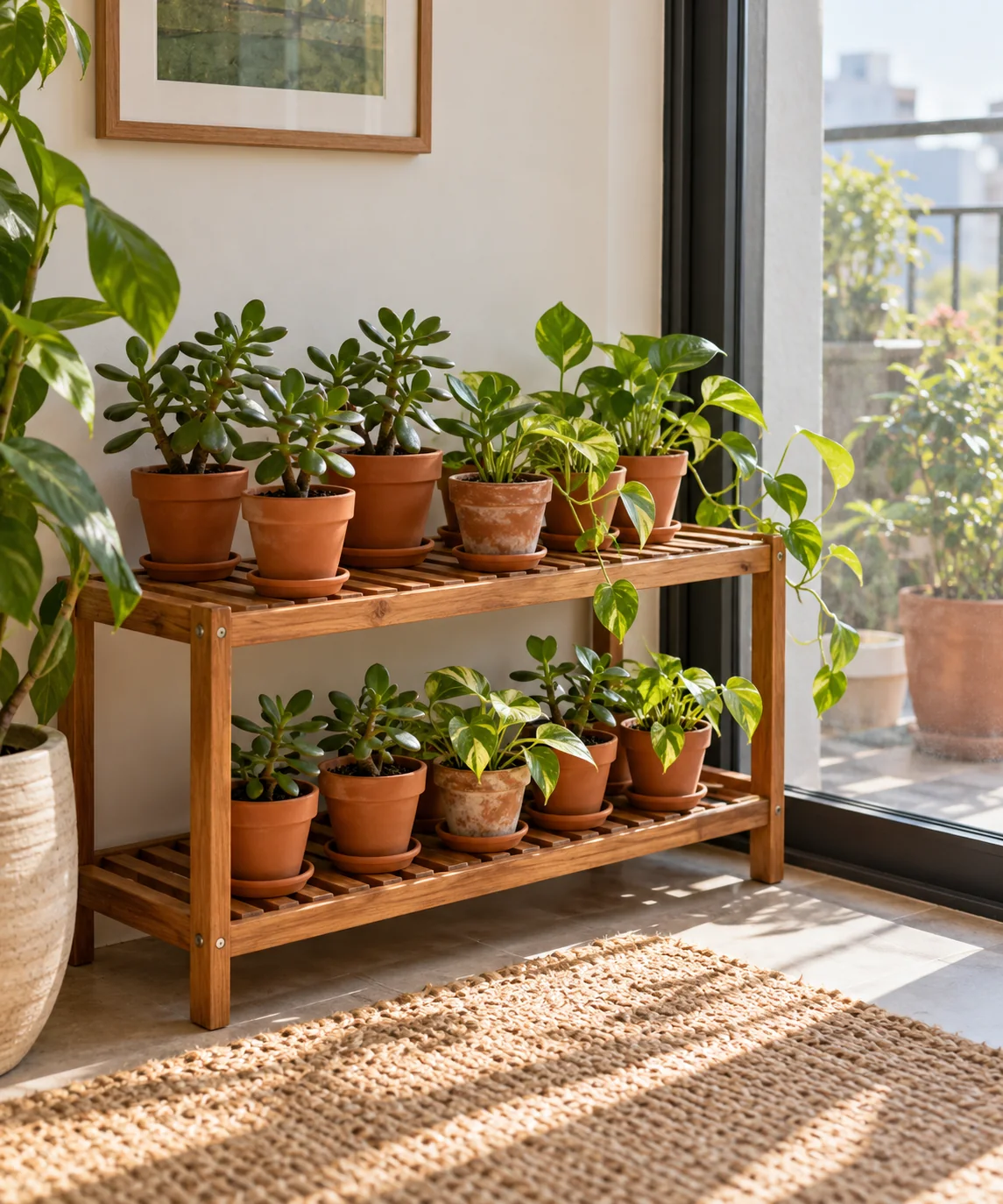
Checking Door Clearance and Traffic Paths
Before stationing the rack, verify that it does not impede the opening arc of your balcony door, trip occupants, or block primary exit paths. Check the clearance along the interior wall beside the door frame to confirm that normal foot traffic moves freely without brushing against the shelves or delicate stems. Sliding glass patio doors often provide a convenient niche against the stationary panel, but sliding tracks and screen doors must still glide cleanly without catching. Avoid positioning the stand where blowing drapes, blinds, or pets can disrupt fragile containers. Maintaining an open, unobstructed passage protects household circulation while keeping propagation cuttings in a stable, well-lit position.
Managing Weight Distribution on Slats
Standard household shoe organizers are designed to support lightweight footwear rather than water-saturated soil mix and ceramic vessels. To prevent structural failure or warped shelving, limit the setup to small starter pots, lightweight plastic nursery liners, or propagation tubes. Distribute containers evenly across the surface rather than concentrating weight in the center of the slats, where thin wooden rails are most vulnerable to flexing. Place heavier ceramic containers directly over vertical side legs or across the lowest shelf to maintain a low center of gravity, which helps keep the unit stable during routine plant care.
Protecting Shelving from Moisture Runoff
Wooden shoe racks, including those constructed from bamboo or sealed hardwoods, can discolor, develop mold, or warp when subjected to persistent moisture. Shield the wood by placing an impermeable rimmed utility tray, silicone mat, or individual deep saucers beneath every container. Avoid allowing pooled runoff to sit against wood joints or drip through slatted tiers onto leaves and flooring beneath. Empty drainage trays shortly after watering so the wood remains dry and free from mineral buildup, and inspect the lower shelf and floor surface regularly for dampness or condensation.
Arranging Plants by Sunlight Tolerance
The glass perimeter adjacent to an exterior doorway creates an uneven light gradient that can be used to suit different plant needs. Position sun-tolerant cuttings, such as rooted jade or hardy succulent offsets, on the upper tier where overhead daylight is brightest and longest-lasting. Reserve shaded sections of the lower tier for sensitive foliage cuttings, like pothos or heartleaf philodendron, which perform better in soft, filtered daylight. Grouping plants according to realistic exposure needs helps reduce leaf scorch, prevents weak growth, and simplifies daily monitoring.
Establishing Clean Maintenance Protocols
Housing multiple starter containers in a compact footprint demands routine maintenance to avoid clutter and insect problems. Check leaf undersides and stem nodes weekly for common indoor pests before localized infestations spread across closely grouped pots. Turn individual pots periodically so developing stems grow evenly rather than stretching toward the exterior glass. Regularly wipe down the rack slats and dry under-trays to remove shed leaves, potting grit, and moisture rings, preserving both the furniture piece and the growing area.
YOUR STARTING POINT
A little checklist.
Original editorial guidance. Images are AI-generated concepts, not photographs of completed projects. Our sources and approach.
Questions to consider
Can outdoor shoes still be kept on the bottom tier?
It is best to dedicate the rack entirely to plants. Outdoor footwear brings dirt, spores, and street grit into the nursery area, which can contaminate clean propagation trays and increase cleaning chores near your glass balcony door.
Will humidity near the balcony door warp an untreated wooden rack?
Untreated pine or composite board can swell from condensation or drafts. Use water-resistant acacia or sealed bamboo racks, ensure individual saucers catch all irrigation runoff, and wipe shelves dry whenever condensation forms on balcony glass.
How often should young plants on the shoe rack be watered?
Watering frequency depends on pot size, substrate, and ambient sunlight rather than a set schedule. Check soil moisture manually by feeling the top inch of mix; water only when the surface feels dry to the touch.