Compact Home Offices · THE GUIDE
Adapt an Enclosed Balcony End-Wall as a Bright Study Pod
Enclosed balconies offer abundant daylight and separation from internal household noise, making them natural candidates for dedicated study nooks. However, converting these perimeter zones requires careful management of sunlight exposure, temperature swings, and humidity shifts. By outfitting the far end-wall with exterior-grade materials like slatted teak and UV-resistant storage, you create a resilient workspace that withstands intense afternoon sun without warping or fading. Thoughtful arrangement of shading, compact furnishings, and glare reduction ensures the micro-office remains practical and productive through all daylight hours without obstructing main balcony egress routes.
Jump to the checklist ↓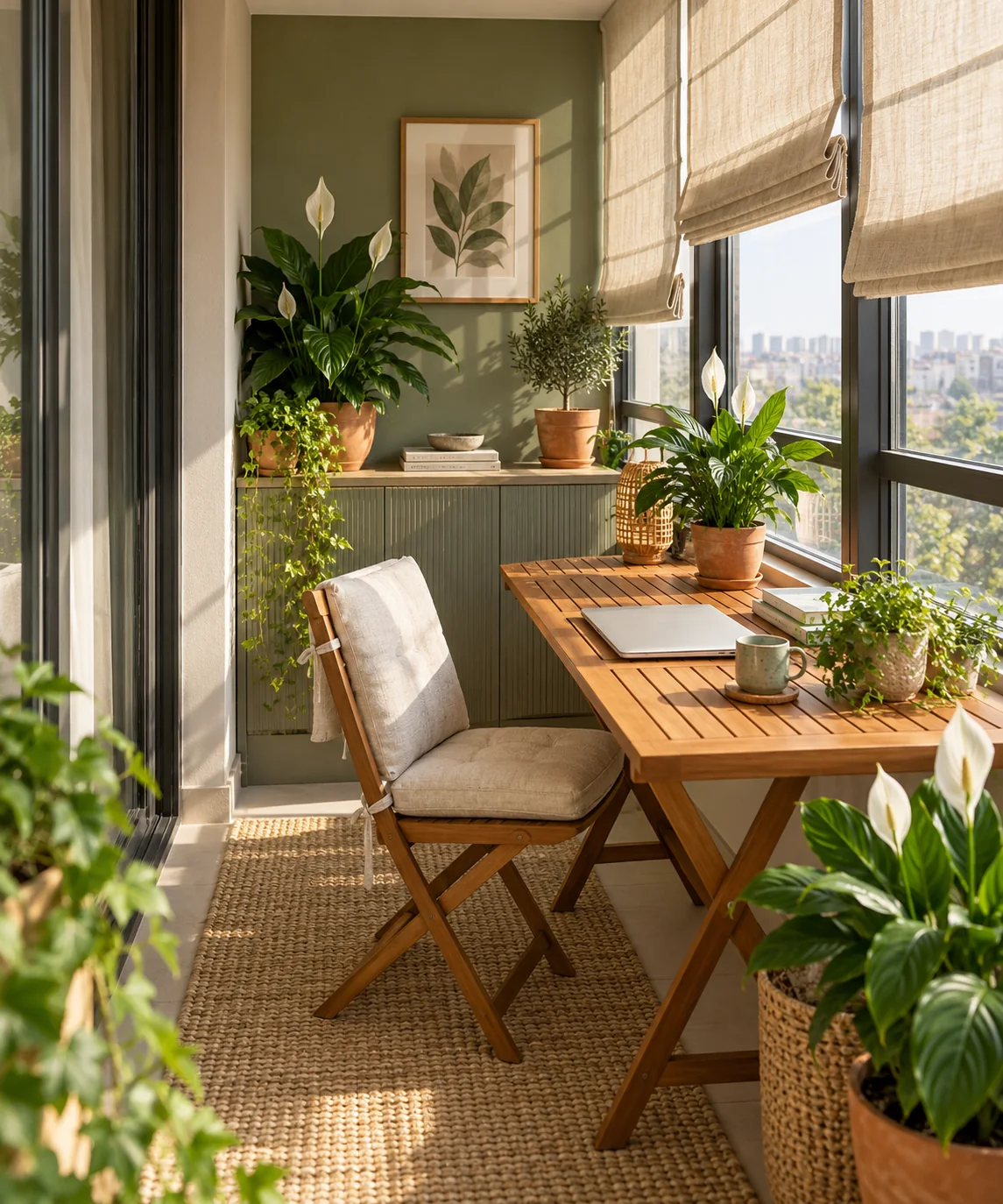
Balcony Capacity and Layout Planning
Before planning any workspace on an enclosed balcony, contact property management, building engineering, or your homeowners association to obtain verified live-load limits and review architectural bylaws. Never assume an end-wall position or lightweight furniture profile makes a setup structurally acceptable. Balconies possess strict structural engineering limits that differ widely depending on building age, construction type, and local codes. In addition to structural clearance, verify that your proposed layout preserves unobstructed access to balcony egress doors, emergency escape hatches, and ventilation louvers.
Selecting Weather-Resilient Materials
Enclosed perimeter zones experience higher ambient thermal cycling, humidity shifts, and solar radiation than interior living spaces. Conventional indoor laminated particleboard often swells or blisters when exposed to strong perimeter conditions. Natural weather-resistant timbers, such as responsibly sourced teak, contain natural oils that tolerate moderate humidity swings when maintained. Choose freestanding furniture with simple joinery that permits natural seasonal expansion, and follow finish manufacturer guidelines regarding periodic oiling or breathable sealants to prevent surface drying.
Reversible Glare and Solar Management
Direct sunlight through exterior glass creates harsh glare on computer screens and elevates ambient surface temperatures. Before considering any window coverings, consult building regulations and window manufacturer terms, as many multi-family properties restrict exterior-facing window appearances or forbid frame drilling. Reversible, freestanding methods—such as adjustable desktop privacy screens, matte display filters, and movable floor-standing partitions—diffuse light effectively without piercing building envelopes or violating exterior architectural uniformity rules.
Non-Invasive Organization and Fastener Limits
Avoid drilling into exterior building envelopes, structural concrete end-walls, or thermal exterior insulation finishing systems without explicit structural and property approval. Penetrating building envelopes can void waterproofing warranties or damage concealed reinforcement. Instead, opt for freestanding desktop organizers, weighted paper trays, or movable caddies that rest on the desk surface. Keep paper reference materials in lidded folders to shield them from ultraviolet bleaching and ambient perimeter dust.
Climate Boundaries and Electronics Care
Enclosed balconies are rarely climate-controlled to the same standards as central interior rooms. Rapid diurnal temperature drops can lead to condensation forming on window glass and adjacent surfaces, while peak summer sun can overheat sensitive batteries. Always bring laptops, tablets, and mobile devices back into the primary conditioned living space at the end of each work session. Check perimeter relative humidity periodically to prevent documents and books from absorbing ambient moisture.
YOUR STARTING POINT
A little checklist.
Original editorial guidance. Images are AI-generated concepts, not photographs of completed projects. Our sources and approach.
Questions to consider
Can I leave electronic equipment on an enclosed balcony permanently?
No. Enclosed balconies fluctuate significantly in temperature and humidity, creating condensation risks that can corrode circuit boards and degrade rechargeable lithium-ion batteries over time.
How do I confirm if my enclosed balcony can hold desk furniture?
Review the structural load specifications with your building manager, landlord, or a licensed structural engineer. Do not rely on visual inspection or furniture weight estimates to assess safety.
What type of seating works best in an enclosed sunlit space?
Choose freestanding chairs finished with UV-resistant materials, such as powder-coated metal or outdoor-rated fabrics. Standard interior polyurethane foams and faux leathers can degrade and crack under sustained direct sunlight.