Compact Home Offices · THE GUIDE
Add a Folding Drop-Front Desk Below a High Bedroom Picture Rail
Older bedrooms frequently feature generous vertical volume paired with limited usable floor area. A traditional picture rail offers a distinct horizontal sightline, making the empty wall plane beneath it a candidate for a shallow, fold-down secretary unit. Rather than crowding floor pathways with a deep permanent desk, a wall-mounted drop-front cabinet preserves open circulation while keeping daily writing essentials contained. Aligning the unit thoughtfully with existing architectural trims creates a dedicated, space-conscious work surface that closes flush when finished, helping maintain the restful atmosphere of a sleeping space.
Jump to the checklist ↓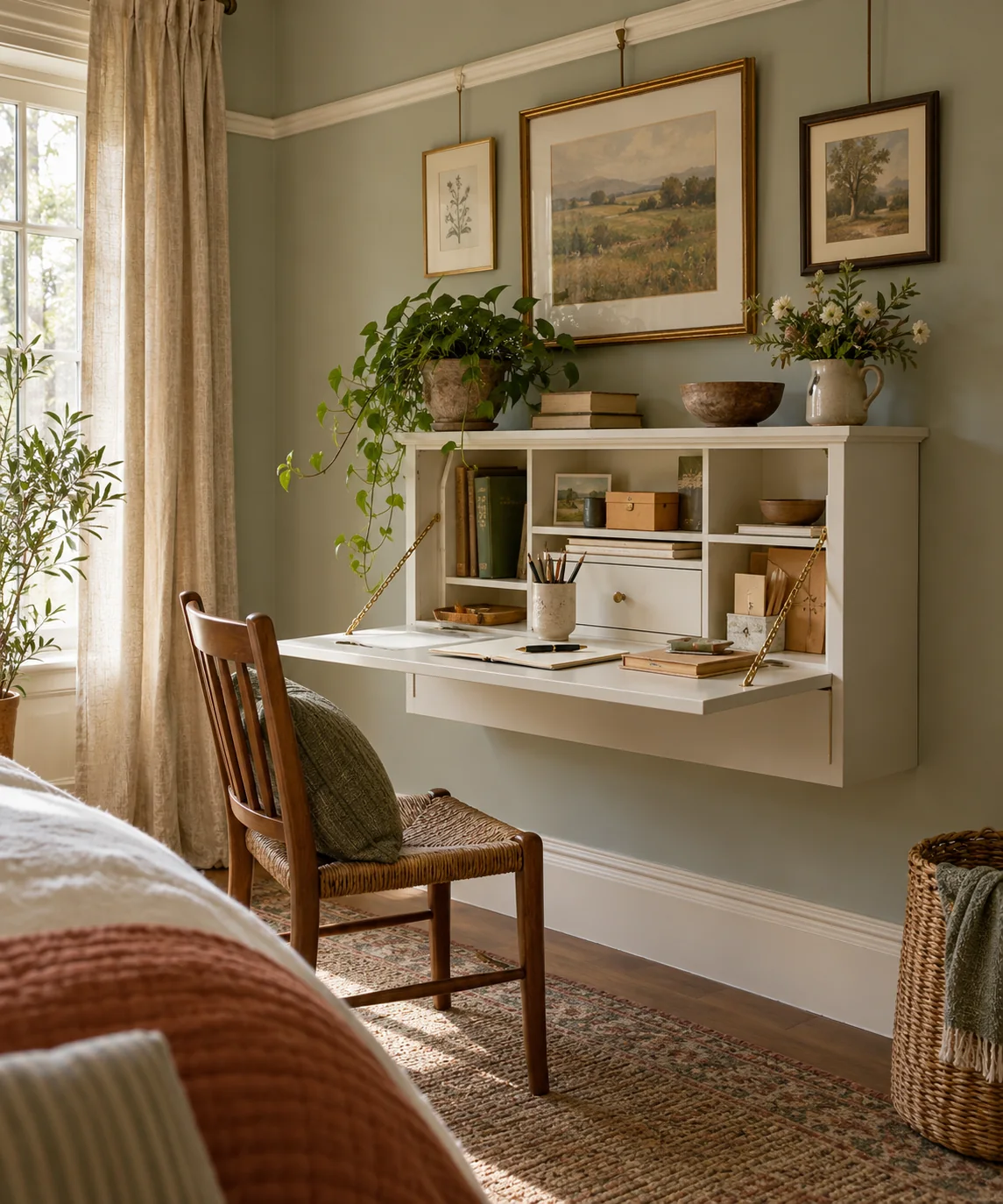
Evaluating Wall Construction and Structural Fastening
Before selecting a drop-front desk, inspect the wall structure beneath the picture rail. Drop-front units exert significant downward leverage on wall anchors whenever the desktop is lowered and leaned upon. Historic homes often feature lath-and-plaster or solid masonry walls, both of which require specialized fixings rather than standard drywall anchors. Locate solid wall studs or consult a qualified tradesperson to confirm your wall type can safely support the combined weight of the cabinet, work equipment, and everyday downward arm pressure.
Aligning Cabinet Proportions with Architectural Sightlines
Measure the vertical drop between the picture rail and the floor to determine suitable cabinet proportions. Aim to install the fold-down desktop at an elbow height that supports relaxed typing or writing posture when seated. Leaving a visible margin of wall space between the top of the cabinet and the picture rail helps preserve the moulding's shadow line, keeping the room from feeling crowded. Always verify that mounting points align securely with internal wall framing rather than relying solely on visual alignment.
Testing Leaf Extension and Room Circulation
The critical spatial consideration for a fold-down desk is the arc and extension of the hinged leaf. Measure the full depth of the front panel when folded down horizontally, and account for the footprint of your intended desk stool or chair. Use low-tack painter's tape to mark the open footprint on the bedroom floor. Confirm that opening the desk does not block essential walking paths between the bed and doorways, and check that opening nearby wardrobes or drawers remains unobstructed during work hours.
Organizing Shallow Interior Storage Safely
Drop-front cabinets generally feature shallow internal depths designed for lightweight office accessories. Arrange notebooks, writing tools, and charging accessories against the back panel using low organizers or slim dividers. Keep heavier items centered and low to avoid shifting the unit's center of gravity. Ensure internal supplies sit deep enough that the front leaf closes completely flush without pressing against charging plugs, pen cases, or laptop edges.
Respecting Leaf Weight Capacities and Hardware Limits
A fold-down desk surface is held in place by mechanical stay brackets, hinges, or support cables, all of which carry manufacturer-specified weight limits. Restrict the surface to light duties such as writing, reading documents, or supporting a laptop. Avoid placing heavy desktop computers, stacks of heavy books, or substantial leaning weight on the extended panel. Periodically inspect hinge screws, wall brackets, and stay mechanisms to confirm fasteners remain tight and operate smoothly.
YOUR STARTING POINT
A little checklist.
Original editorial guidance. Images are AI-generated concepts, not photographs of completed projects. Our sources and approach.
Questions to consider
Can a drop-front desk be hung directly from the picture rail moulding?
No. Traditional picture rails and hooks are designed solely for lightweight framed artwork hung in tension. They cannot support the dynamic downward leverage and cantilevered weight of a working desk surface. A drop-front cabinet must be secured directly into wall studs or solid masonry.
How can I tell if my wall can support a wall-hung fold-down desk?
Locate wall studs using a stud finder or check for solid masonry behind plaster. If your wall consists of hollow plasterboard or aged lath-and-plaster without direct stud access, consult a professional installer to select heavy-duty structural anchors suited to the cabinet's rated load.
Can a laptop remain stored inside the unit when the front leaf is closed?
Yes, provided the laptop's thickness does not exceed the interior cubby depth. Measure your device when closed to verify the front flap latches easily without exerting pressure against the screen or straining the cabinet hinge mechanism.