Dining Nooks · THE GUIDE
Add a Narrow Wainscot Ledge to Support Daily Table Spices
Compact dining nooks often suffer from cluttered table surfaces where salt cellars, pepper mills, olive oil cruets, and napkin trays compete with meal plates. Capping existing or planned wall wainscoting with a continuous narrow ledge creates a functional storage shelf running directly behind the seating. By keeping this architectural shelf between three and four inches deep, condiments remain within arm's reach of diners while the tabletop remains completely clear for dining and cleaning. This approach maximizes limited banquette perimeters without intruding into seating space or requiring bulky hanging cabinetry.
Jump to the checklist ↓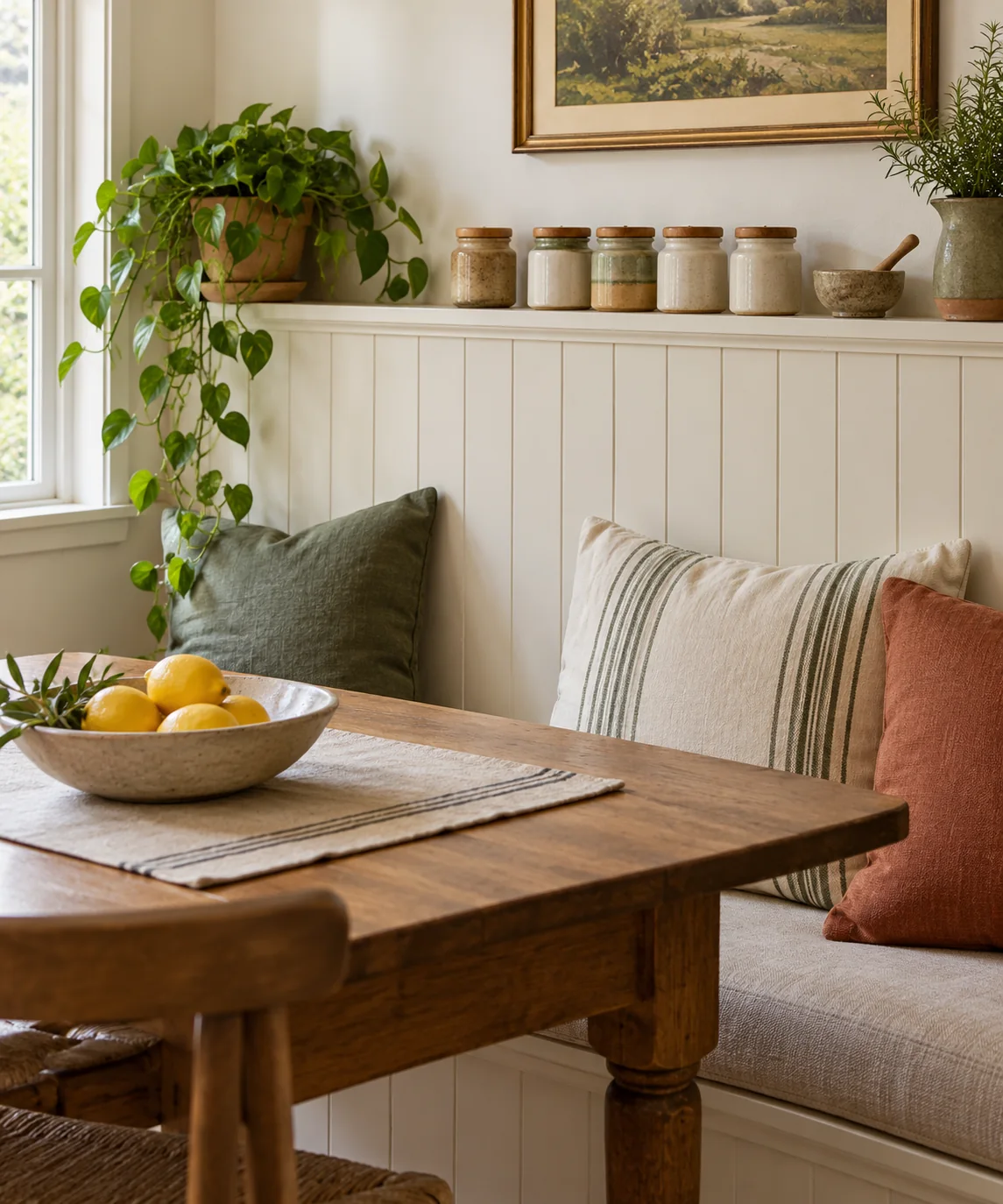
Proportioning Ledge Depth to Banquette Backrests
When planning a condiment ledge above banquette seating, projection depth must be balanced against diner comfort. A projection between two and three and a half inches generally provides adequate resting space for small shakers while reducing the risk of diners bumping their heads or shoulders when reclining. The finished height of the wainscot cap should be coordinated directly with your chosen seat height and cushion thickness. Measuring the distance from the compressed cushion to the mid-back level of typical sitters helps determine a ledge elevation that stays conveniently accessible without interfering with natural seated posture.
Selecting Stable Containers for Narrow Shelves
Narrow architectural ledges require stable, low-profile containers to minimize accidental spills during mealtime activity. Squat ceramic pots, wide-bottomed salt cellars, and compact cruets with weighted bases sit more securely than tall, slender bottles that easily tip when brushed. Placing shallow trays, silicone mats, or felt-lined caddies along the ledge provides a dedicated perimeter that keeps small items grouped together. This setup prevents individual grinders or condiment jars from shifting unexpectedly when diners settle onto or leave the adjacent bench seating.
Protecting Adjacent Wall Finishes from Stains
Condiment containers, particularly those holding oils or vinegars, often develop drips that transfer onto surrounding surfaces over time. Applying scrubbable, moisture-resistant paints—such as satin or semi-gloss interior finishes—to the ledge cap and adjoining wall helps simplify routine wipe-downs. Washable wallpaper or protective clear backsplashes can also shield vulnerable drywall. In addition, setting containers on small ceramic dishes, glazed coasters, or washable stone saucers creates an effective barrier that catches residual oil rings before they can mark painted millwork.
Coordinating Ledge Profiles with Existing Millwork
Integrating a functional ledge cap into existing beadboard, shiplap, or paneled wainscoting requires careful visual and physical planning. Selecting a durable hardwood board with an eased or bullnosed outer edge prevents sharp corners from snagging clothing as diners enter or exit the nook. The new profile should cleanly align with door casings and window aprons to maintain cohesive room architecture. Rather than undertaking complex structural modifications, homeowners can work with millwork suppliers to source pre-milled sill profiles that match the existing trim style.
Weight Distribution and Clutter Management
A wainscot ledge functions best as an auxiliary resting place for core dining necessities rather than a catch-all display shelf. Overcrowding narrow ledges with decorative accents or oversized ceramic vessels increases the likelihood of items falling onto diners or the table. Keeping the inventory limited to daily essentials—such as salt, pepper, and clean cloth napkins—maintains orderly dining space. Routinely clearing away rarely used items preserves the functional balance of the nook and ensures that every container remains stable on the narrow surface.
YOUR STARTING POINT
A little checklist.
Original editorial guidance. Images are AI-generated concepts, not photographs of completed projects. Our sources and approach.
Questions to consider
Will diners knock items off a narrow ledge when leaning back?
Careful dimensional planning prevents interference. Keeping ledge depth under three and a half inches and setting the ledge slightly above the primary shoulder line of seated diners creates comfortable clearance when backrest cushions are properly angled.
What wood types hold up best for dining nook ledges?
Dense hardwoods such as white oak, hard maple, or ash offer strong resistance to surface denting and moisture absorption. Softer species can be used if they receive a durable, scrubbable topcoat, though they remain more susceptible to indentations from dropped metal items.
Can framed pictures or decor share space on the ledge?
Leaning frames or wide decorative objects can easily crowd narrow ledges and destabilize seasoning jars. Reserving the ledge strictly for dining essentials preserves stability and keeps mealtime items from tumbling forward onto seated guests.