Small Bathroom Storage · THE GUIDE
Add an Under-Sink Tension Bar for Hanging Spray Cleaners
Under-sink vanity cabinets present significant organizational obstacles due to central drainage pipes, supply hoses, and shallow dimensions. Bottles of everyday surface cleaners frequently clutter the cabinet floor, blocking access to spare toiletries and personal care items stored in the rear. Installing a sturdy tension bar utilizes otherwise wasted vertical air space beneath the sink basin. By suspending trigger spray bottles by their nozzles, you immediately clear the primary shelf surface for stackable bins or baskets. This reversible, non-invasive method requires zero hardware drilling and adapts easily to varying cabinet widths.
Jump to the checklist ↓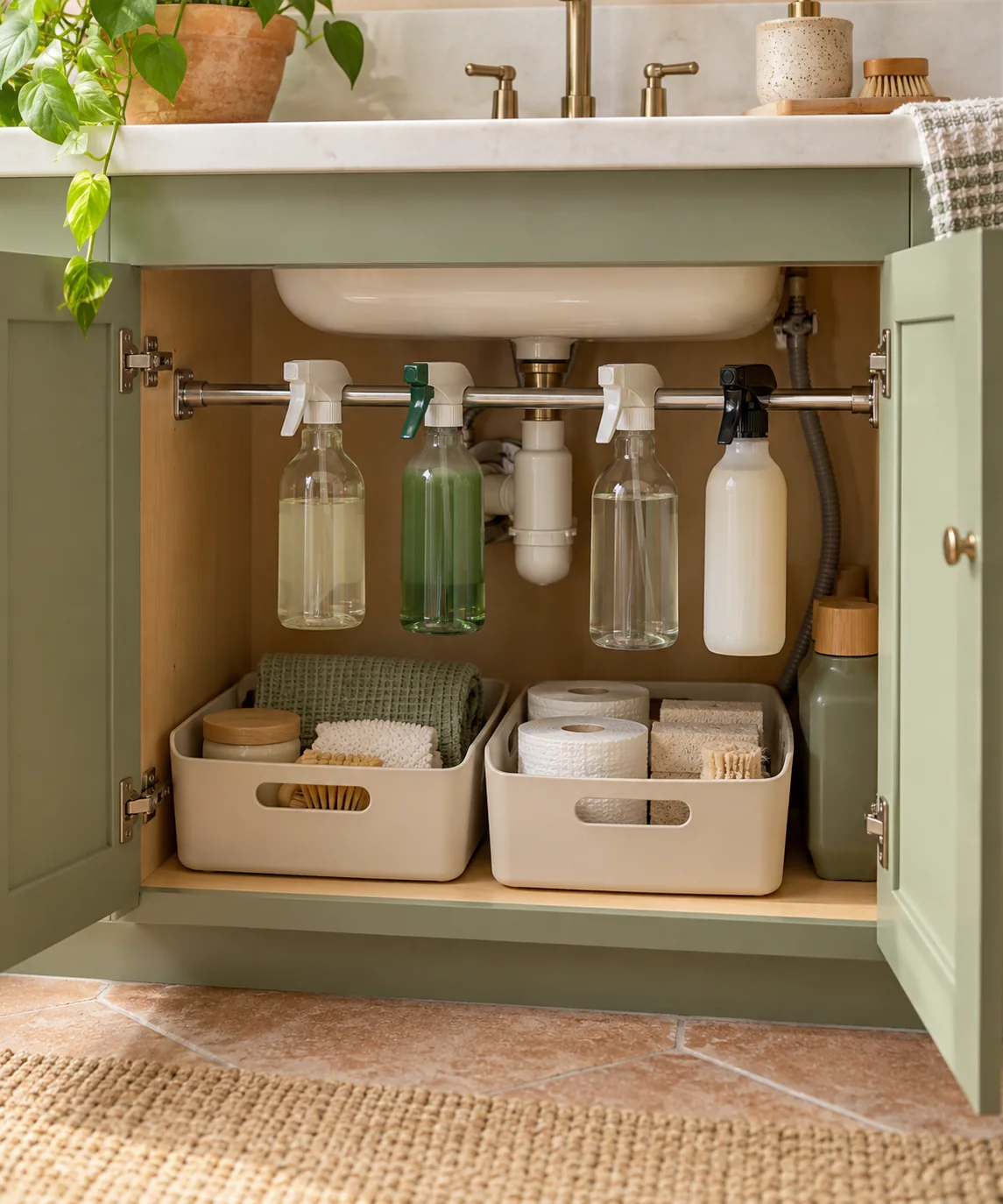
Assessing Cabinet Sidewalls and Internal Obstacles
Inspect the internal cabinet walls before introducing tension-mounted storage. Tension rods rely on continuous outward pressure against opposing surfaces, which requires structurally sound cabinet casework. Solid wood, rigid furniture-grade plywood, or well-braced panels provide reliable support, whereas thin, unbraced veneer or flexible cabinet backs can bow under pressure. Map the layout of the sink drain trap, flexible supply lines, and shutoff valves to ensure the bar sits in an unobstructed path without placing force against plumbing components.
Selecting Appropriate Rod Dimensions and Weight Ratings
Review the manufacturer's published load ratings when selecting an adjustable tension rod for utility storage. Rod stability decreases as the bar extends toward its maximum published length; selecting a rod that fits your cabinet width while operating near its mid-range provides greater rigidity. Avoid ultra-thin decorative curtain rods, which readily deflect under the combined weight of liquid cleaning containers. Look for designs featuring broad, non-marring rubber end pads to maximize surface contact and prevent finish damage.
Establishing Proper Hanging Height and Balance
Plan the rod height so that suspended spray bottles hang completely clear of lower storage containers without interfering with the sink basin above. Test the height by holding a representative bottle against the cabinet interior before setting the rod in place. Distribute hanging items evenly along the bar, placing larger containers closer to the supported ends to reduce center deflection, and avoid concentrating heavy items along the middle span.
Organizing the Recovered Base Shelf Space
Suspending spray bottles by their trigger grips frees valuable floor space for low-profile organizers. Measure the vertical clearance beneath the hung bottles to choose suitable plastic trays, stackable bins, or acrylic caddies for spare cloths, sponges, and small accessories. Ensure that lower bins can slide in and out freely without snagging bottle nozzles or dislodging the rod. This vertical zoning creates functional separation within compact cabinets without altering cabinetry.
Preventing Rod Slippage and Respecting Load Limits
Tension rods can slip if cabinet walls are dusty or if the bar is loaded beyond its intended capacity. Wipe the cabinet contact points clean and dry before positioning the rod to remove any grease or household dust. Always adhere strictly to the manufacturer's stated weight limits and avoid overloading the rod with oversized bulk jugs. If the rod shifts during regular access, reduce the number of hanging containers rather than forcing additional tension against delicate cabinet walls.
YOUR STARTING POINT
A little checklist.
Original editorial guidance. Images are AI-generated concepts, not photographs of completed projects. Our sources and approach.
Questions to consider
Can tension rods damage painted or laminate cabinet interiors?
Tension rods with soft rubber end pads generally protect finished surfaces when installed according to manufacturer instructions. However, applying excessive pressure against thin veneers, hollow-core panels, or soft laminates can cause surface dents or hairline cracking.
How much weight can an under-sink tension rod safely hold?
Load capacities vary widely depending on the rod's diameter, metal gauge, extension length, and pad material. Always check the manufacturer's packaging for specific weight limits, and remember that ratings apply to static, evenly distributed loads rather than concentrated center weight.
What if spray bottles slide along the rod when the cabinet is accessed?
Hanging bottles may slide along smooth metal rods if moved abruptly. Distributing containers evenly and avoiding overcrowding helps maintain balance, while small silicone grip rings or manufacturer-approved dividers can keep hooks separated without adding weight.