Indoor Plant Styling · THE GUIDE
Add Greenery to a Laundry Utility Shelf in Washable Pots
Laundry rooms often suffer from sterile utilitarian aesthetics and limited surface area, making high utility shelves ideal spots for practical styling. Integrating resilient indoor plants into this environment introduces fresh organic texture alongside laundry detergents and glass soap jars. However, splashing water, high humidity, and occasional detergent residue require durable planting solutions. By utilizing lightweight, washable enamelware pots, you gain moisture-resistant containers that handle frequent repositioning and wipe-downs with ease. This thoughtful pairing creates a tidy, durable greenery display that softens open shelving without complicating your regular weekly wash routines.
Jump to the checklist ↓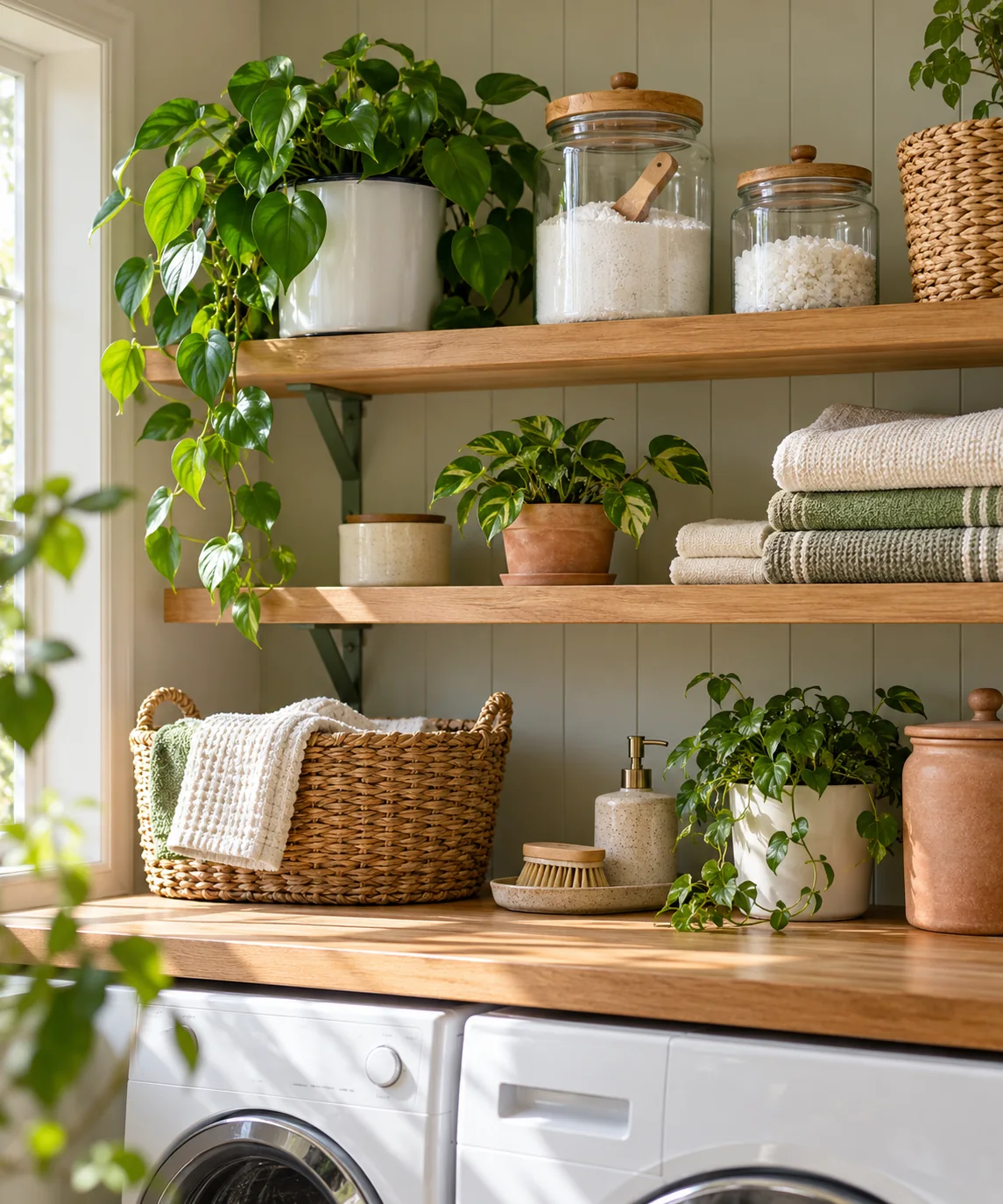
Selecting Washable Enamel Containers
Enamelware provides a durable, non-porous option for plant styling on utility shelving. Small enamel mugs, canisters, or basins comfortably house standard plastic nursery pots while withstanding ambient laundry moisture. The porcelain-coated steel surface resists humidity, accidental splashes, and detergent dust, wiping clean easily with a cloth. Ensure chosen containers have a wide, stable base that rests securely on solid or slatted shelves. Because decorative enamel containers typically lack drainage outlets, use them as cachepots rather than potting directly into them.
Choosing Resilient Indoor Plants
Laundry spaces experience fluctuating conditions, from standard room temperatures to temporary humidity rises during appliance cycles. Choose dependable, adaptable houseplant varieties such as pothos, ZZ plants, or spider plants that tolerate ambient indoor shifts and occasional lapses in watering. Avoid sensitive varieties that demand constant high humidity or strict moisture schedules, as utility ventilation can dry potting mix unevenly. Check plant foliage periodically to observe how species respond to the specific airflow patterns in your space.
Organizing Alongside Laundry Supplies
Group plants alongside laundry essentials to keep the shelf functional and uncluttered. Place heavy soap containers, stain removers, and powdered detergents together, allowing ample breathing room between cleaning products and plant foliage. Keeping supplies and containers comfortably separated prevents accidental chemical splashes onto leaves and ensures you can access detergents without brushing or snapping delicate stems. This visual separation keeps the utilitarian shelf organized and tidy.
Shelf Weight and Stability Planning
Utility shelves must comfortably support the combined load of cleaning supplies and potted containers. Check the shelf manufacturer's specified weight rating before loading multiple pots onto wall-mounted or freestanding units. Place heavier pots directly over shelf brackets or near upright vertical supports rather than along unsupported center spans. For wire or slatted shelving, add a rigid acrylic or solid shelf liner beneath pots to create a flat, steady surface that prevents tipping.
Routine Cleaning and Plant Care
Dryer lint and airborne dust naturally settle on shelf surfaces and plant foliage over time. Establish a regular care habit by lifting the inner nursery pots out of the enamel vessels during watering. Wash the enamel cachepots with warm water and mild soap, drying them thoroughly before replacing the plants. Gently wipe accumulated lint and dust from leaf surfaces with a soft, damp cloth, which keeps foliage clean and allows unobstructed light absorption.
YOUR STARTING POINT
A little checklist.
Original editorial guidance. Images are AI-generated concepts, not photographs of completed projects. Our sources and approach.
Questions to consider
Can I drill drainage holes directly into enamel containers?
Drilling into enamel is not recommended because the porcelain coating can chip, exposing the bare metal core to water and causing rust. Keep plants in standard plastic nursery pots with drainage holes and use the enamel containers as decorative, protective cachepots.
How can I support plant health if the laundry room has no natural light?
In windowless utility rooms, rotate plants every week or two into a room with bright, natural light. If using supplemental grow lighting, choose a freestanding or dedicated fixture verified by the manufacturer for safe use in humid utility environments.
Will detergent dust or lint harm plant leaves?
Accumulated laundry lint and airborne detergent residue can coat foliage, reducing light absorption over time. Position plants away from open powder boxes and wipe the leaves gently with a damp cloth whenever dust becomes noticeable.