Bookshelf Styling · THE GUIDE
Add Plywood Shelf Liners to Wire Industrial Utility Shelving
Industrial wire shelving provides exceptional strength and modular utility, but its grated decks are inherently hostile to book storage. Thin paperback spines drop between the wire rungs, heavy hardcovers tilt unpredictably, and sharp metal seams can scuff delicate paper dust jackets over time. Adding rigid birch plywood liners turns these open metal grids into continuous, stable surfaces suitable for organized libraries. The pale Scandinavian wood grain balances the utilitarian look of chrome or dark steel framing, establishing a sturdy, durable platform that preserves the condition of your books while enhancing your room's overall aesthetic.
Jump to the checklist ↓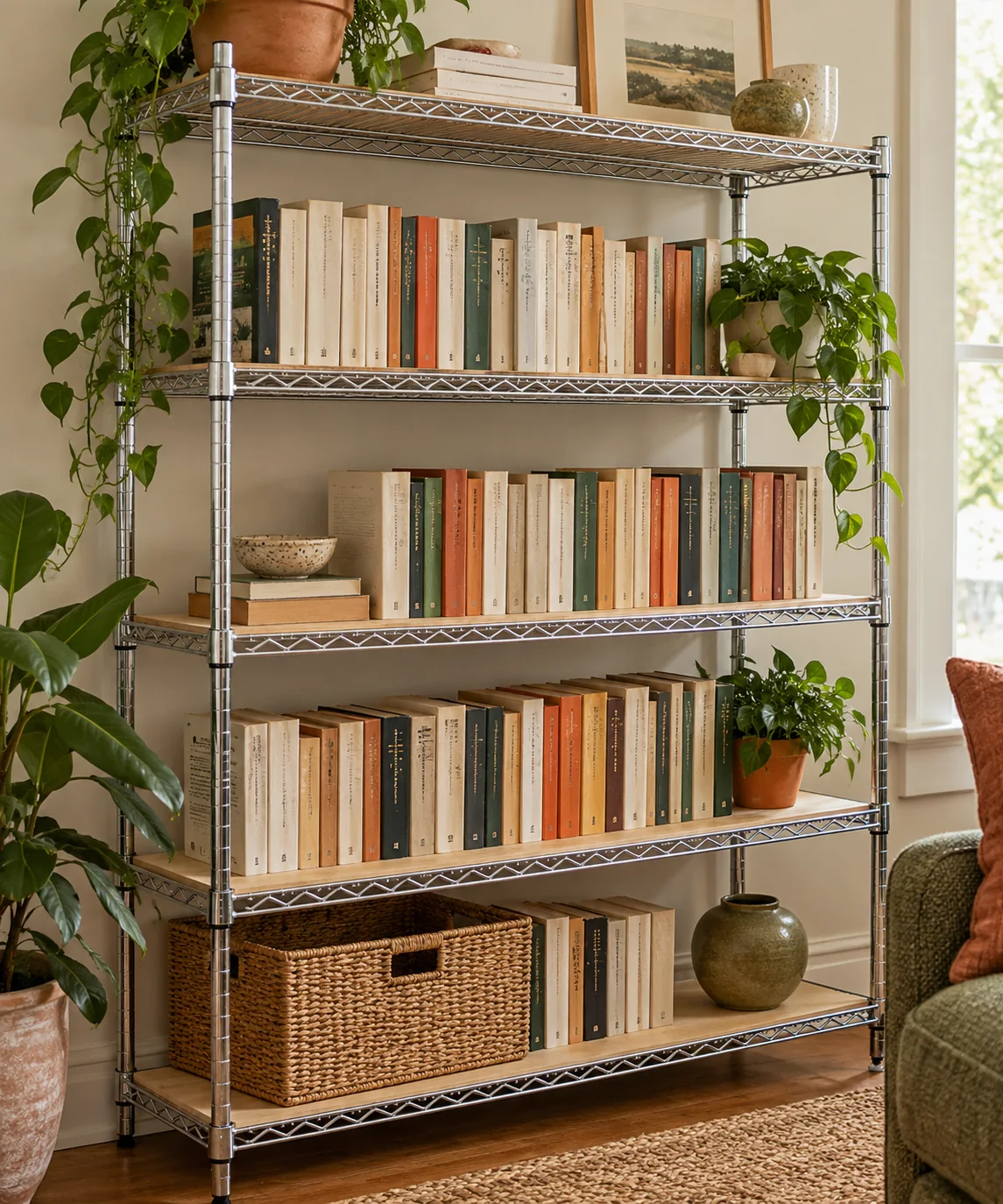
Selecting and Sizing Plywood Decks
Cabinet-grade birch plywood provides a flatter, more consistent contact surface than rough construction-grade sheathing, reducing voids and splintering. Carefully check the manufacturer's load rating for each wire shelf tier before sourcing materials, as adding wooden liners contributes to the dead weight on each level. Measure the interior opening between the corner posts, deducting approximately one-eighth inch from both width and length so the panel drops in without binding against uprights. Most lumber retailers or local millwork shops can cut flat panels to dimension, ensuring consistent right angles across all tiers.
Edge Preparation and Surface Finishing
Cut plywood edges often present loose splinters or tooling marks that can abrade book jackets and paper corners. Hand-sand perimeter edges and corner profiles with medium 120-grit sandpaper before progressing to 220-grit paper to create a smooth, slightly rounded edge. Vacuum residual sanding dust thoroughly and wipe the boards clean. Seal the exposed wood surfaces with a fully curing, water-based acrylic or polyurethane finish rather than penetrating oils, which can slowly migrate into paper covers over extended contact. Allow the protective coat to cure thoroughly according to manufacturer specifications before shelving books.
Seating and Stabilizing the Panels
Place each cut liner squarely over the wire deck so its perimeter rests along the supporting frame and crossbars. If a panel shifts when sliding volumes into place, apply small adhesive silicone bumpers or non-slip rubber pads to the underside corners where the plywood contacts the wire structure. These pads help dampen contact noise, limit horizontal shifting across the wire rungs, and protect factory finishes without requiring mechanical fasteners. Check that the added panel thickness does not interfere with shelf clip collars or obstruct clearance between consecutive shelf levels.
Distributing Load and Unit Stability
Even though industrial wire shelving is engineered for utility storage, tall freestanding units loaded with dense books require sensible weight distribution and manufacturer-recommended tip-over restraints. Always consult the manufacturer's user manual for maximum per-shelf and total unit weight limits, subtracting the weight of the plywood liners. Place oversized volumes, dense art portfolios, and heavy reference binders on lower tiers to keep the center of gravity low. Reserve upper tiers for lighter paperbacks and pamphlets, and ensure the entire shelving unit is secured to wall framing using appropriate anti-tip hardware.
Routine Cleaning and Maintenance
Open wire frameworks allow ambient room dust to circulate and settle across both the wood inserts and stored collections. Periodically remove books by section to vacuum or wipe down the sealed plywood using a lightly dampened microfiber cloth, clearing gritty dust before it marks the lower edges of book pages. Inspect the panels occasionally for localized deflection or seasonal moisture changes, particularly in basements or utility zones with fluctuating humidity. Because the liners remain unattached to the frame, lifting them out for thorough cleaning or shelf height reconfigurations requires no tools.
YOUR STARTING POINT
A little checklist.
Original editorial guidance. Images are AI-generated concepts, not photographs of completed projects. Our sources and approach.
Questions to consider
Can thinner quarter-inch plywood be used for the inserts?
Quarter-inch plywood is significantly more flexible and can sag across open wire rungs when loaded with heavy collections. Half-inch panels provide greater structural resistance against flex, though readers should still monitor spans over time and avoid exceeding the manufacturer's load limits for the shelf.
Is mechanical fastening required to secure the wood to the wire frame?
Permanent screws or mechanical clips are generally unnecessary for standard residential book storage when non-slip silicone bumpers are placed beneath the panels. However, make sure the liners sit flat within the perimeter wire lip so books cannot lever the edge upward during retrieval.
Will unsealed wood damage powder-coated or chrome wire shelving?
Bare plywood edges can scuff delicate powder coatings through repeated micro-movements during daily use. Sanding the contact faces and adding thin rubber or silicone bumper dots creates a protective cushion that isolates the wire finish from direct friction.