Dining Nooks · THE GUIDE
Add Under-Bench Power Strips for Laptop and Small Appliance Use
Dining nooks frequently serve secondary roles as casual work spaces or homework stations, requiring accessible power for low-voltage devices like laptops and phones. However, stringing extension cords across open walkways creates tripping hazards and clutter. Integrating a commercially certified, surge-protected power strip into an accessible, well-ventilated nook area provides organized power while keeping cables managed. Understanding load limitations is paramount: power strips are designed for low-draw electronics, never high-wattage cooking appliances. Following manufacturer specifications, routing cables safely away from pinch points, and prioritizing reversible, non-invasive mounting keeps hybrid dining spaces functional and secure.
Jump to the checklist ↓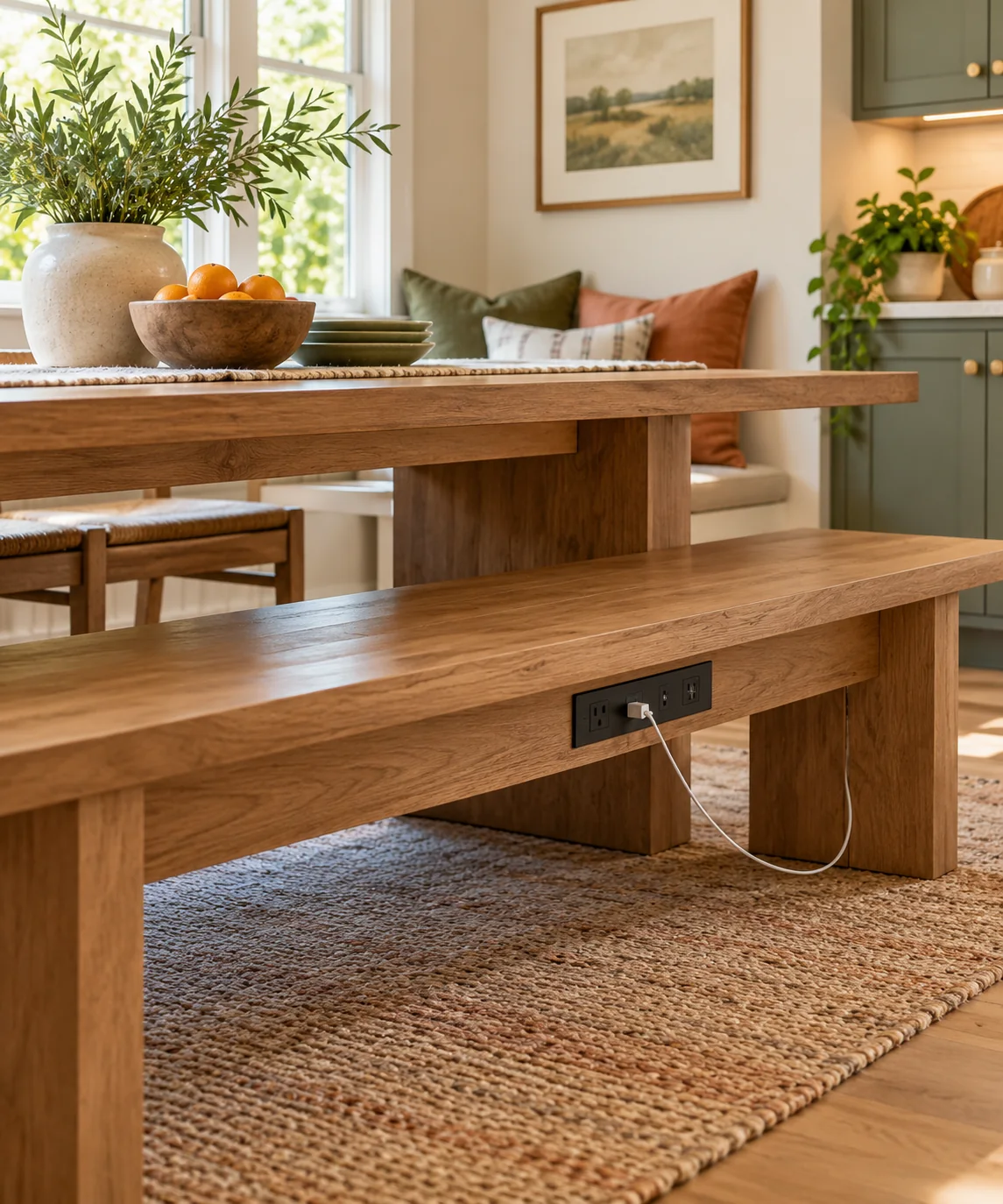
Distinguishing Low-Draw Devices from Heating Appliances
The most critical safety consideration when planning dining nook power is the electrical load. Multi-outlet power strips and surge protectors are designed for light-duty personal electronics such as laptops, tablets, and mobile chargers. High-draw kitchen appliances—including electric kettles, toasters, waffle makers, and hot plates—draw substantial amperage and should always plug directly into dedicated, wall-mounted kitchen receptacles on appropriate circuits. Never plug high-wattage heating elements into a power strip or furniture-mounted tap, as sustained high current draw can overwhelm the device and create a severe fire hazard.
Evaluating Clearance and Safe Placement
When planning the placement of a surface-mounted power strip, ergonomic clearance is essential. The unit should sit recessed several inches back along an interior apron or under a bench deck to ensure plugs and adapters do not collide with knees, calves, or feet. Sit at the table and observe natural leg movement before deciding on a location. Bulky charging bricks protrude farther than standard flat plugs, so allow ample margin so that movement cannot bump or dislodge connections. Always position the strip away from areas where liquid spills from the tabletop could drip into sockets.
Safe Cord Management and Pathway Routing
Power cords must travel safely from the wall outlet to the seating nook without creating physical or electrical hazards. Route the flexible supply cord along fixed structural rails using non-conductive cable clips or surface raceways. Avoid running cords underneath area rugs, mats, or through high-traffic walking paths where foot traffic can compress and degrade protective insulation over time. Ensure the cord has enough slack to avoid tension at the plug and wall receptacle, but remains supported so it does not droop into footwells or catch on moving chair legs.
Reversible Mounting and Ventilation Considerations
To avoid damaging furniture or voiding manufacturer warranties, opt for non-marring, reversible mounting solutions such as heavy-duty interlocking fasteners or specialized mounting brackets. Ensure the power strip casing is securely held against a flat, solid surface rather than suspended loosely. Furthermore, power supplies and charging adapters generate modest heat during operation. Avoid enclosing power strips inside tightly sealed, unventilated bench storage compartments, and keep them clear of upholstery fabrics, foam cushions, or stored linens that could trap heat.
Routine Inspection and Debris Prevention
Dining spaces are prone to food crumbs, dust, and beverage spills that pose risks to exposed electrical receptacles. Inspect the power strip periodically for signs of debris accumulation, loose plugs, or cord wear. Disconnect the main plug from the wall before cleaning the exterior casing with a dry cloth. Utilizing units with integrated sliding safety covers helps block crumbs and dust from entering empty sockets when not in use. If a power strip feels warm to the touch, smells unusual, or trips repeatedly, remove it from service immediately and consult a qualified electrician.
YOUR STARTING POINT
A little checklist.
Original editorial guidance. Images are AI-generated concepts, not photographs of completed projects. Our sources and approach.
Questions to consider
Can small kitchen appliances like kettles be plugged into an under-bench power strip?
No. High-draw heating appliances such as electric kettles, toasters, and sandwich presses draw heavy amperage that can overload power strips. These appliances should only be connected directly to properly rated, dedicated wall outlets.
What is the best way to secure a power strip to wooden furniture without damage?
Use heavy-duty, surface-safe interlocking hook-and-loop strips or manufacturer-approved mounting brackets. These hold the unit securely while allowing clean removal without drilling into solid wood frames.
How do I protect under-bench outlets from food crumbs and liquid spills?
Install the strip recessed beneath an overhang where direct drips cannot enter the sockets, and choose a power strip equipped with sliding outlet safety covers to block ambient dust and crumbs.