Small Bedroom Layouts · THE GUIDE
Aligning Bed and Freestanding Clothes Rail in a Parallel Flow
Narrow bedrooms often feel crowded when large furniture items jut awkwardly into primary paths of movement. Placing the bed along one long perimeter wall and orienting a freestanding clothes rail directly opposite establishes a clean, parallel flow that preserves the central walkway. This layout maximizes floor visibility and simplifies routine bed-making and wardrobe selection. By establishing clear physical boundaries on facing walls, visual weight distributes evenly rather than clustering in a single corner. Careful planning ensures doors swing freely, hanging garments stay clear of foot traffic, and the floor corridor remains entirely open.
Jump to the checklist ↓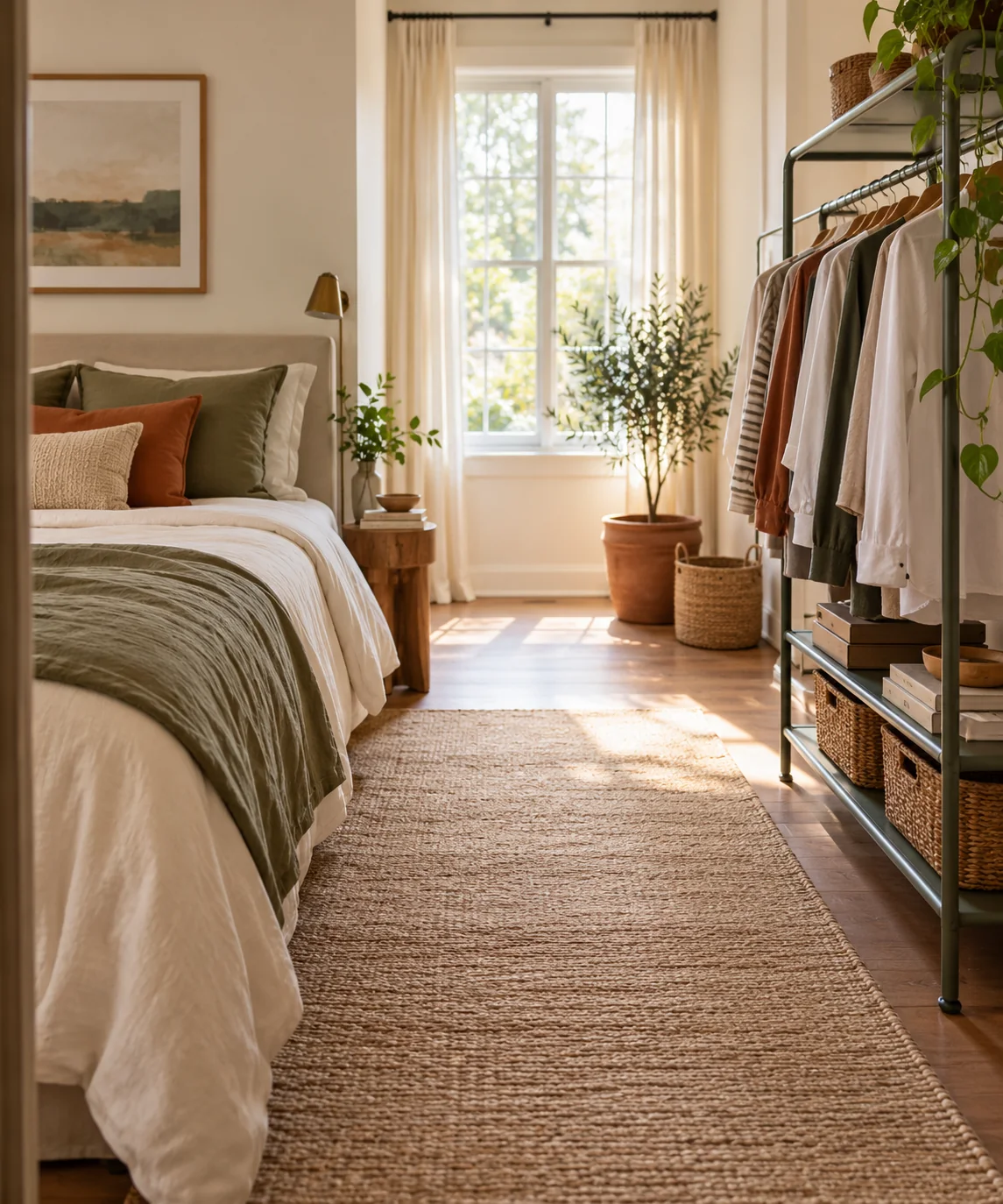
Establishing Minimum Corridor Clearances
A workable central corridor requires at least thirty inches of clear walkway between the edge of the mattress and the outermost projection of the clothing rack. Account for the width of standard coat hangers, which typically extend sixteen to nineteen inches from the rail itself. If the rail includes a wide wheeled base or low shoe shelf, calculate your boundary from the widest bottom footprint. Keeping thirty to thirty-six inches open allows two individuals to pass comfortably and prevents hanging garments from brushing against your bed linens.
Testing with Existing Furniture Footprints
Before purchasing or repositioning a clothing rail, mark the intended perimeter directly on the floor using low-tack painter's tape. Factor in bedroom door swings, closet doors, and open window paths to verify that no functional clearances collide. Walk the corridor carrying everyday items, such as laundry baskets or luggage, to test whether the linear lane feels tight. If the walkway dips below twenty-eight inches, consider shifting to an open frame rail with a shallower base or turning the bed sideways against an end wall.
Managing Visual Bulk and Garment Spacing
Exposed clothing racks can introduce sensory clutter into a compact sleep zone if overloaded. Distribute heavier garments, such as coats and thick knitwear, toward the ends closest to natural wall corners rather than directly across from the pillow line. Maintain uniform hangers to create a disciplined horizontal profile that runs parallel to the mattress edge. Leaving one or two inches of empty space between garments stops the rack from looking heavy, keeping the sightline across the central floor passage open and airy.
Selecting Base Profiles for Daily Movement
Freestanding clothing racks feature various base designs, including caster wheels, flat sled bases, or integrated shoe platforms. In a parallel small-bedroom layout, fixed sled bases or flush low-profile feet present fewer tripping hazards than wide, protruding wheel assemblies. If casters are used, ensure they feature reliable manual locks so the rail stays parked during garment retrieval. Low-profile bases also permit narrow storage bins to slide neatly underneath, provided the boxes stay inside the frame boundary and do not spill out into the corridor.
Practical Limitations and Dust Considerations
While parallel placement provides immediate accessibility, open clothes racks expose everyday fabric to airborne lint and settling dust generated from bed linens. Regular laundering of bed covers and routine damp-cloth dusting of the metal rail frame help mitigate fabric fuzz accumulation. Additionally, this layout demands disciplined tidiness; unorganized hanging garments immediately read as visual clutter from the bed. If your storage collection exceeds the rail's structural weight limit, this setup functions best paired with off-season under-bed storage boxes rather than overfilled hangers.
YOUR STARTING POINT
A little checklist.
Original editorial guidance. Images are AI-generated concepts, not photographs of completed projects. Our sources and approach.
Questions to consider
How wide should a room be for a parallel bed and rack setup?
A room width of at least eight to nine feet is ideal. This accommodates a standard mattress width, a sixteen- to twenty-inch clothing rail, and leaves thirty inches of unobstructed central clearance for comfortable movement.
Will clothing pick up dust from being placed opposite the bed?
Open storage inevitably gathers settling lint from bedding. Shake out sheets regularly away from the rail, wash duvet covers frequently, and rotate garments periodically or protect sensitive fabrics with breathable, zippered shoulder covers.
What should I do if the bedroom door swings into the rail?
Relocate the rail further down the wall toward the window or footboard, ensuring the door hinge clearance remains entirely unobstructed. Alternatively, position a narrow nightstand near the door to absorb the initial swing arc.