Small Bedroom Layouts · THE GUIDE
Aligning Twin Beds with a Shared Center Nightstand in Guest Rooms
Arranging two twin beds in a narrow guest room presents unique spatial challenges, especially when attempting to balance comfort, symmetrical aesthetics, and accessible storage. Centering a single shared nightstand between both frames provides an efficient, space-conscious solution that anchors the room layout cleanly. This setup consolidates tabletop lighting and overnight essentials into one zone, maximizing perimeter walking room along outer walls. By coordinating bed spacing, table proportions, and reachable surface areas, you create an inviting, functional guest environment that handles varied hosting needs without overcrowding modest floor plans.
Jump to the checklist ↓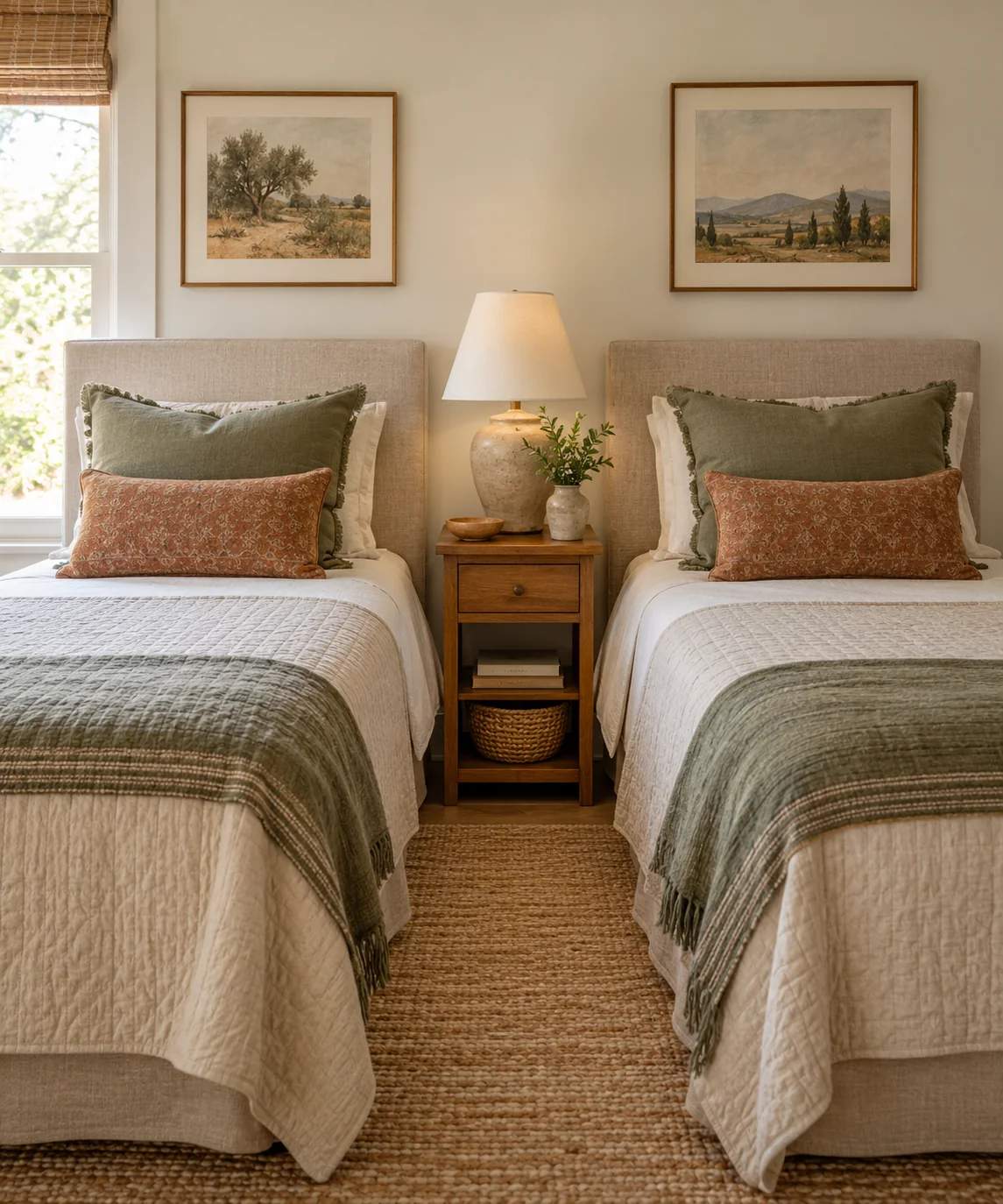
Calculating Wall Spacing and Center Placement
Start by measuring the primary anchor wall to determine whether twin mattresses can sit comfortably side by side. Standard twin frames measure approximately thirty-eight inches wide, requiring seventy-six inches solely for sleeping surfaces. In rooms measuring ten to twelve feet across, a center space of eighteen to twenty-four inches between frames allows for a compact table while reserving roughly eighteen inches of outer walkway space beside each bed. This distribution ensures neither bed feels pinned tightly into room corners.
Selecting the Right Nightstand Proportion
A shared nightstand must serve two sleepers without protruding into the middle of the room. Look for an accent table measuring between sixteen and twenty inches wide with a shallow front-to-back profile. The tabletop height should align closely with mattress level, ideally within one inch higher or lower than the bedding tops. Matching these heights allows guests on either side to set down water glasses, reading glasses, or mobile devices without awkward reaching.
Designing Shared Tabletop Utility
Because one tabletop supports two individuals, surface organization must remain streamlined. Select a compact lamp with a narrow base or an adjustable dual-direction shade to keep center surface real estate clear. Ensure both sides can reach the switch comfortably from a resting position. Keep decorative items off this shared surface entirely; dedicating the tabletop strictly to a lamp and personal resting items prevents clutter and avoids nocturnal accidents when guests reach out in the dark.
Testing Bed Access and Making Linens
Sufficient outer clearance is essential not only for guest comfort but also for daily linen maintenance. Ensure the outer perimeter allows enough physical room to stand comfortably while tucking sheets and smoothing blankets. If an outer side is constricted by a doorway or window trim, shift the center table slightly off-dead-center or select lower-profile bed frames without thick sideboards. Smooth navigation around each frame ensures guests enter and exit bed without feeling boxed in.
Preserving Visual Balance Across the Wall
Symmetry makes a split bedroom arrangement feel deliberate rather than improvised. Use matching headboards, tailored quilts, and standard pillows to establish a cohesive visual rhythm along the main wall. Grounding the shared nightstand between identical textile profiles anchors the composition, turning two separate sleeping units into a unified suite. Keep wall hangings centered over the midpoint of the entire wall or evenly balanced above each individual headboard to preserve serene proportions.
YOUR STARTING POINT
A little checklist.
Original editorial guidance. Images are AI-generated concepts, not photographs of completed projects. Our sources and approach.
Questions to consider
How far apart should twin beds sit in a guest room?
A separation of eighteen to twenty-four inches is optimal. This provides enough clearance for a slim nightstand and gives each sleeper a sense of personal space without crowding room walls.
Can round tables work between twin beds?
Yes, a round pedestal table eliminates sharp corners in narrow gaps. Ensure its diameter stays under twenty inches so it does not impede guests stepping out of bed.
What lamp style works best on a shared nightstand?
A tall, slim-base lamp with a compact drum shade works best. It casts balanced downward ambient light across both sides while consuming minimal flat surface area on the shared tabletop.