Indoor Plant Styling · THE GUIDE
Alternate Foliage and Book Bundles to Relieve Visual Weight
Solid walls of bound books can quickly overwhelm an open shelving unit, turning functional storage into a dense, visually heavy block. Integrating living foliage among book runs is a reliable method to create intervals of open space and introduce varied silhouettes. By alternating traditional vertical book rows, low horizontal book stacks, and potted houseplants, you establish a rhythmic composition across the shelves. This styling strategy softens angular grid compartments, reduces the perceived bulk of extensive book collections, and directs ambient room light across organic leaf textures without sacrificing valuable shelf capacity for reading materials.
Jump to the checklist ↓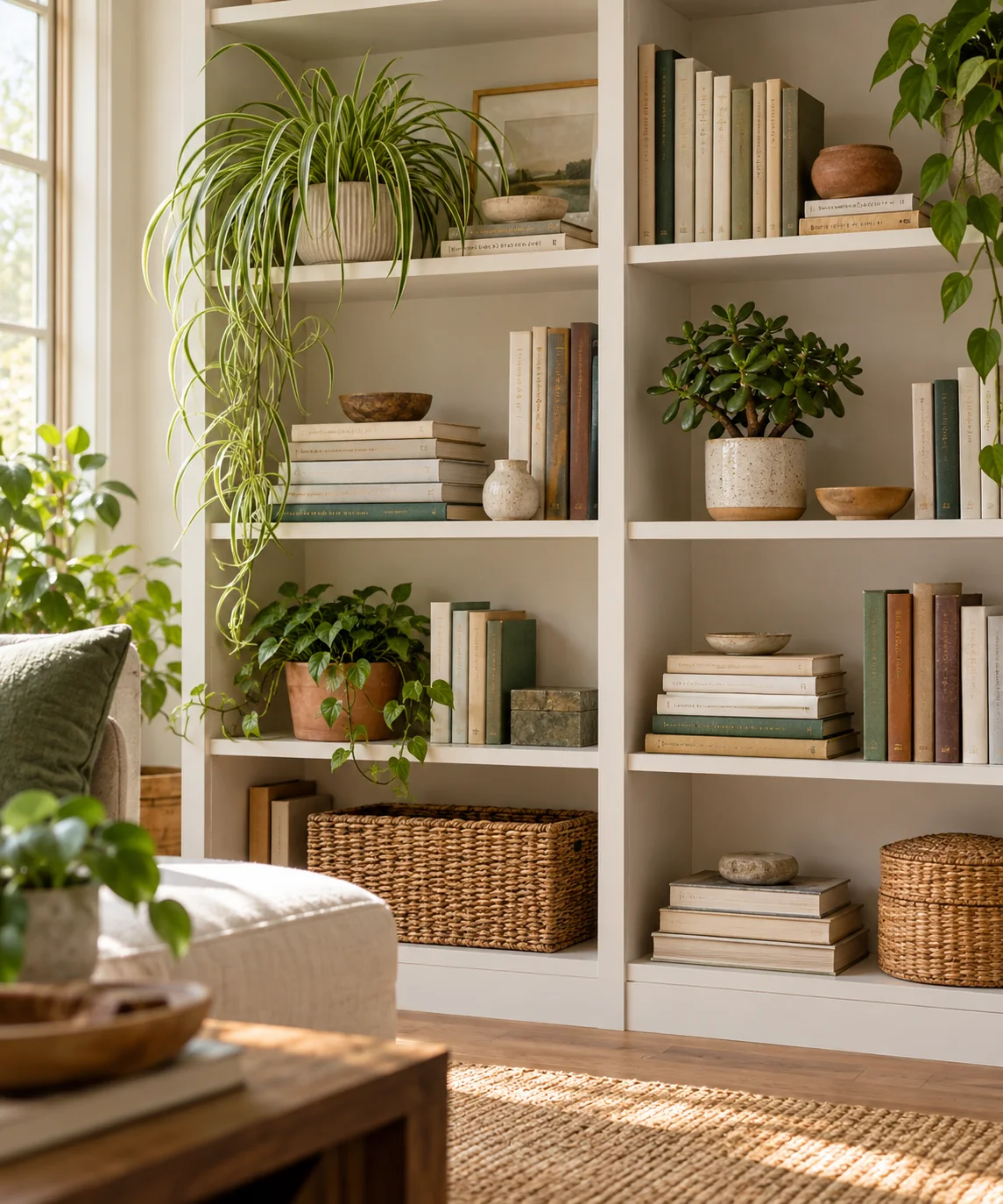
Establishing an Alternating Grid Pattern
Balancing a full bookcase requires distributing potted greenery across various shelf compartments rather than grouping every plant on a single tier. Arrange shelves using a staggered checkerboard concept, positioning a dense vertical row of books on one tier and an open plant arrangement immediately above or beside it. Pairing upright spine rows with low horizontal book stacks creates natural alcoves for small pots. This alternating rhythm breaks up monotony, softens hard shelving grids, and allows open negative space to relieve the visual weight of extensive book collections.
Pairing Pot Shapes with Book Stacks
The dimensions and orientation of your book stacks should guide the choice of plant containers. Low-profile, wide-based saucers or squat pots sit securely atop sturdy, flat horizontal book stacks without wobbling, taking advantage of open vertical headroom. For open bays flanked by upright books, taller cylindrical or geometric ceramic pots fill the vertical void effectively. Cascading plants, such as spider plants or trailing vines, pair well alongside vertical book spines, draping over open shelf fronts to add organic texture against straight linear edges.
Assessing Shelf Depth and Foliage Spread
Standard bookcase shelves offer limited depth, which naturally restricts the canopy spread of your plants. Select upright or gently cascading cultivars that do not press leaves against the back panel or project awkwardly into the room. Allow comfortable clearance around each container so foliage does not brush against paper edges, trap stagnant air, or hinder your ability to pull titles from the shelf. Prune or train trailing vines along open shelf edges rather than allowing damp stems to wind behind book spines where they can trap moisture.
Protecting Paper Bindings from Moisture
Moisture, damp soil, and leaking irrigation trays pose serious risks to valuable book bindings and paper covers. Avoid unglazed, porous terracotta pots that can sweat moisture onto wooden shelves or paper surfaces. Instead, select fully glazed containers with sealed drip saucers, or place protective cork-backed coasters under each pot. For reliable protection, remove potted plants entirely from the bookcase when watering, hydrate them over a sink or basin, and allow the potting medium to drain completely before returning containers to their spots.
Factoring Light Levels and Shelf Shadows
Shelving dividers, upright supports, and upper tiers cast dense shadows that drastically reduce ambient light inside book compartments. Place the shelving unit where indirect natural daylight can reach into the individual compartments throughout the day. Reserve the open top surface or upper brightly lit tiers for species that require moderate to high light levels, while selecting tolerant, lower-light foliage for recessed mid-level shelves. Reserve the deepest, lowest tiers for reference volumes or decorative storage baskets rather than struggling plants that require stronger light.
YOUR STARTING POINT
A little checklist.
Original editorial guidance. Images are AI-generated concepts, not photographs of completed projects. Our sources and approach.
Questions to consider
Can I place potted plants directly on top of hardcover books?
Only if you place an impermeable, non-sweating barrier like a sealed coaster beneath the pot. Ensure the plant is lightweight and thoroughly dry after watering to prevent warping pages or staining bindings.
What types of plants work best on deep bookshelf tiers?
Compact plants with upright or gentle arching growth work best. Avoid spreading varieties that sprawl across titles. Select species matched to the ambient daylight reaching inside the specific shelf compartment.
How do I clean leaves nestled between book bundles?
Remove the pot from the shelf every few weeks to wipe foliage gently with a damp microfiber cloth. This keeps leaves free of dust while preventing any moisture from splashing neighboring books.