Rental-Friendly Decor · THE GUIDE
Amplify Hallway Daylight with a Weighted Leaning Floor Mirror
Narrow or windowless interior hallways often feel dim, but renters frequently face lease limits on drilling the substantial wall anchors needed for heavy hanging mirrors. Placing a freestanding full-length mirror near a doorway can help direct indirect daylight into a passage by reflecting ambient light from an adjoining room. However, leaning tall objects in high-traffic corridors introduces serious stability and clearance challenges. Balancing improved illumination with household safety involves careful placement planning, evaluating floor traction, and adhering to appropriate anti-tip precautions based on your flooring type and household composition.
Jump to the checklist ↓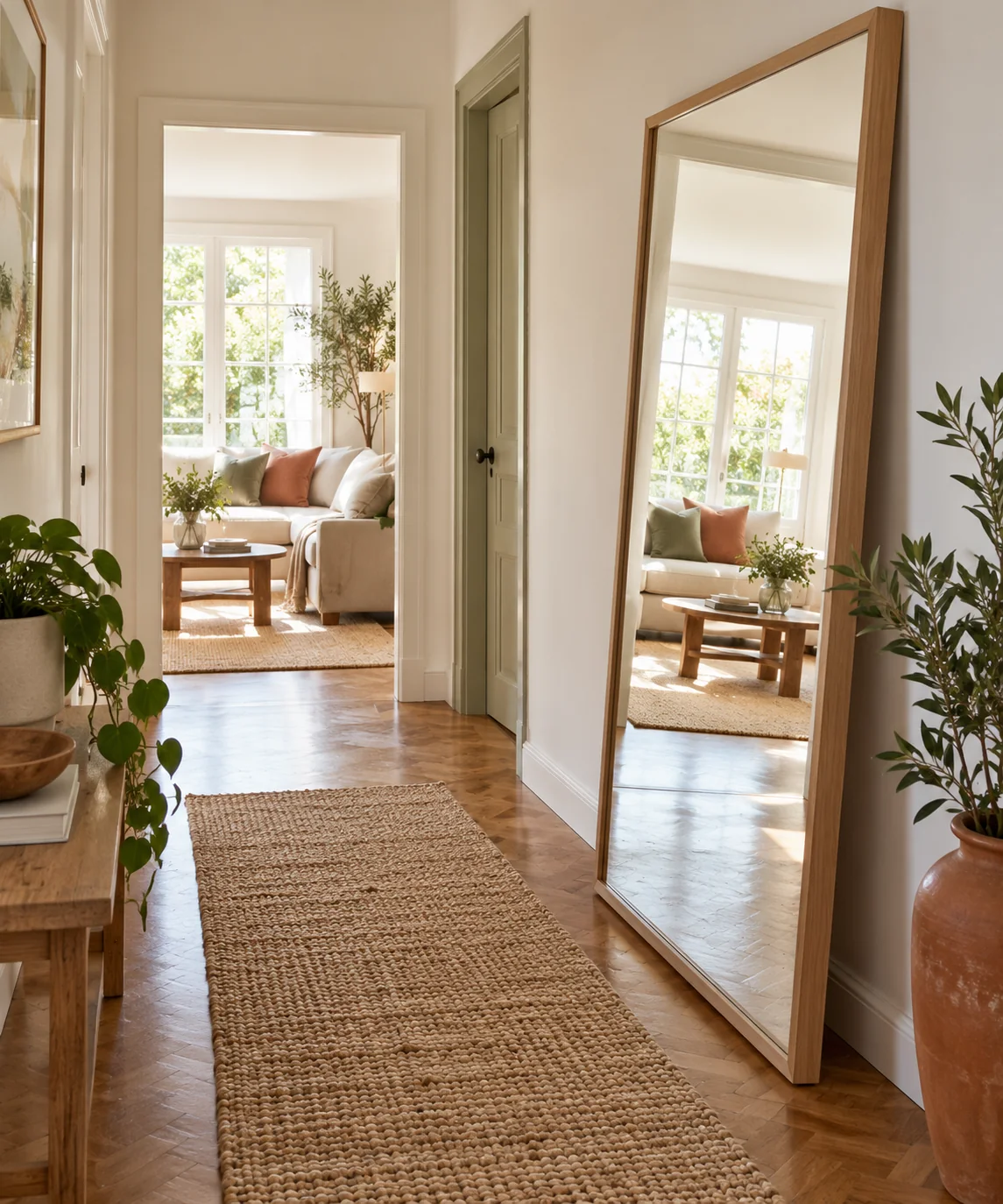
Evaluate Light Paths and Sightlines
Before repositioning furniture, observe how natural daylight moves across adjoining rooms throughout the day. A mirror placed opposite or diagonally from a sunlit doorway can capture diffuse ambient illumination and bounce it into a shadowy corridor. Avoid orienting the glass toward intense, direct midday sunbeams, which can generate sharp glare and visual discomfort for people walking through the passage. Testing potential placements with a portable reflective surface helps identify a location that maximizes light distribution without creating disorienting reflections.
Assessing Floor Grip and Tipping Risks
Leaning mirrors present inherent tip-over hazards, particularly in homes with children, pets, or frequent movement. Smooth flooring such as polished hardwood, laminate, or glazed tile offers minimal friction, meaning an unsecured base can slide outward under minor disturbance. If choosing a leaning model, check manufacturer specifications regarding required floor surfaces and anti-tip hardware. Even when using dense non-slip rubber pads on the frame base, property managers often permit small, discreet anti-tip safety tethers that prevent forward tipping while minimizing wall disruption.
Maintaining Unobstructed Hallway Clearances
Hallways serve as primary circulation routes and emergency egress paths within a home. Introducing a wide or projecting item into a narrow passage can create pinch points. Measure the corridor width and ensure that open, unobstructed walking space remains comfortable for carrying laundry baskets, moving groceries, or navigating in low light. Position the frame away from the swing paths of interior doors, cupboard openings, and coat hooks where swinging fabric or door handles could contact the glass.
Frame Selection and Structural Stability
Taller mirrors require rigid frame construction to resist warping, twisting, or wobbling along the floor. Look for frames made from solid hardwood, welded metal, or reinforced composite materials rather than flexible thin plastic moldings. Check that the glass includes safety backing film, which helps hold shards together in the event of impact. A mirror with balanced proportions and a stable, broad base rail rests more evenly against vertical walls, but mass alone should never be assumed to eliminate tipping hazards.
Routine Care and Reflection Maintenance
Angled glass surfaces naturally accumulate settling airborne dust faster than vertical wall-hung mirrors, which gradually reduces their ability to bounce ambient light. Dust the frame and glass with a dry microfiber cloth before wiping the surface with a lightly dampened cloth. Avoid spraying cleaners directly onto the pane, as liquid running down the surface can seep behind the bottom frame rail and damage the reflective silver backing. Periodically check that base pads remain clean, free of accumulated lint, and firmly seated against the floor.
YOUR STARTING POINT
A little checklist.
Original editorial guidance. Images are AI-generated concepts, not photographs of completed projects. Our sources and approach.
Questions to consider
Is it safe to lean a floor mirror without attaching it to the wall?
Freestanding leaning mirrors carry tip-over risks, especially in active households or narrow passages. Manufacturers generally recommend installing discreet anti-tip wall straps to prevent forward falls, even on models designed to rest on the floor.
What floor surfaces are unsuitable for leaning mirrors?
Highly polished hardwood, slick tile, and deep plush carpets are problematic. Hard surfaces lack natural grip and allow the bottom frame to slide, while plush carpet can cause uneven settling and balance shifts. Anti-slip pads help on firm floors, but do not replace structural tethering.
How can I prevent cleaning solutions from damaging the mirror backing?
Apply glass cleaner or water directly to a microfiber cloth rather than spraying the mirror. Direct spraying allows liquid to pool along the bottom frame seam, which can erode the reflective backing over time.