Dining Nooks · THE GUIDE
Anchor a Triangular Corner Shelf Table for Single-Diner Studios
Studio apartments often lack the square footage for standard rectangular or circular dining tables, prompting single residents to seek creative furniture alternatives. Utilizing the ninety-degree space of an unused corner establishes a permanent eating surface without hindering primary walkways. A dedicated triangular wedge table or freestanding corner console creates a compact breakfast station tailored for one person. By placing a wedge-shaped profile into an open corner, you take advantage of underutilized wall intersections, keeping solo dining activities neatly outside the main flow of residential movement.
Jump to the checklist ↓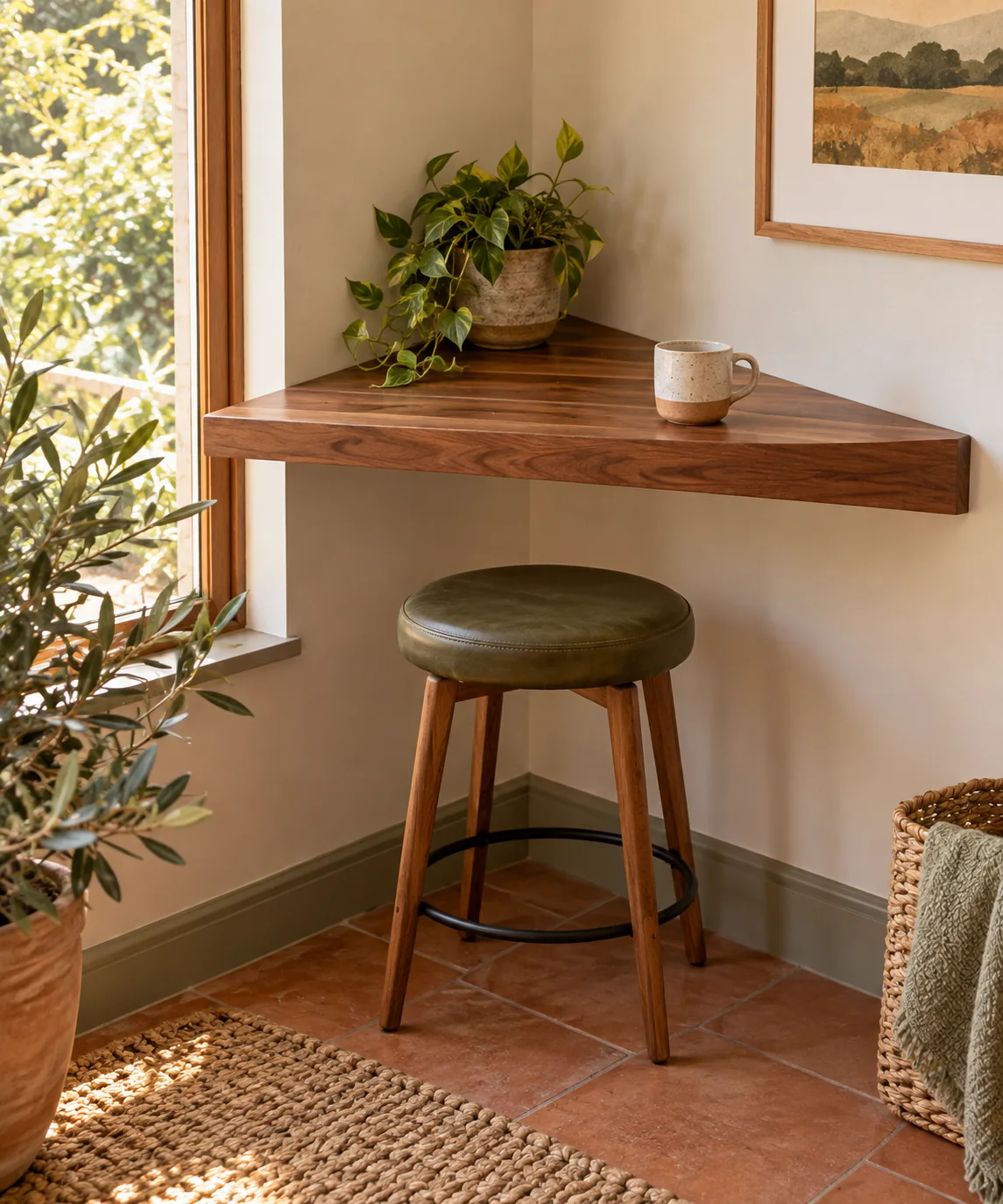
Calculating Proportions and Seating Clearances
A comfortable solo corner table typically requires wall-contact edges of roughly twenty-four to thirty inches along both sides, depending on the available wall span. This geometry provides an outward diagonal hypotenuse spacious enough for standard dishware, a beverage, and basic utensils without feeling cramped. Table heights generally follow standard dining heights around thirty inches or counter heights near thirty-six inches. Check that the surrounding floor provides adequate clearance for moving the seat back freely, ensuring you can sit down and stand up without bumping into adjacent furniture or walls.
Selecting Practical Wedge Surface Materials
Because corner surfaces sit directly adjacent to walls, they experience frequent dishware contact, localized heat, and daily wiping. Sealed hardwoods, durable composite boards with protected edge banding, or high-pressure laminates hold up well against condensation rings and routine food prep. Unsealed softwoods or porous unsealed stones can absorb oil and dark liquids quickly, requiring extra maintenance. Choosing a table design with a rounded or slightly eased front edge reduces sharp corners, making navigation through tight studio layouts more comfortable.
Integrating Stool Storage Below the Wedge
One of the chief advantages of a corner wedge table is its compact vertical efficiency. Pairing the surface with a backless stool or slim chair that nests entirely underneath the table edge keeps walkways unobstructed when mealtime is over. Measure the clearance between the floor and the underside of the table apron or support frame to ensure sufficient thigh room and stool fit. Keeping seating tucked cleanly beneath the tabletop prevents the corner from encroaching into primary walking paths.
Positioning Tableware and Lighting Responsibly
Room corners frequently sit outside the direct illumination of central ceiling fixtures, making supplemental lighting important for dining or reading. Rather than taking up precious floor space with a wide tripod lamp, consider a plug-in wall sconce or a directional task lamp plugged into an accessible wall outlet. Keep the dining surface functional by avoiding decorative tabletop clutter; use vertical wall organizers, magnetic boards, or nearby shelving for everyday accessories rather than staging decorative objects across the compact wedge.
Evaluating Geometry Trade-offs and Single-User Limits
Triangular corner tables involve noticeable functional compromises that suit specific living situations. The narrowing rear corner creates a deep, tapering angle where small items can be awkward to retrieve if pushed too far back. Additionally, the compact geometry is inherently optimized for a single diner; attempting to accommodate two people around a small corner wedge creates overlapping place settings and cramped seating. In spaces where hosting guests is a priority, consider pairing this dedicated solo perch with a secondary fold-down or drop-leaf table.
YOUR STARTING POINT
A little checklist.
Original editorial guidance. Images are AI-generated concepts, not photographs of completed projects. Our sources and approach.
Questions to consider
Can two people share a triangular corner dining table?
Generally, no. Triangular corner tables under thirty-six inches along each wall force knee and elbow conflicts between two diners. Reserve this geometry for solo meals, studying, or compact morning coffee routines in space-constrained studio apartments.
What is the best depth for the front diagonal edge?
A front edge measuring roughly thirty-four to forty-two inches across the diagonal hypotenuse provides comfortable arm clearance, providing room for a standard ten-inch dinner plate, silverware, and a drinking glass simultaneously.
How do I prevent items from sliding behind the corner wedge?
Select a tabletop design that fits tightly against the adjoining walls, or add a short two-inch perimeter lip along the rear edges. This prevents cutlery, napkins, and crumbs from falling down behind the furniture.