Garden Tool Organization · THE GUIDE
Anchor a Wooden Pallet Vertically to Corral Long-Handled Garden Tools
Long-handled garden tools like rakes, spades, and hoes frequently create hazardous clutter when propped loosely against shed walls. Repurposing a wooden shipping pallet into an upright tool corral organizes these implements vertically while occupying under two square feet of floor space. The existing structural slats form natural dividers that separate tool heads and keep shafts contained safely upright. Positioned neatly in an out-of-the-way utility corner, this arrangement prevents tools from sliding sideways or tangling together. By planning handle orientation and stability, gardeners establish a predictable station for everyday landscape equipment.
Jump to the checklist ↓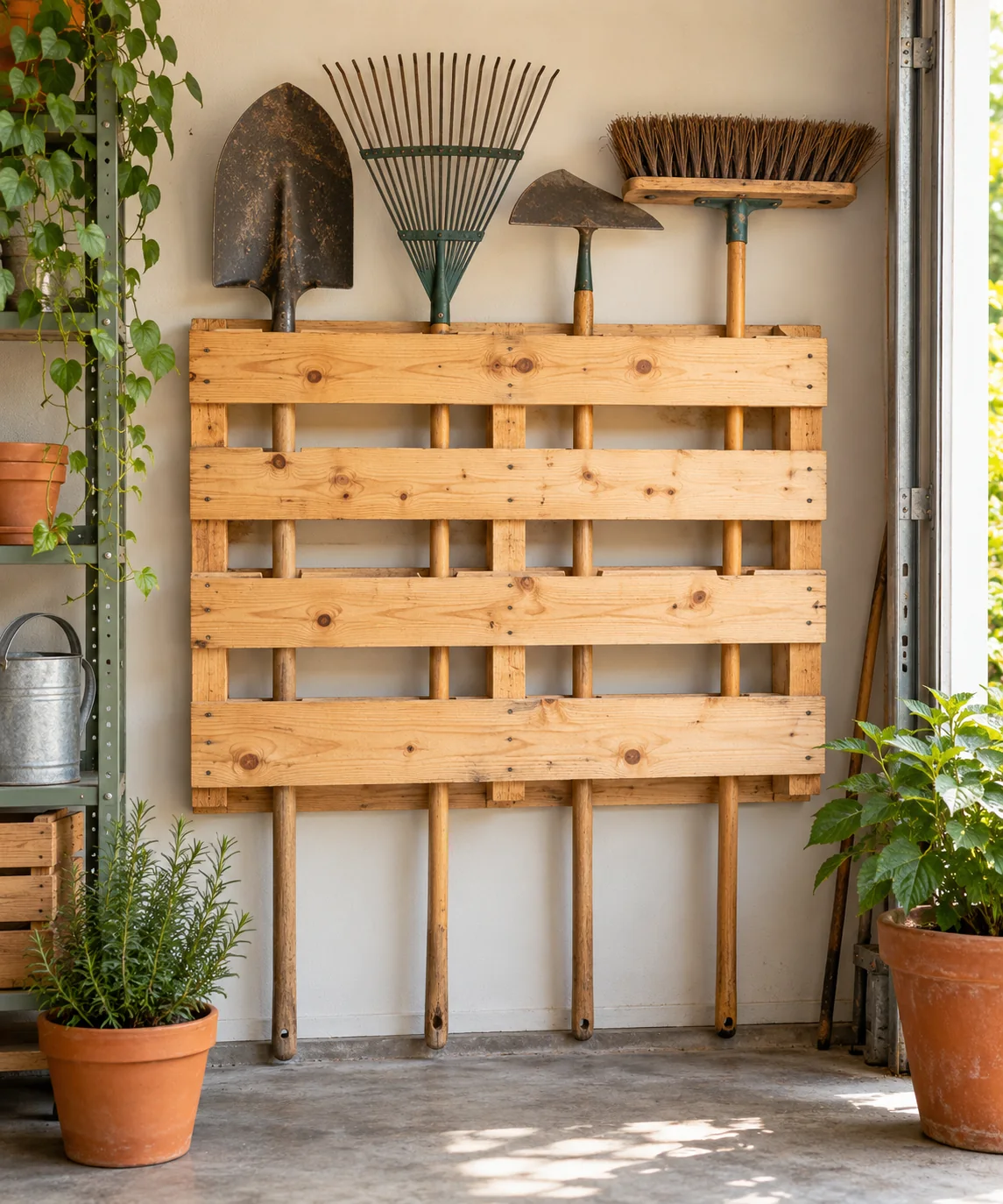
Selecting and Inspecting Reclaimed Pallet Wood
Check for the HT (heat-treated) stamp to ensure the pallet was not chemically treated with methyl bromide. Inspect timber thoroughly for cracks, loose nails, rot, or bowed runners. Sand rough surfaces to minimize splinter hazards during tool retrieval. Pallets that show compromised central stringers or split crossboards should be avoided, as they lack the rigidity needed to hold the weight of multiple resting tools.
Assessing Wall Support and Tip-Over Risks
A vertical pallet loaded with long-handled tools is inherently top-heavy. Relying merely on corner placement or floor shims without positive mechanical restraint creates a serious tipping hazard if bumped or pulled. Assess the intended shed or garage wall to identify structural framing, such as wall studs or solid masonry, that can securely receive appropriate heavy-duty fasteners or brackets rated for the total load. If permanent mechanical fastening is not feasible in a rented space, consider freestanding commercial tool stands designed with wide, weighted bases rather than attempting an unfastened pallet setup.
Arranging Tools for Balance and Clearance
Plan tool placement to maintain balance and prevent implements from tangling. Long garden tools such as rakes, hoes, and spades should be slotted with handles downward and tool heads resting supported above the upper slats, keeping cutting edges visible and off the floor. Alternate wide-headed tools like lawn rakes with narrower implements like edging spades to avoid crowding. Ensure the storage location offers adequate vertical clearance above the frame so long handles can be lifted out smoothly without hitting overhead joists, light fixtures, or roof trusses.
Partitioning Internal Channels for Handle Control
The open interior cavity of a pallet can allow tool shafts to slide sideways, cross over, or bind against internal runners. Adding vertical dividers, such as smooth scrap timber strips or rigid dowels positioned between the front and rear faceboards, creates distinct vertical lanes for individual handles. Ensure each partitioned opening provides sufficient clearance for the thickest tool grip to slide in and out without snagging. This compartmentalization prevents multiple tools from collapsing together inside the frame.
Moisture Mitigation and Long-Term Maintenance
Direct contact with damp concrete floors or wet ground can draw moisture into pallet wood, leading to softening, mold, and premature failure. Elevating the base on non-porous rubber risers or placing an impermeable utility mat beneath the footprint helps isolate the timber from rising damp. Wipe excess soil and moisture from tool blades before placing them into the corral to keep dirt from accumulating inside the internal slots. Routinely inspect the frame, fasteners, and timber condition to ensure the assembly remains stable and sound over time.
YOUR STARTING POINT
A little checklist.
Original editorial guidance. Images are AI-generated concepts, not photographs of completed projects. Our sources and approach.
Questions to consider
Can an upright pallet safely hold tools without being attached to a wall?
No. A freestanding pallet loaded with long-handled tools is inherently top-heavy and presents a significant tip-over hazard if bumped or during tool removal. Upright storage of this type requires secure fastening into solid wall framing or masonry using appropriate structural hardware, rather than relying on balance or corner wedging.
How should tool capacity be determined for a pallet organizer?
Capacity depends on tool head dimensions, overall weight, and the structural integrity of the pallet. Avoid packing tools tightly together, as overlapping rake tines and shovel blades make removal awkward and can pull neighboring tools loose. Allow enough lateral spacing between implements so each tool lifts vertically without snagging.
How do I identify if a wooden pallet is safe for indoor garden storage?
Look for an official IPPC stamp with the letters HT, signifying the wood was heat-treated rather than fumigated with chemicals. Avoid pallets marked MB (methyl bromide), pallets stained with oil or unknown agricultural chemicals, and units with rotted wood, loose fasteners, or cracked structural stringers.