Warm Neutral Living Rooms · THE GUIDE
Anchor an Indoor Rubber Tree in an Unused Living Room Corner
Empty living room corners frequently become visual dead zones or default holding spots for miscellaneous household clutter. Introducing an indoor rubber tree (Ficus elastica) transforms a vacant corner into an organic architectural focal point. Its broad, glossy foliage introduces deep natural green that grounds soft beige, ecru, and taupe palettes without overwhelming subtle furnishings. Positioned alongside a low-slung lounge chair, a tall specimen provides vertical scale and soft balance. With appropriate placement and basic container management, this resilient plant delivers enduring structure to neutral spaces.
Jump to the checklist ↓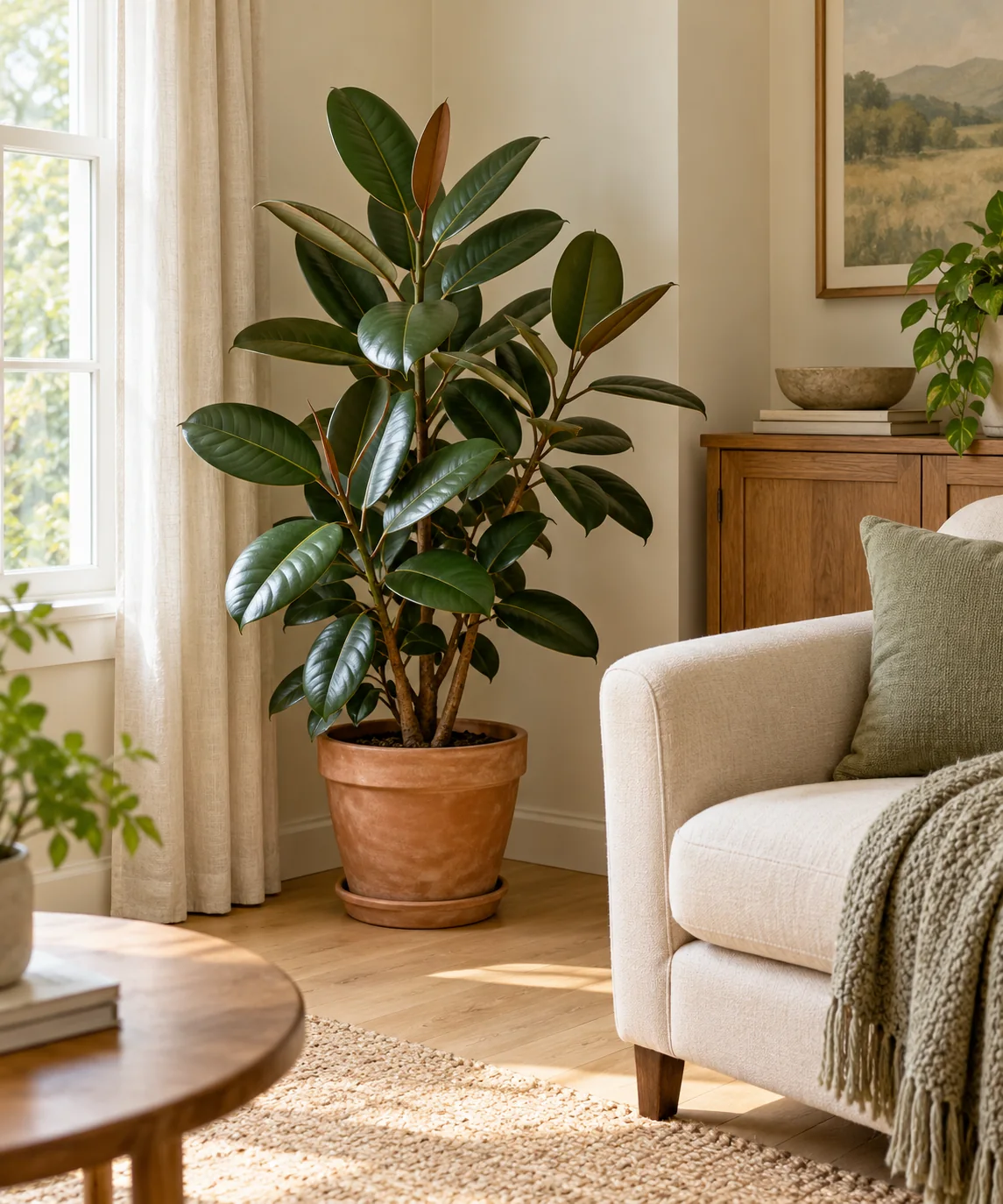
Assessing Natural Light in Corner Spaces
Ficus elastica thrives in consistent, bright indirect daylight and will struggle in dim recesses. Corners positioned adjacent to east- or south-facing windows usually offer ideal illumination without direct scorching heat. If your corner sits farther from natural light sources, test ambient brightness by observing clear shadows at midday. Avoid placing the foliage directly against exterior glass or near active heating vents, as drafts cause premature leaf drop. Ensure ambient airflow circulates around the canopy to maintain healthy leaf transpiration.
Balancing Proportions Beside Low Seating
Pairing a vertical plant with low-profile furniture requires careful attention to proportional heights. A rubber tree standing four to six feet tall creates an appealing counterweight to an ecru armchair or linen chaise. The vertical trunk lifts the eye upward, highlighting ceiling height while anchoring the lower seating cluster. Allow at least eight to twelve inches of clearance between the outer foliage and the armchair frame so users can sit comfortably without brushing against broad leaves or tipping the vessel.
Selecting Containers and Floor Protection
A heavy, unglazed terracotta or neutral ceramic vessel complements warm neutral rooms while keeping top-heavy trees stable. Ensure the pot features a clear drainage hole, and pair it with a deep matching saucer to protect flooring. Hardwood and wool rugs require protection from moisture seepage, so position a breathable cork pad or low wheeled caddy beneath the saucer. A low plant stand elevates smaller specimens, achieving proper corner height without needing an overly large, heavy pot immediately.
Leaf Care and Dust Management
The broad, thick leaves of the rubber tree naturally collect ambient household dust, which diminishes their gloss and impairs light absorption. Wipe both sides of each leaf once a month using a soft cloth dampened with room-temperature water. Skip commercial leaf-shine sprays, which can clog stomata and attract additional airborne particulate. Inspect the lower stem nodes during routine cleaning to monitor stem stability and remove naturally yellowed baseline foliage to preserve a clean, sculptural silhouette.
Pruning and Directional Rotation
Indoor rubber trees tend to lean toward the strongest source of natural light over time. Rotate the container a quarter turn every two weeks during routine watering to encourage upright, symmetrical growth. If a single branch outgrows the allotted corner boundaries, prune the stem just above a leaf node using sharp bypass shears during early spring. Strategic pruning controls lateral spread, maintains comfortable walkway clearances, and prompts dense foliage along the main central stem.
YOUR STARTING POINT
A little checklist.
Original editorial guidance. Images are AI-generated concepts, not photographs of completed projects. Our sources and approach.
Questions to consider
How often should an indoor rubber tree receive water?
Water thoroughly only when the top two to three inches of potting soil feel dry to the touch. Always drain excess water from the catchment tray within thirty minutes to prevent root saturation.
Can a rubber tree survive in a windowless corner?
No. Rubber trees need ample bright, indirect natural light to photosynthesize and retain their broad foliage. Without adequate window light nearby, stems stretch weakly, growth stalls, and baseline leaves drop quickly.
What should I do if lower leaves drop off?
Occasional loss of the lowest leaves is normal as the plant matures. If shedding is rapid, check for overwatering, cold window drafts, or insufficient light, and adjust the corner placement accordingly.