Dining Nooks · THE GUIDE
Anchor an Open-Plan Dining Nook with a Slim Low-Profile Bench
Open-plan layouts offer spaciousness and natural light, but delineating specific zones without heavy walls or bulky furniture can prove challenging. A slim, low-profile bench provides an effective visual and physical anchor for a dining nook in combined living spaces. By maintaining a low vertical line, a backless bench defines the dining perimeter without bisecting window light or disrupting sightlines across the room. Integrating this versatile piece requires strategic alignment against perimeter walls or sofa backs, proper scale calibration relative to the dining table, and thoughtful material choices that balance clean minimalism with practical sitting comfort.
Jump to the checklist ↓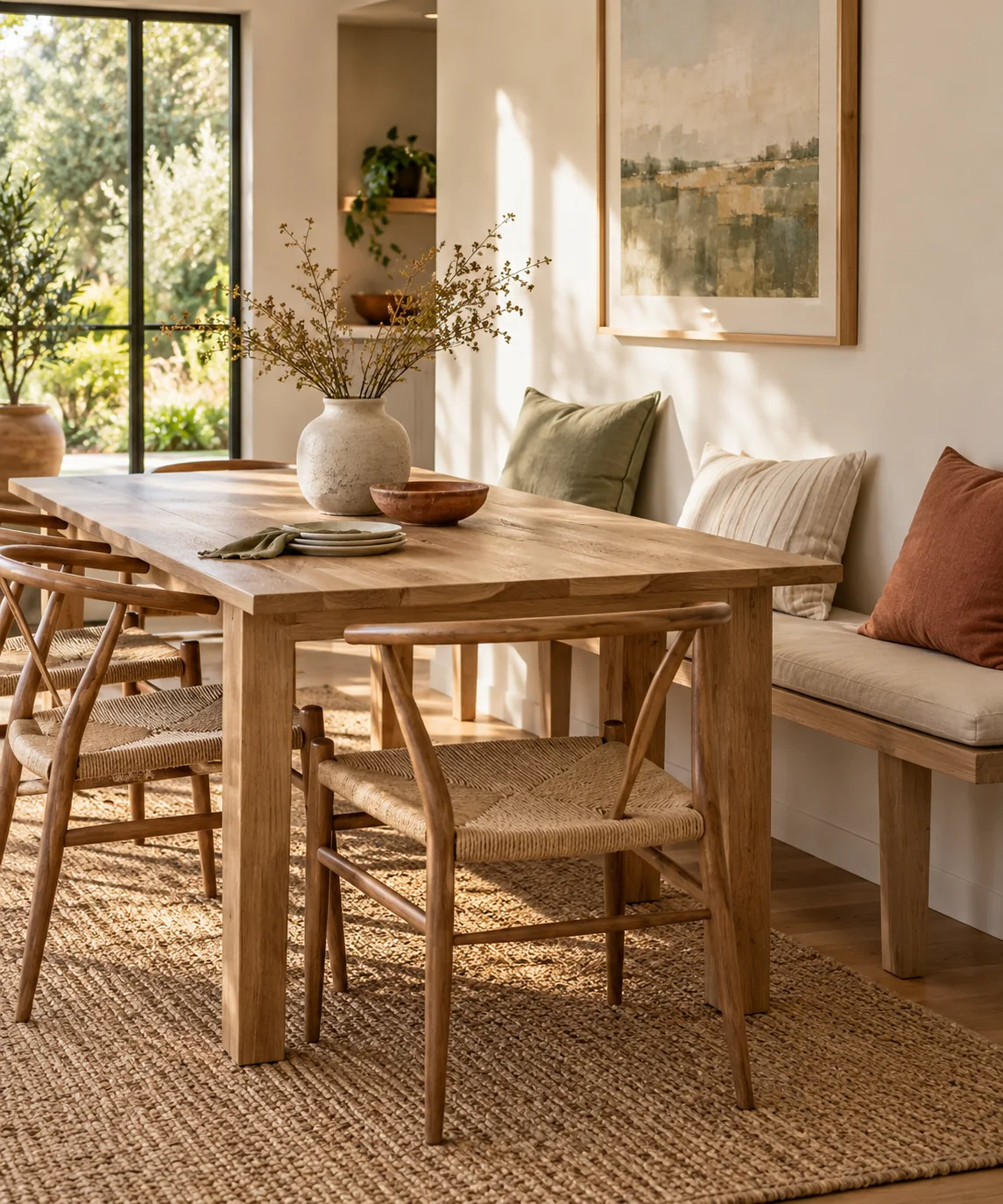
Defining Boundaries Without Visual Clutter
In an open living area, tall chair backs can create visual barriers that slice the room into awkward segments. A low-profile, backless bench establishes a clean horizontal plane that grounds the dining nook while allowing uninterrupted views across living and dining zones. Positioned along a wall or backing up to a low-profile sofa, the bench delineates where lounging ends and dining begins. This subtle boundary creates functional structure while keeping the overall room feeling open, cohesive, and bright.
Scale and Proportions for Dining Benches
Proportion is vital when pairing a bench with a rectangular dining table. The bench length should match or measure slightly shorter than the distance between the table legs, allowing it to slide completely underneath when not in use. A standard dining bench sits between 17 and 19 inches high, with a slim seat depth of 12 to 15 inches. This restrained footprint preserves surrounding floor space while providing stable, comfortable support for both adults and children during meals.
Managing Walkway Clearance in Open Rooms
Benches can streamline perimeter circulation compared to traditional dining chairs because they tuck flush beneath the tabletop when not occupied, avoiding protruding rear legs. While standard chairs generally require wider surrounding space to pull out and stand comfortably, a tucked bench conserves space when stationary. However, primary household thoroughfares still require adequate room to pass comfortably without brushing against furniture. Test your specific room traffic to ensure moving past the seated nook feels natural and unhindered.
Upholstery Selection and Daily Maintenance
Because a dining bench experiences frequent use and potential food spills, prioritize resilient and easily cleanable materials. Solid hardwoods like oak, ash, or maple offer timeless durability and wipe clean with a slightly damp cloth. If you desire seated cushioning, choose removable, tie-on bench pads covered in tightly woven canvas, performance linen, or wipeable leatherette. Avoid fixed deep-button tufting or loose woven fabrics that trap crumbs and require labor-intensive spot extraction.
Trial Layouts Using Painter Tape
Before moving heavy furniture into an open layout, outline the bench and table dimensions on your floor using painter tape. Walk through your usual daily routines—moving from sofa to kitchen, watering plants, or accessing patio doors—to ensure the taped perimeter leaves comfortable clearance. Sit on a portable storage ottoman or step stool at the marked bench location to confirm that dining sightlines feel comfortable and do not conflict with room focal points like television screens or windows.
YOUR STARTING POINT
A little checklist.
Original editorial guidance. Images are AI-generated concepts, not photographs of completed projects. Our sources and approach.
Questions to consider
Can adults sit comfortably on a backless bench for long dinners?
While backless benches work well for everyday meals, long multi-course dining may fatigue lower back muscles. Add firm, high-density foam cushions or place the bench against a flat wall where diners can lean back comfortably.
How many people can realistically fit on a standard dining bench?
A four-foot bench comfortably seats two adults, while a five-foot bench can accommodate three children or two adults with ample elbow room. Allow 20 to 24 inches of lateral bench length per person.
Does a dining bench make the room look too casual?
A streamlined wood or leather bench adds tailored structure rather than informal clutter. When paired with sculptural end chairs and clean tableware, the bench introduces crisp architectural lines that elevate an open-plan aesthetic.