Small Balcony Layouts · THE GUIDE
Anchor Balcony Corners with Heavy Square Fiberclay Planters
High-rise balconies frequently experience exposed conditions where wind movement and spatial limits make container selection challenging. Placing square composite planters in recessed corner zones is an established styling approach for framing an outdoor area without cluttering primary walkways. Fiberclay, a blend often made from fiberglass mesh and mineral slurries or clay composites, provides a rigid structure with manageable handling weight. When planning container placement, working within building regulations and consulting property management regarding weight thresholds helps ensure corner arrangements remain practical, stable, and compliant with residential rules.
Jump to the checklist ↓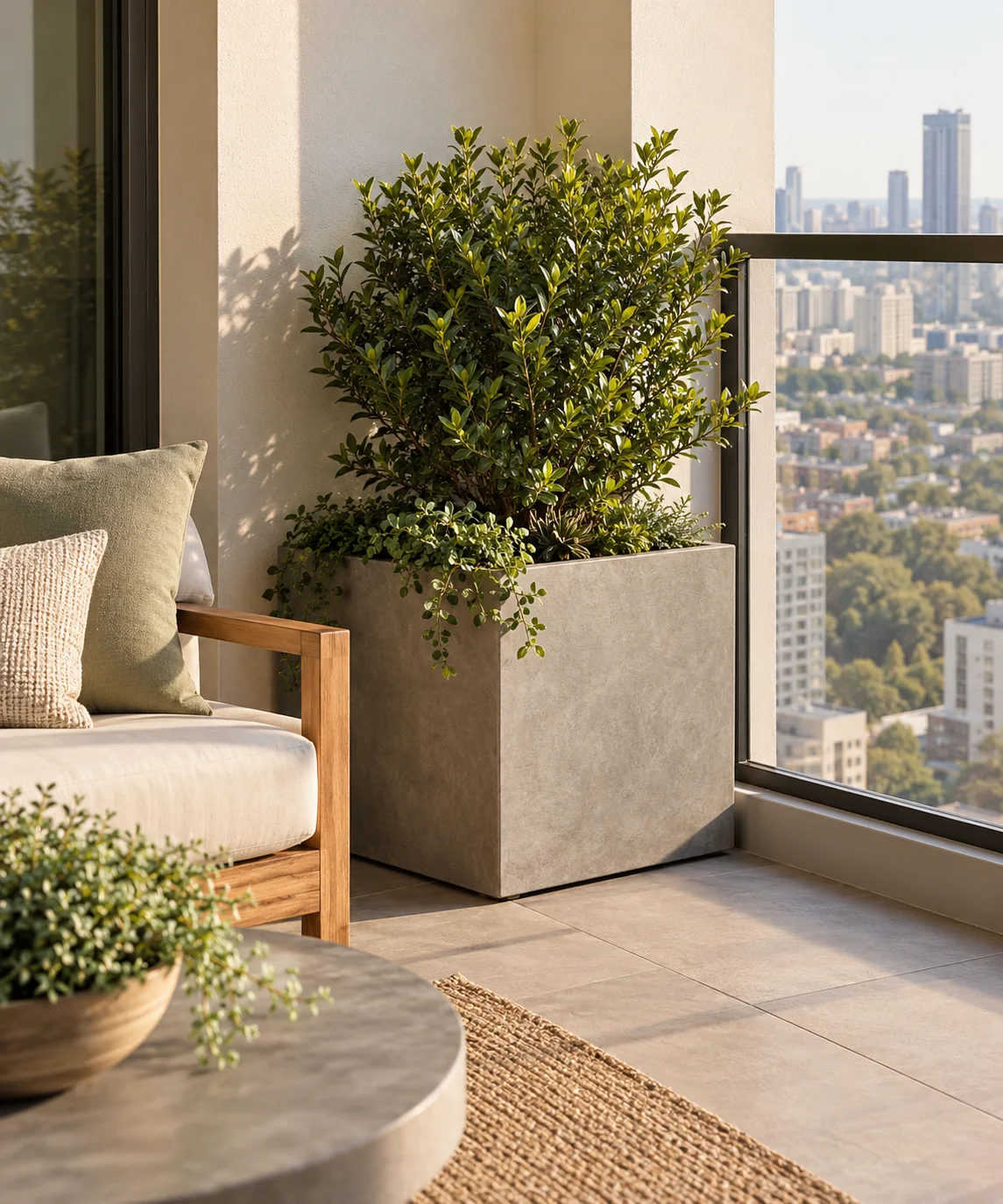
Corner Placement and Environmental Exposure
Balcony corners often serve as natural anchor points for outdoor arrangements because two intersecting walls offer a defined visual boundary. Positioning a square container in an inner corner keeps the footprint compact and out of primary traffic paths compared to irregular or rounded pots. However, corner zones do not eliminate wind exposure or turbulence along tall building facades. Container stability depends on base dimensions, total potted weight, plant profile, and ambient wind conditions rather than corner placement alone. Maintain a modest gap between the container and exterior walls to prevent scuffing finishes and to permit air circulation.
Structural Load Considerations and Planting Media
While empty fiberclay containers are generally lighter to maneuver than solid cast concrete, wet potting soil, drainage water, and mature root systems add significant mass over time. Balcony load capacities vary widely depending on building age, construction type, and local building codes. Never estimate slab capacity independently; consult your property management, homeowners association guidelines, or a qualified structural professional before introducing large planters. To manage interior mass sensibly, use standard lightweight, well-draining potting blends containing perlite, vermiculite, or composted bark rather than dense topsoil or heavy stone drainage layers.
Layout Planning and Egress Routes
Before purchasing sizable containers, assess the layout to ensure open movement across the balcony floor. Clear pathways are critical for daily use and emergency access. A practical way to preview spatial impact is by placing a temporary cardboard template matching the planter's dimensions into the designated spot. Observe whether the footprint interferes with door swings, furniture clearance, or clear sightlines. Ensure the container sits securely on a flat, level surface and does not create an awkward pinch point or restrict unobstructed access to exits.
Surface Protection and Drainage Verification
Moisture trapped beneath flat-bottomed planters can discolor deck tiles, corrode coatings, or stain concrete balcony slabs over time. Using non-staining pot feet or low-profile rubber risers slightly elevates the planter base, facilitating drainage and allowing the surface below to dry. Ensure drainage holes remain open by covering them internally with small mesh screens to keep potting media from washing out. Check that drainage water flows freely toward existing balcony scuppers or floor drains without pooling against building thresholds or running over perimeter edges onto lower units.
Plant Selection and Seasonal Care
Container plantings on elevated balconies face intense sun exposure, temperature swings, and sudden gusts. Selecting compact, wind-tolerant plants with flexible stems—such as dwarf ornamental grasses or low-growing woody perennials—helps reduce the sail area that can catch wind and destabilize the pot. In regions with freezing winters, fiberclay can absorb moisture and develop hairline surface fissures if wet soil freezes and expands. Reduce watering in late autumn, verify that drainage holes are clear of root plugs, and move tender plantings to sheltered areas if severe freezes are anticipated.
YOUR STARTING POINT
A little checklist.
Original editorial guidance. Images are AI-generated concepts, not photographs of completed projects. Our sources and approach.
Questions to consider
How does fiberclay compare to traditional terracotta or concrete?
Fiberclay incorporates fiberglass reinforcement with composite minerals, making it easier to handle when empty than dense cast concrete. However, durability and overall weight vary by manufacturer, and all filled planters become substantially heavier once saturated with water.
Can corner planter placement prevent containers from tipping over?
No. While corner walls offer two boundaries, gusts can swirl within balcony recesses. Stability depends on the container's base-to-height ratio, the overall mass of the soil, and the wind resistance of the plant foliage.
How should fiberclay planters be maintained over time?
Clean outer surfaces periodically with a soft cloth, water, and mild detergent to prevent dirt buildup. Avoid wire brushes or harsh chemical cleaners that could degrade surface sealants, and inspect drainage holes regularly to prevent standing water.