Patio Seating Ideas · THE GUIDE
Angled Reading Chair with Footrest for Sheltered Porch Corners
Sheltered porch alcoves often become underutilized pockets where irregular angles and limited clearances complicate standard outdoor furniture arrangements. Placing a compact, armless lounge chair paired with an independent low footrest into these architectural recesses creates a practical seating nook without blocking primary traffic paths. Setting the seat on a gentle diagonal follows natural sightlines toward the open porch or yard rather than facing an enclosure wall directly. By selecting low-profile frames and versatile footstools, you preserve comfortable seating area while respecting the physical boundaries, door swings, and clearance requirements of a covered porch setting.
Jump to the checklist ↓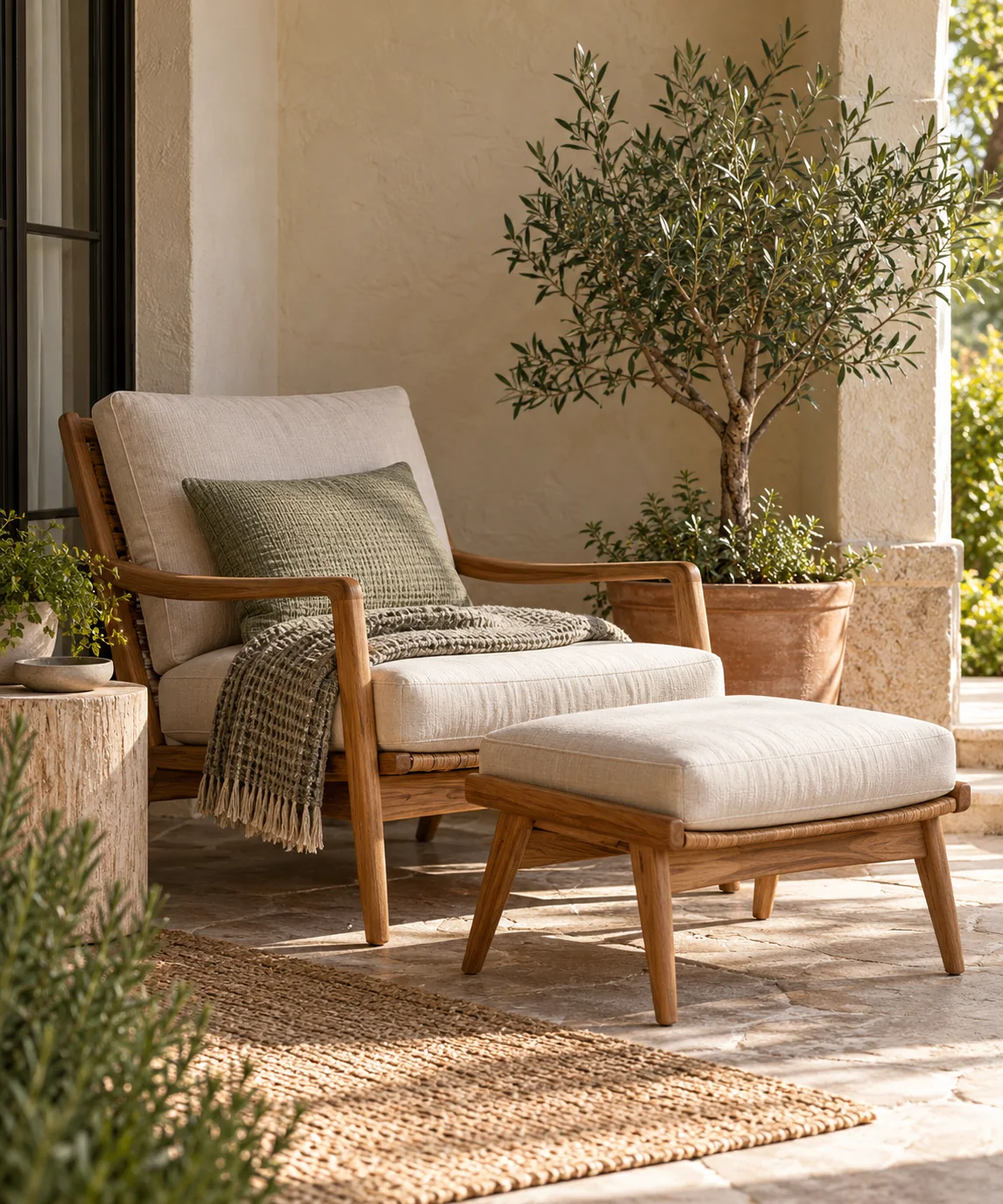
Orienting Seating for Alcove Proportion and Circulation
Placing a deep chair square against an alcove wall can crowd the perimeter and leave awkward gaps along adjacent corners. Angling the chair diagonally across the corner opens up visual space, directs sitting orientation outward toward natural light, and helps preserve open floor area along the main porch pathway. Before settling on a permanent layout, test the angle while walking past with typical items like trays or laundry baskets to verify that egress routes remain completely unobstructed. This angled approach accommodates human movement more naturally than rigid perpendicular arrangements in tight porch niches.
Selecting Armless Profiles to Conserve Usable Width
Wide armrests on traditional patio lounge chairs can consume considerable lateral room without adding functional sitting surface, which quickly overcrowds narrow porch alcoves. Choosing an armless silhouette maintains a generous seat cushion while reducing the overall footprint of the frame. Open sides also simplify ingress and egress in tight spaces, allowing you to slide comfortably into the seat from the front or side without bumping elbows against rigid framing. Review manufacturer frame dimensions carefully against your measured porch alcove before purchasing to confirm adequate perimeter clearance.
Coordinating Footrest Spacing and Walkway Safety
A separate footrest or low ottoman provides versatile support without locking you into the fixed footprint of a chaise lounge. Position the footrest far enough from the seat to permit easy standing and sitting, adjusting the distance to suit personal comfort while keeping clear of screen door swings and porch stairs. Selecting an ottoman with a firm, level cushion or flat slatted surface allows it to double as a temporary tray rest when extra tabletop space is needed. For safety, ensure the footrest is easy to shift aside whenever wider pathway clearance is required.
Maintaining Wall Clearance and Moisture Management
Covered porch alcoves can experience reduced natural air movement, which slows drying times after periods of high ambient humidity or wind-driven rain. Avoid pushing furniture flush against exterior cladding, siding, or stucco. Maintaining a visible gap between the chair frame and the wall allows ambient air to circulate freely around back cushions and helps protect exterior wall finishes from abrasion or trapped moisture. Keep furniture positioned away from wall penetrations, dryer exhaust terminations, and roof drainage splash zones to prevent excessive moisture exposure.
Caring for Outdoor Textiles in Covered Corners
Because sheltered corners receive less direct sunlight and breeze than open patios, moisture from high humidity can linger in outdoor upholstery. Choose weather-resistant outdoor fabrics such as solution-dyed acrylics or olefins, and verify that foam inserts feature open-cell or quick-draining construction. During prolonged damp weather or seasonal non-use, tilt cushions upright on their edges to let water drain away from the seams, or store them in a dry indoor storage container. Check fabric care labels regularly for cleaning guidelines to prevent soot and surface mildew accumulation.
YOUR STARTING POINT
A little checklist.
Original editorial guidance. Images are AI-generated concepts, not photographs of completed projects. Our sources and approach.
Questions to consider
Why choose an armless chair over an armchair for a porch alcove?
Armless chairs provide open side access and maximize the usable cushion surface within a more compact overall frame footprint, making them well suited for tighter alcoves where armrests would constrict movement.
How should you determine spacing between an angled chair and an ottoman?
Test the spacing based on the user's leg length and ease of standing up, ensuring the footrest does not project into high-traffic porch pathways or interfere with adjacent door swings.
How can you protect porch furniture from dampness in sheltered corners?
Maintain space between the chair frame and exterior walls, select quick-drying outdoor foam and weather-rated fabrics, and store cushions in a dry indoor location during prolonged rainy weather.