Small Balcony Layouts · THE GUIDE
Arrange a High-Top Counter Bar Along the Railing
Solid balcony parapets offer privacy and acoustic buffering, but standard-height patio furniture can obstruct outward views across the surrounding landscape. Setting up a narrow, freestanding high-top table inward from the barrier provides a vantage point for working, reading, or enjoying meals. However, elevating furniture near perimeter edges introduces critical safety considerations, including maintaining effective guardrail protection, avoiding climbable hazards, and respecting property regulations. Before selecting or positioning elevated tables, consult building guidelines and local residential codes regarding balcony furniture heights, secure placement, and wind exposure.
Jump to the checklist ↓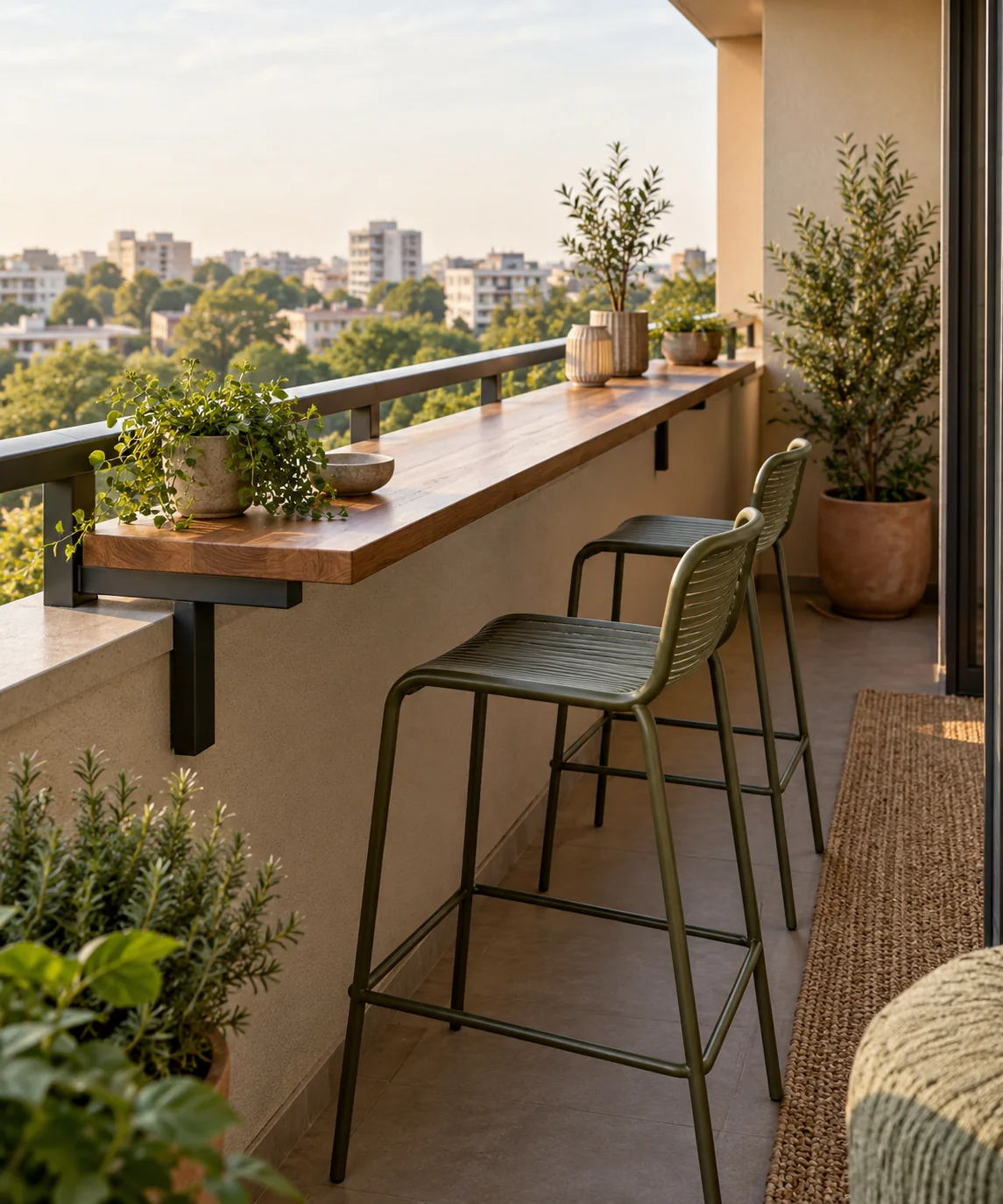
Assessing Railing Height and Fall Safety
Before introducing elevated furniture to a balcony, review local building codes and property bylaws regarding perimeter barrier heights. Standard residential guardrails and parapets are typically designed between 36 and 42 inches above the finished floor to prevent accidental falls. Placing tall stools or benches directly beside a perimeter wall can significantly reduce the effective protective height of the barrier and create climbing footholds for young children or pets. Position elevated seating well inward from the edge, verify that seated eye levels do not compromise personal comfort or safety, and confirm that your building permits high-top furniture along perimeter zones.
Freestanding Dimensions and Floor Clearances
Opt for a slender, freestanding table rather than clamping items directly onto the railing or masonry cap. A counter depth between 12 and 16 inches generally accommodates tableware or a laptop while preserving open floor space on narrow balconies. Measure door clearance arcs, window sills, and balcony egress pathways to confirm the furniture does not impede movement. Maintain enough circulation space behind seated areas so household members can traverse the balcony comfortably without squeezing past chairs or brushing against structural borders.
Addressing Wind Exposure and Furniture Stability
Balconies, particularly on upper floors, experience sudden gusting winds and updrafts that can shift or overturn outdoor furniture. While heavy materials like powder-coated steel, dense timber, or weighted bases offer greater resistance than lightweight plastic, no freestanding piece is completely impervious to extreme weather. Position the counter in an area shielded from prevailing drafts when feasible. Inspect the table regularly for wobble, use adjustable rubber feet to adapt to floor drainage slopes, and plan to fold, weight, or move pieces indoors whenever severe storms or seasonal gales are forecast.
Perimeter Setback and Drop Hazard Prevention
Objects falling from upper-level balconies present severe safety risks to pedestrians and property below. To mitigate this hazard, set the counter inward from the parapet face rather than flush against the perimeter. Avoid resting loose items, cups, glassware, or decorative objects along the table edge unattended. Choose tableware with non-slip bases, use weighted accessories, and remove all loose items immediately after dining. Never use the top of the parapet or railing as an auxiliary shelf for personal belongings or planter boxes.
Material Selection and Routine Upkeep
Exterior furnishings must endure temperature swings, ultraviolet radiation, and driving precipitation. Look for weather-rated finishes such as marine-grade aluminum, sealed hardwoods, or high-density composite materials that resist warping and corrosion. Check mechanical fasteners and joints periodically, as vibration from ambient breezes and daily use can loosen hardware over time. Clean surfaces regularly with mild detergent and water to remove urban dust, grime, and pollen, keeping the surface pleasant and ready for everyday use.
YOUR STARTING POINT
A little checklist.
Original editorial guidance. Images are AI-generated concepts, not photographs of completed projects. Our sources and approach.
Questions to consider
Why can high-top seating near a balcony railing be hazardous?
Elevated chairs and tables raise a person's center of gravity and can reduce the effective protective height of a guardrail. They can also create climbing hazards for children and increase the likelihood of objects falling over the edge.
Can I clamp a drop-leaf counter directly to a balcony railing or parapet?
Clamping furniture directly to railings often violates lease terms, condo bylaws, and exterior building codes. Freestanding tables that do not alter or stress perimeter structures provide a safer, fully reversible alternative when permitted.
How should high-top balcony furniture be managed during severe wind?
High-profile furniture is vulnerable to strong drafts and updrafts. During high-wind warnings or seasonal storms, lower or fold adjustable tables, bring loose stools indoors, and store lightweight items inside to prevent tipping.