Sage and Cream Interiors · THE GUIDE
Arrange a Studio Apartment Room Divider Using an Open Cream Bookcase
Dividing a studio apartment into distinct functional zones often involves balancing personal privacy with natural light distribution. An open cream bookcase can serve as an adaptable, low-impact room partition that separates sleeping and living areas while letting daylight pass through backless shelves. Choosing lighter finishes helps reflect ambient light across single-exposure apartments. However, using shelving as a freestanding room divider requires careful attention to unit proportions, physical stability, and household safety, particularly regarding tip-over hazards in open living areas.
Jump to the checklist ↓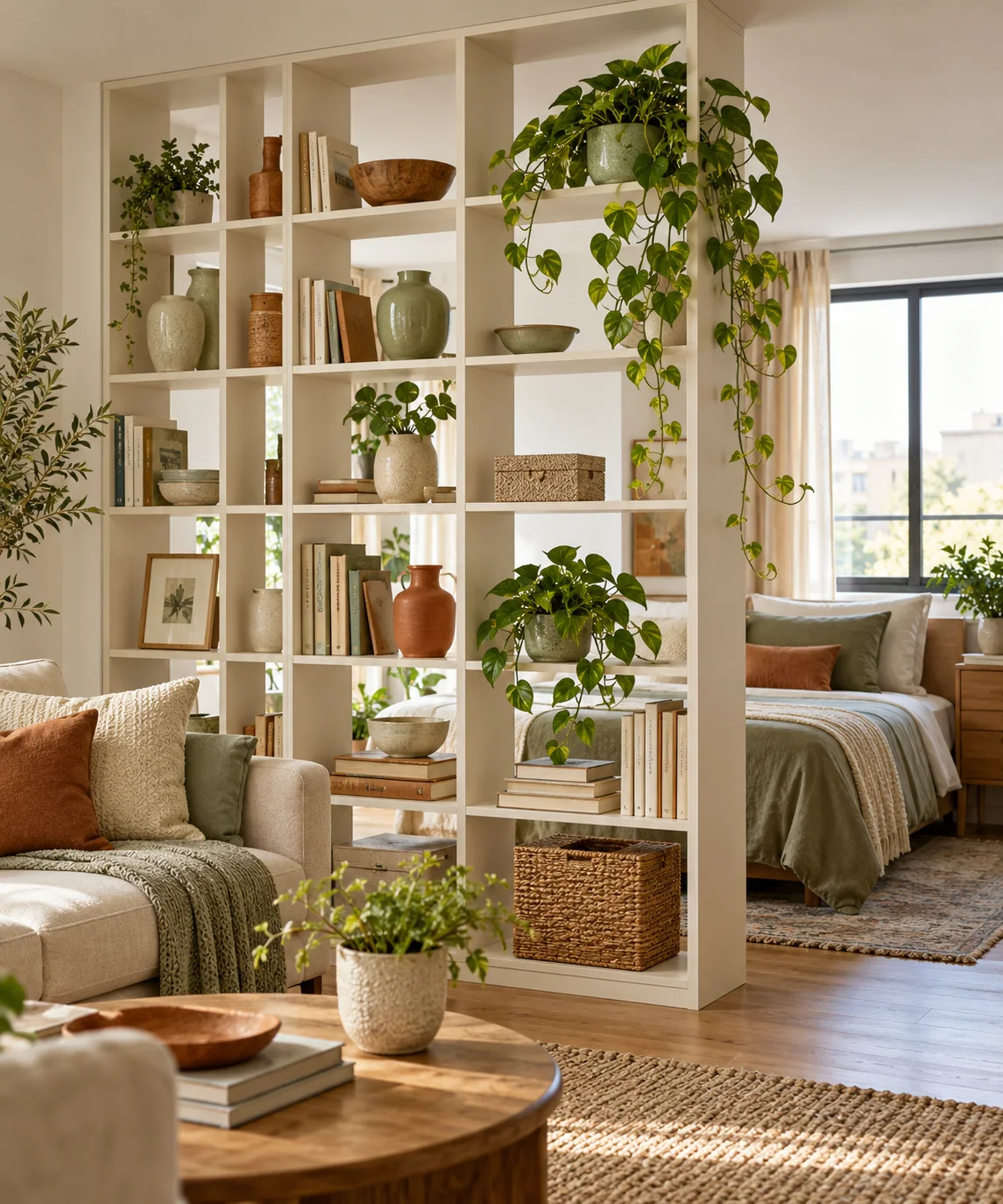
Positioning Shelving for Daylight and Smooth Circulation
Positioning an open bookcase perpendicular to primary windows helps capture natural daylight and distribute it between zones without casting heavy shadows across the studio. When planning the layout, ensure that walkways around the shelving remain comfortable and completely unobstructed for daily movement. Avoid crowding entryways, closet doors, or emergency exit paths. Arranging the divider so the sleeping area is shielded from direct sightlines at the front door provides a sense of separation while keeping traffic flowing naturally throughout the apartment.
Balancing Open Negative Space with Display Items
An open-backed shelving partition works best when items are arranged with intentional restraint rather than packed completely full. Leaving a generous portion of each shelf empty allows light to filter through the unit and preserves visual continuity across the studio. Cluster books and decorative objects in small groupings, alternating them with open shelf areas. This open spacing prevents the unit from feeling like an imposing solid barrier while still visually demarcating the transition from living room to bedroom.
Two-Sided Styling with Neutral Tones
Because both sides of a freestanding partition are visible, each shelf arrangement should be composed thoughtfully from every angle. Use cream ceramics, muted sage accents, and finished bookends that present clean outlines from both the front and rear. Rather than facing all book spines in a single direction, consider alternating orientations or placing sculptural objects centrally within shared openings. This creates a cohesive, finished appearance whether viewed from the bed or the sofa.
Incorporating Trailing Houseplants Safely
Tolerant trailing houseplants, such as pothos or heartleaf philodendron, add soft texture and modest visual screening to the divider frame. Position plants on sturdy mid-level shelves where their trailing foliage can drape without interfering with walking paths. Always place planters in watertight catch pots or saucers to prevent moisture from seeping into shelf surfaces or dripping onto books below. Monitor plant health regularly and trim back long vines so they do not catch on passing clothing.
Assessing Unit Proportions and Tip-Over Safety
Using tall, narrow bookcases as unanchored freestanding room dividers introduces serious tip-over hazards, particularly if bumped or subjected to vibrations. For freestanding setups where wall anchoring is not possible, opt for low- or mid-height shelving units with wide, sturdy base footprints. Avoid tall, top-heavy bookcases unless they are securely anchored in accordance with manufacturer instructions and building rules. Even with lower units, place the heaviest items—such as large books or dense storage boxes—on the lowest shelves to maintain a low center of gravity.
YOUR STARTING POINT
A little checklist.
Original editorial guidance. Images are AI-generated concepts, not photographs of completed projects. Our sources and approach.
Questions to consider
Is it safe to use a tall bookcase as a freestanding room divider?
Tall, narrow bookcases placed away from walls carry substantial tip-over risks unless securely anchored. For unanchored partitions, select lower-profile units with broad bases, or consult manufacturer guidelines and lease terms regarding approved anti-tip restraint systems.
What shelving height works well for dividing a studio apartment?
Waist- to chest-height shelving units typically provide clear spatial separation between seating and sleeping areas while maintaining open sightlines and preserving natural light transfer across the room.
How can I conceal small everyday items in an open shelving unit?
Place shallow fabric or woven baskets in the lower shelf compartments. These bins keep personal clutter out of view while presenting neat, double-sided surfaces to both sides of the studio.