Sage and Cream Interiors · THE GUIDE
Arrange a Wall-Hung Herb Drying Rack in a Well-Ventilated Kitchen
Drying fresh garden herbs on an exposed wall rack combines seasonal culinary preservation with understated interior styling. A cream-painted shaker rail equipped with wooden pegs introduces a functional focal point that complements sage-accented kitchens. Proper air circulation and deliberate placement away from stove heat, cooking grease, and harsh direct sunlight are essential to preserve delicate essential oils and leaf color. By bundling small stems loosely with natural cotton twine and staggering their placement, you can dry culinary harvests efficiently while adding natural texture to empty kitchen wall spaces.
Jump to the checklist ↓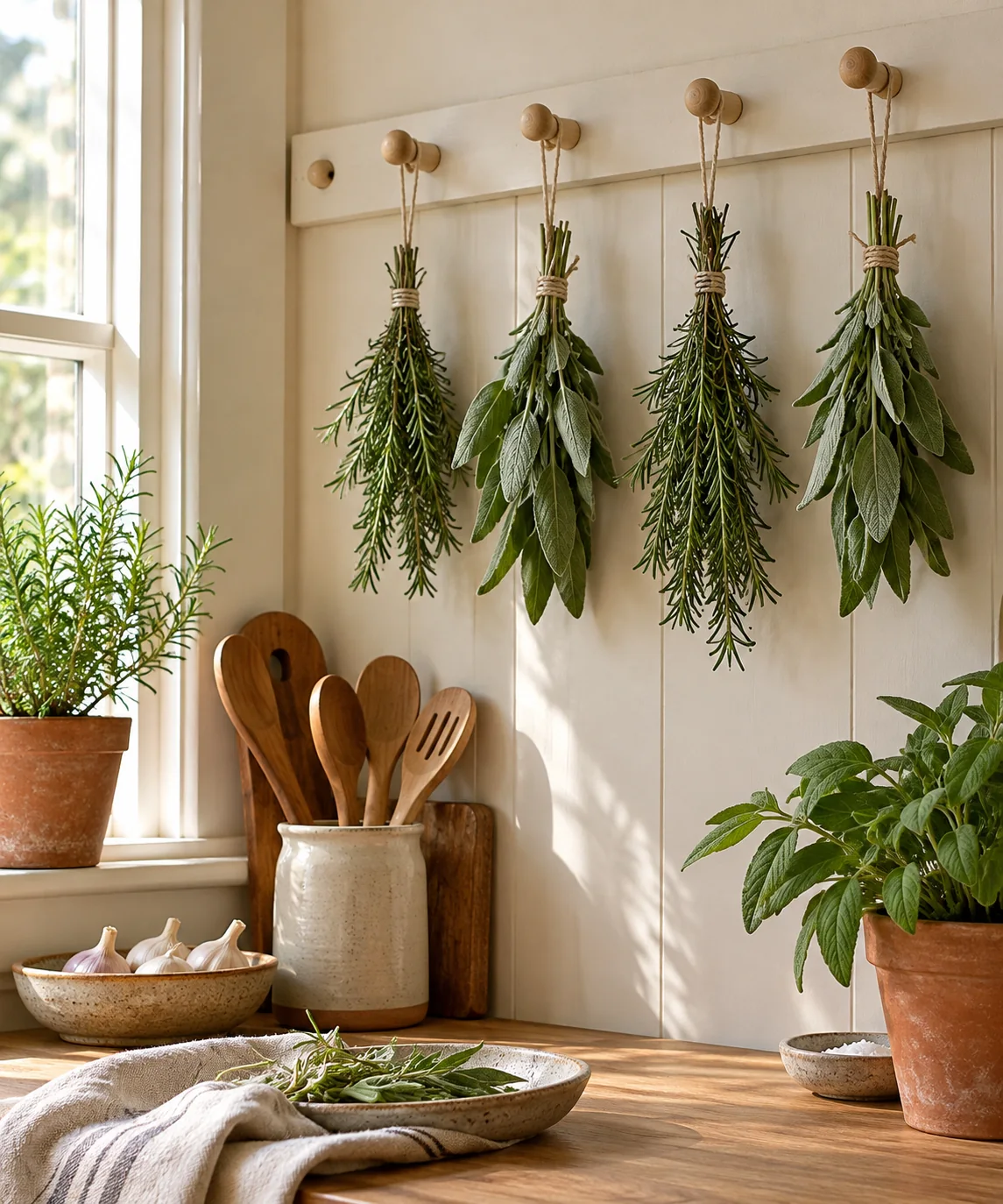
Selecting the Kitchen Location
Choose an interior wall that receives steady, gentle airflow and indirect natural light, well away from heavy kitchen traffic. Avoid positioning the rack directly above or adjacent to a cooktop, kettle, or dishwasher where steam, humidity fluctuations, and airborne grease can settle onto the herbs and foster mold growth. Similarly, avoid draft-free recesses or tightly enclosed corners where stagnant air delays moisture evaporation. A calm stretch of wall across from an open doorway or near a well-ventilated dining area allows moisture to dissipate gradually while keeping stems clean and readily accessible.
Preparing and Sizing Herb Bundles
Gather healthy, dry stems during morning hours once any surface moisture or condensation has fully evaporated. Gently inspect the cuttings to shake away garden dust or debris before assembling them for the drying rail. Strip the foliage from the bottom inch or two of each stem to create a clean surface for tying. Assemble the stems into modest clusters rather than dense handfuls, as overly thick bunches retain moisture deep inside the bundle and dry unevenly. Keeping bundles small ensures air can circulate through the interior stems, allowing foliage to dehydrate consistently.
Hanging Bundles With Natural Twine
Fasten each prepared bundle firmly around the cut stems using natural, undyed cotton twine. Because plant stems contract as their internal water content evaporates, tie with an adjustable slip knot or wrap the twine several times around the base before securing it. Leave a sturdy loop to slip over the shaker pegs. Suspending the bundles upside down allows the stems to dry straight and keeps the foliage oriented outward, promoting even exposure to circulating air without leaves matting together against the wall.
Spacing Bundles for Adequate Airflow
Position your bundles along the pegs with sufficient space between them so ambient air circulates freely around every cluster. Overlapping bunches trap evaporating moisture between leaves, slowing the dehydration process and increasing the chance of spoilage. Adjust the placement based on bundle fullness and available peg width so foliage hangs naturally without brushing tightly against adjacent stems or flattening against the wall surface. Staggering twine lengths can also help separate fuller clusters across the rail to optimize surrounding air movement.
Monitoring Dryness and Storing Dried Herbs
Check the hanging herbs every few days, looking for brittle textures and distinct aromas over a period that typically spans one to three weeks depending on indoor humidity levels. Herbs are ready for storage when the leaves crumble crisply under light finger pressure and the smaller stems snap rather than bend. Carefully lift the finished bundles down, strip the dried leaves onto clean parchment paper to catch fragments, and transfer them into airtight glass containers kept away from heat and light. Dust the shaker rail with a dry cloth before suspending your next harvest.
YOUR STARTING POINT
A little checklist.
Original editorial guidance. Images are AI-generated concepts, not photographs of completed projects. Our sources and approach.
Questions to consider
How do I know when the herbs are dry enough to store?
Leaves should feel papery and crumble easily between your fingers without feeling soft, flexible, or cool to the touch. If stems bend without snapping cleanly, allow the bundle to hang for several more days.
Can I dry broad-leaf herbs like basil on an open wall rack?
Broad, moisture-dense leaves like basil often turn dark and mold before drying properly in open air. Wall racks work best for woody, lower-moisture herbs such as rosemary, thyme, sage, oregano, and winter savory.
How do I keep dust off the hanging bundles as they dry?
Place the rack away from ceiling fans and open exterior doors. You can also loosely drape a clean, unbleached sheet of parchment or paper bag over each bundle, leaving the bottom open for complete air circulation.