Indoor Plant Styling · THE GUIDE
Arrange a Wall-Mounted Plant Cutting Display in a Narrow Hallway
Narrow hallways often lack the floor area needed for conventional plant stands or credenzas, leaving walls feeling stark and utilitarian. Installing a wall-mounted plant cutting display provides an elegant living accent with zero floor footprint. Minimalist timber-backed glass test tubes allow you to propagate single-leaf cuttings in plain view while keeping horizontal pathways completely clear. By carefully planning hardware height, spacing intervals, and ambient light requirements, you can convert a tight corridor into a curated vertical gallery that celebrates botanical growth without obstructing daily foot traffic or snagging sleeves.
Jump to the checklist ↓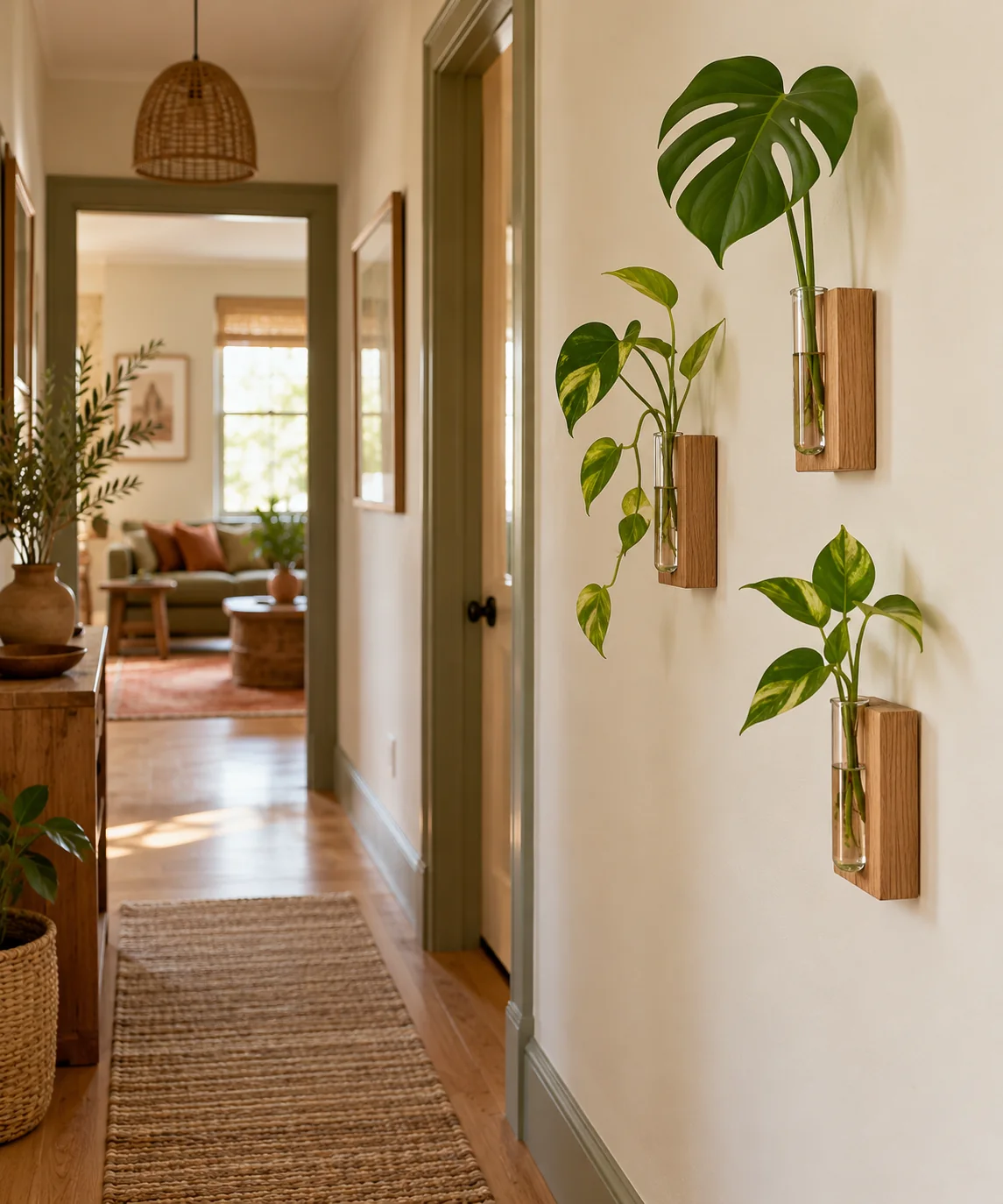
Hallway Clearance and Sightlines
In high-traffic areas like narrow corridors, wall displays should sit at a comfortable viewing height while remaining close to the wall surface. Select slim timber mounts and small glass vessels that project minimally into the walking path to avoid catching on clothing, bags, or passing household members. Aligning the display with existing architectural elements, such as door frames or nearby artwork, creates a balanced visual line while preserving open passage through the hall.
Selecting Suitable Cuttings for Hallway Conditions
Hallways often receive moderate or indirect ambient light rather than bright direct sun, so select plant cuttings that adapt well to lower light levels. Stem cuttings from pothos, heartleaf philodendron, or zz plants tend to root reliably in water under moderate household illumination. Avoid high-light flowering species or woody herbs that tend to lose foliage or rot when ambient light is insufficient. Using resilient cuttings helps keep the display fresh and vibrant.
Display Geometry and Arrangement
Arrange wall-mounted tubes with sufficient breathing room between vessels so individual cuttings do not crowd one another as leaves unfurl. A horizontal row or clean vertical column allows each cutting to be viewed clearly without visual clutter. Leaving open wall space around the mounts also makes it easier to remove and replace individual glass tubes during routine maintenance without bumping adjacent hardware.
Water Management in High-Traffic Zones
Regular water changes are essential for healthy root development and clean aesthetics. Choose mounting brackets that allow glass tubes to be lifted out easily without disturbing the wall attachment. Carry individual tubes to a nearby sink to discard old water, rinse the interior, and refill with fresh room-temperature water. This practice prevents accidental wall splashes or drips onto hallway baseboards and flooring.
Mounting Considerations and Wall Protection
Select hanging hardware appropriate for your specific wall construction, such as drywall, plaster, or wood paneling, following the fastener manufacturer's installation and weight guidelines. Ensure mounts sit flush against the wall so they do not wobble when tubes are removed. Placing small adhesive felt or rubber bumpers on the back corners of timber brackets helps protect wall paint from friction marks during handling.
YOUR STARTING POINT
A little checklist.
Original editorial guidance. Images are AI-generated concepts, not photographs of completed projects. Our sources and approach.
Questions to consider
How often should water be refreshed in wall propagation tubes?
Rinsing and replacing water every week or two helps keep the display clear and supports root growth by preventing algae accumulation and stagnation.
Can propagation displays be placed near exterior hallway doors?
Displays can be positioned in entry halls as long as they stay clear of the door's swing path. Be mindful of cold drafts during winter, which can slow down rooting or damage sensitive tropical leaves.
What should be done when cutting roots fill the glass tube?
Once roots are several inches long, the cutting can be potted into soil mix, or the display can be refreshed with a new stem cutting to maintain a clean, uncluttered look.