Pantry Organization · THE GUIDE
Arrange Cooking Oils and Vinegars on a Wipeable Enamel Tray
Cooking oils and aged vinegars are kitchen essentials, but their bottles frequently develop slow, stubborn drips that run down the glass. Over time, these residues transfer onto wooden pantry shelves, causing dark stains, sticky buildup, and moisture damage that is difficult to lift. Setting these liquid ingredients onto an enameled metal rimmed tray creates a dedicated zone that isolates spills. The non-porous glazed surface protects delicate wood grains while corralling tall, tippy condiment bottles onto a single wipeable platform that keeps shelf storage visually organized and easily cleanable.
Jump to the checklist ↓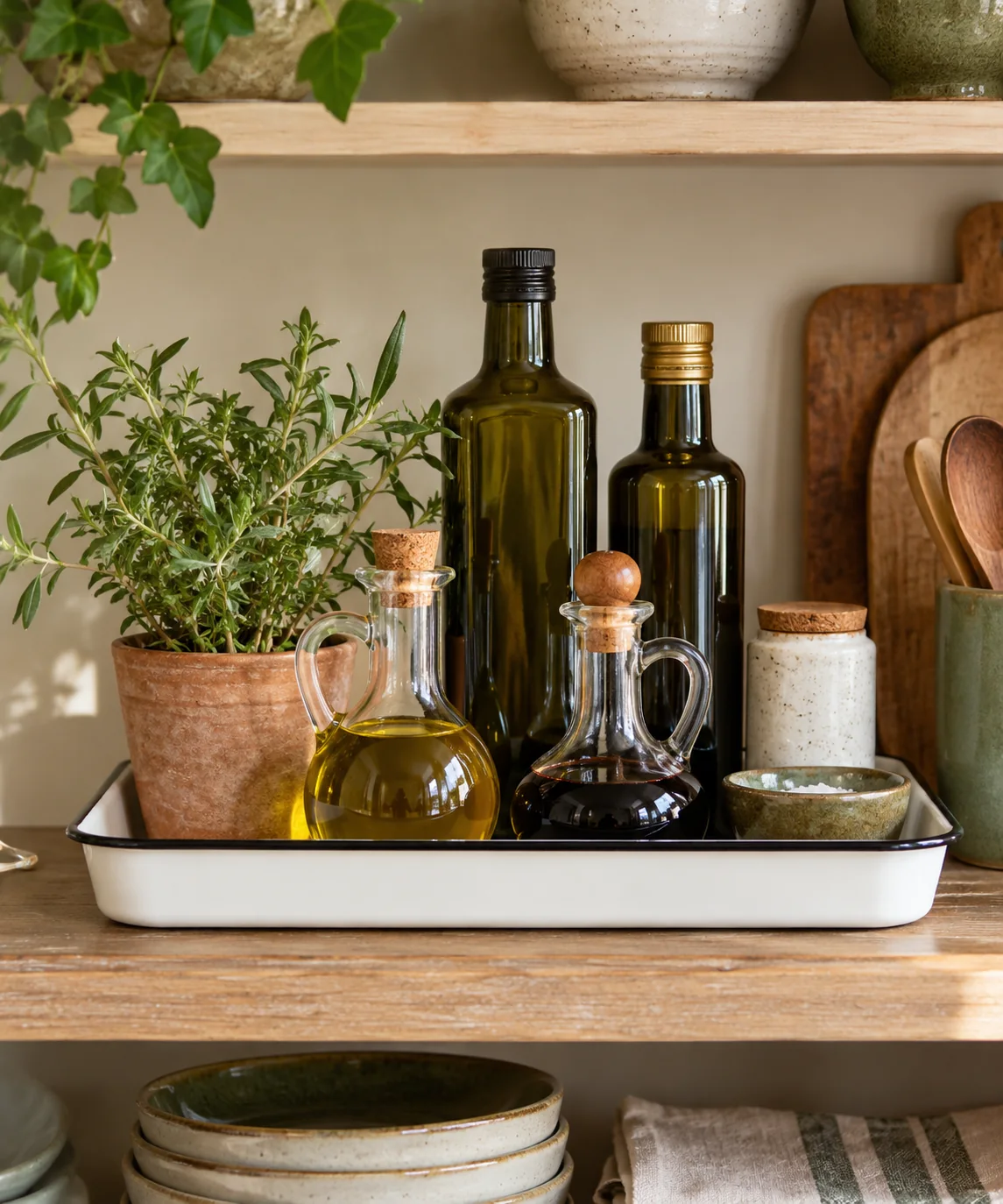
Selecting Rim Height and Tray Dimensions
Choose an enamel tray featuring a raised perimeter lip measuring between three-quarters of an inch and one inch high. This lip height provides a sufficient physical barrier to contain leaks without obstructing your grip when grasping bottles by their bases. Measure the clearance between pantry shelves, ensuring that the tray plus your tallest vinegar cruet leaves at least two inches of overhead space. An oval or rectangular tray often maximizes depth efficiency along typical twelve-inch pantry shelves.
Arranging Bottles by Weight and Usage Frequency
Place daily cooking essentials, such as standard olive and neutral vegetable oils, along the front edge of the tray for effortless access. Reserve the rear corners for specialty finishing oils, thick balsamic glazes, and toasted sesame oils that see less frequent rotation. Grouping by bottle weight stabilizes the tray and keeps top-heavy decanters from knocking into one another when retrieving items, reducing the likelihood of glass clinking and accidental bottle tipping.
Protecting Pantry Surfaces Beneath the Tray
While enamel prevents oils from penetrating wood, a rigid metal base sliding across painted or finished shelving can create friction marks over time. Apply small, clear felt or silicone adhesive pads to each bottom corner and the center underside of the enamel tray. These bumpers elevate the metal base slightly above the shelf, preventing surface abrasions and dampening vibration when lifting or resetting heavy glass dispensers onto the tray.
Managing Drips and Maintaining the Glazed Surface
Enameled steel provides a smooth, non-porous glass finish that resists acidic vinegar etching and greasy oil degradation. When spills occur, lift the tray off the shelf and clean the surface using warm water, mild liquid dish soap, and a soft sponge. Never use steel wool, abrasive scouring pastes, or harsh scrapers, as these will scratch the vitreous enamel coating. Prompt cleaning prevents oil films from turning sticky over prolonged storage periods.
Understanding Thermal and Moisture Limitations
Pantry storage should remain cool and dark to extend the shelf life of cold-pressed oils. Keep the enamel tray situated away from warm pantry zones adjacent to refrigerator compressor vents, water heater closets, or uninsulated exterior walls. While enamel is impervious to moisture, avoid allowing standing pools of vinegar to sit for weeks in chipped areas, as exposed raw carbon steel underneath the glaze will slowly oxidize and rust.
YOUR STARTING POINT
A little checklist.
Original editorial guidance. Images are AI-generated concepts, not photographs of completed projects. Our sources and approach.
Questions to consider
Can I carry the fully loaded tray to the counter during meal prep?
Carrying an enamel tray loaded with heavy glass bottles risks drops and balance issues. Leave the tray stationary on the shelf, removing only the specific bottles needed for your current cooking task.
What should I do if the enamel tray gets chipped?
Keep the chipped area completely dry to prevent the underlying steel from rusting. Clean spills promptly with a damp cloth rather than submerging the tray in standing water.
Will balsamic vinegar etch or stain off-white enamel?
Vitreous enamel is non-porous glass and resists acidic vinegar etching. However, wipe balsamic spills within a few days so deeply pigmented residues do not dry into stubborn surface stains.