Small Balcony Layouts · THE GUIDE
Arrange Corner Plant Stands to Enhance Sightlines from Inside
Arranging potted containers across a balcony can inadvertently obscure views if foliage gathers directly in front of main doors and windows. Placing a tiered, quarter-round or corner shelving unit into an underutilized corner consolidates greenery into a vertical arrangement while keeping central sightlines open. This layout lifts pots off the floor, organizing plants neatly without encroaching on walking corridors. However, grouping multiple planters concentrates mass, requiring confirmation of allowable balcony loads with property management or a qualified professional alongside stand manufacturer ratings. With careful plant selection and modest positioning, corner stands provide an attractive display that complements both indoor and outdoor spaces without compromising safety.
Jump to the checklist ↓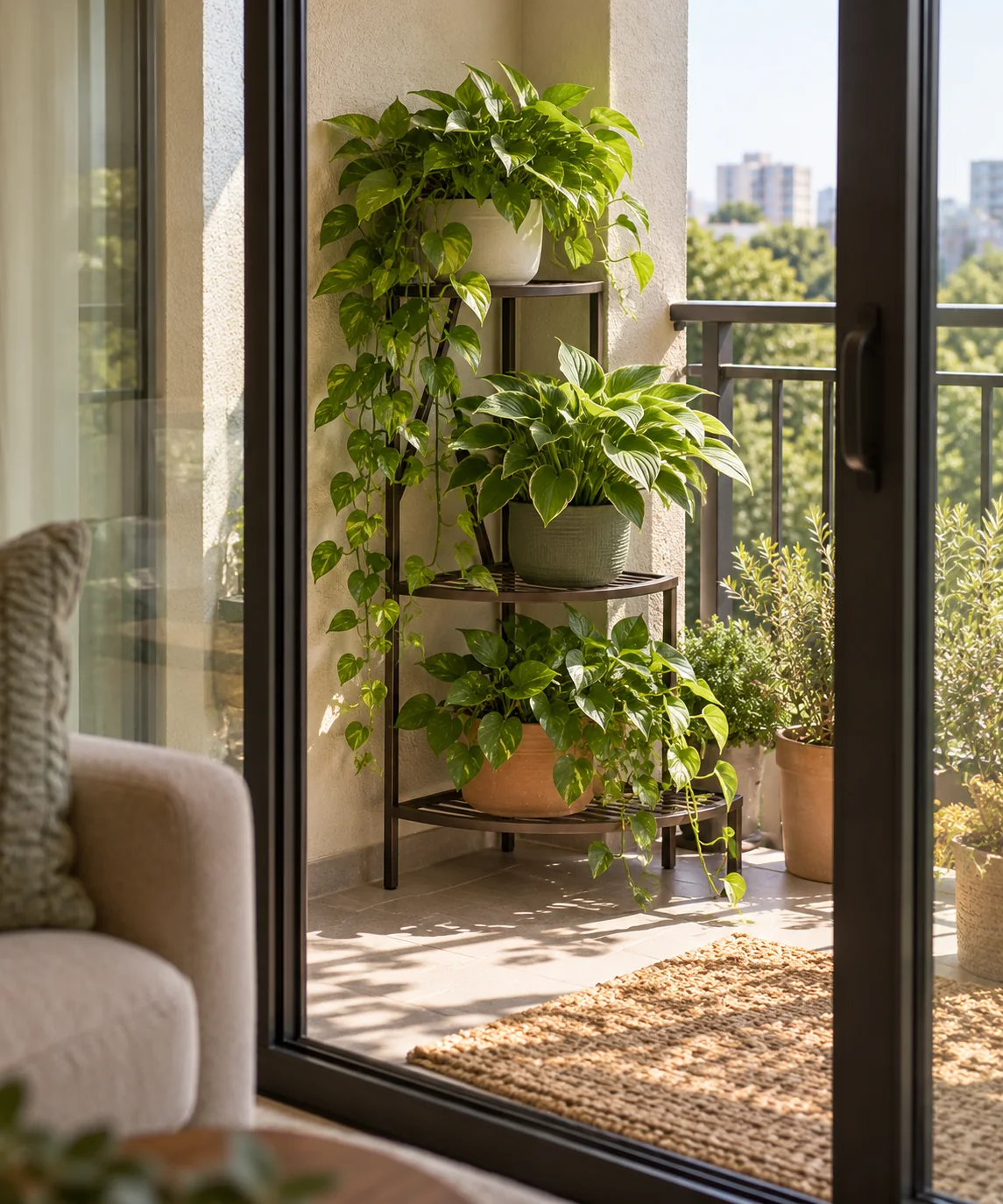
Assessing Indoor Sightlines and Layout Boundaries
Before positioning shelving on a balcony, observe the space from your primary indoor seating areas. Note which exterior areas fall directly within your viewing angles and which corners remain peripheral. Positioning a corner stand in an off-center angle frames the outdoor space while leaving center window panes unobstructed for natural daylight. Verify that the chosen location maintains clear access to doors, complies with local emergency egress requirements, and allows routine window cleaning. Keeping walkways clear ensures the arrangement remains practical and avoids accidental contact during daily balcony use.
Balcony Load Limits and Stand Weight Capacity
Potting soil, containers, drainage gravel, and absorbed water add substantial concentrated mass, particularly when stacked onto a single multi-tiered frame. Never assume a balcony is safe to support grouped containers based on visual appearance, corner placement, or pot materials alone. Consult building management, property bylaws, or a qualified structural engineer to determine verified floor load limits before assembling multi-pot displays. Additionally, review the stand manufacturer's maximum rated weight capacity for each shelf tier, distributing potted plants within those stated boundaries.
Balancing Shelf Organization and Visual Openness
Arranging plant shapes intentionally across shelves supports both container health and open visual appeal. Lower shelves often accommodate broader or slightly taller upright plants without interfering with outward sightlines. Middle and upper shelves suit medium foliage or compact spreading varieties that soften the frame. Avoid overcrowding shelves to ensure air circulates around foliage and daylight reaches each plant. This stepped visual progression creates an organized display that complements the view rather than forming a dense visual screen.
Evaluating Corner Lighting and Exposure
Balcony corners often exhibit distinct environmental conditions influenced by adjacent exterior walls, overhangs, and building orientation. While structural corners may alter exposure, conditions vary widely depending on elevation and building geometry. Deep corners frequently experience extended periods of shade from overhead balconies or adjacent facades. Observe how sunlight moves across the stand through different seasons before choosing plants. Shade-tolerant greenery often suits deeper recesses, whereas sun-tolerant varieties require positions that receive adequate natural daylight.
Drainage Management and Floor Protection
Because a tiered stand clusters several containers over a concentrated floor footprint, managing runoff is essential for building maintenance. Ensure every pot has an appropriately sized saucer to catch excess irrigation water, preventing runoff from accumulating against walls or dripping to levels below. Empty standing water promptly to protect root systems and reduce excess weight. Periodically shift the stand slightly to sweep away organic debris and inspect the floor surface for trapped moisture. Utilizing protective non-abrasive pads beneath stand legs helps safeguard balcony waterproof membranes and tile finishes.
YOUR STARTING POINT
A little checklist.
Original editorial guidance. Images are AI-generated concepts, not photographs of completed projects. Our sources and approach.
Questions to consider
How do I choose plants for a shaded balcony corner?
Track the duration and intensity of direct sunlight the specific corner receives across the day. Recessed areas under overhangs or behind solid walls typically receive limited direct sun and are best matched with shade-tolerant varieties suited to your regional climate.
How can I verify if my balcony can support a tiered plant stand?
Check with your property management, landlord, or a qualified structural engineer to obtain confirmed structural load ratings. Never rely on visual inspection or assume corner placement compensates for concentrated container weight.
How do I prevent drainage water from damaging the balcony floor?
Use functional drip saucers beneath each container and empty excess water after irrigating. Maintain a modest gap between the stand and exterior walls to allow air circulation and easy floor maintenance.