Laundry Space Organization · THE GUIDE
Arrange Folded Clean Bedding in Dust-Proof Cotton Zipper Totes
High open utility shelving in laundry areas provides valuable vertical storage, but leaving freshly washed out-of-season quilts and spare duvets uncovered invites household problems. Airborne dryer lint, ambient dust, and light exposure degrade fabric fibers over prolonged storage intervals. Breathable cotton zipper totes offer a structured, protective barrier that preserves clean bedding without trapping ambient humidity. Unlike airtight containers that can cause musty odors in natural textiles, tightly woven cotton shields down, wool, and cotton quilts from settled particulate matter while allowing natural air circulation across stored seasonal layers.
Jump to the checklist ↓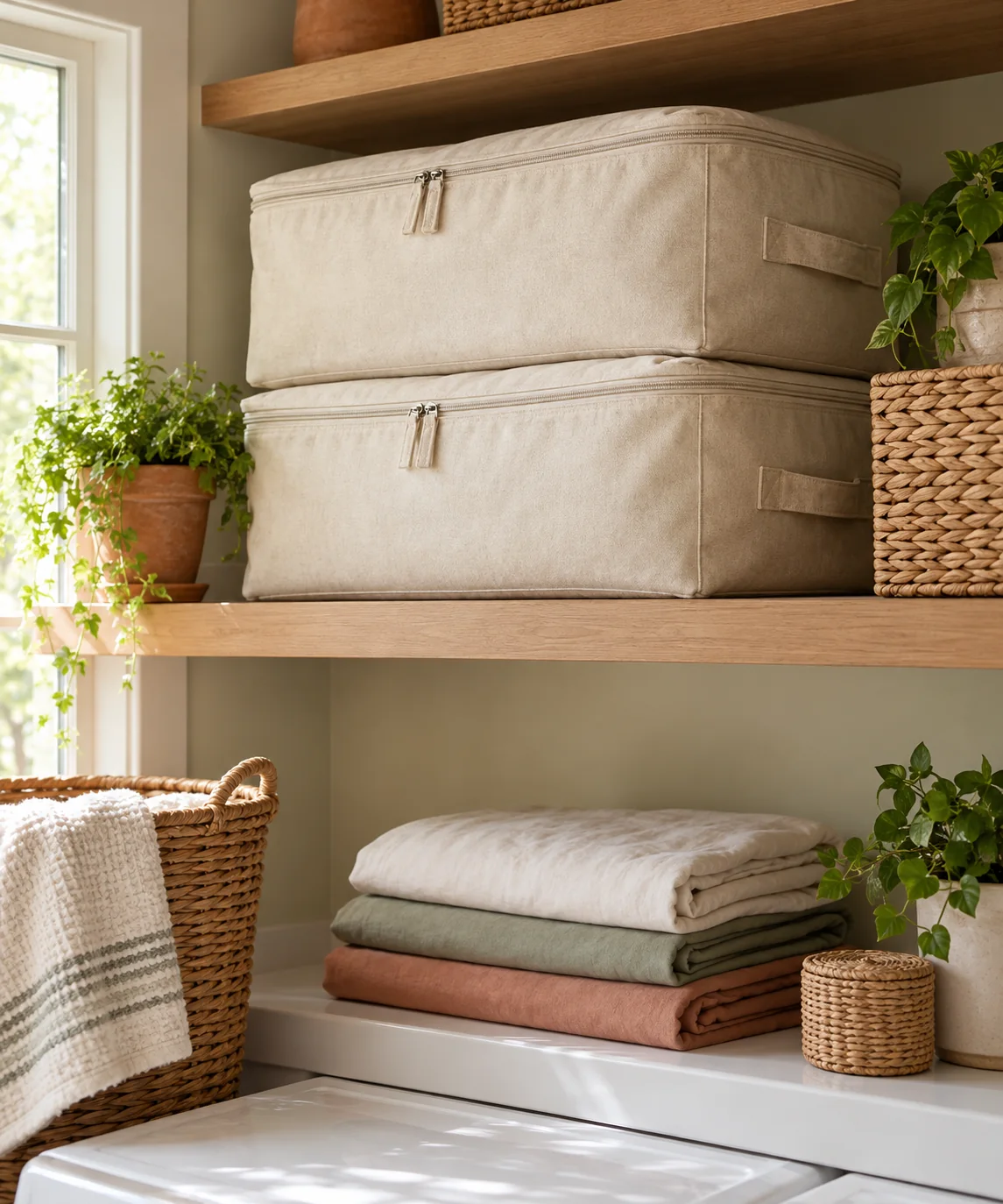
Evaluate Shelf Depth and Structural Limits
Examine your high utility shelving before purchasing storage totes. Typical open utility shelves range from twelve to sixteen inches deep. Measure the vertical gap between the top shelf and the ceiling to allow safe lifting clearance when retrieving packed textiles. Heavy folded quilts exert substantial downward force, so distribute the packed totes evenly across shelf supports rather than concentrating weight in the center. Avoid placing storage totes where they obstruct airflow from laundry exhaust vents or ceiling lighting.
Breathable Fabric Totes Versus Sealed Plastic
Storing bedding in laundry utility areas requires protection from airborne lint while managing ambient humidity. Breathable cotton or linen storage totes allow natural air circulation, which helps prevent musty odors from developing in stored natural fibers such as wool, down, and cotton. While sealed plastic containers and compression bags provide moisture barriers, improper sealing can trap humidity, and prolonged high compression can temporarily crush down clusters or cause sharp creasing in delicate textiles. Sturdy canvas totes provide a balanced middle ground by filtering ambient dust while allowing fibers to breathe.
Fold Linens to Match Tote Dimensions
Maximize storage density and prevent structural stress on tote zippers by folding quilts to the rectangular footprint of the case. Lay the quilt flat on a clean surface, folding the sides inward in thirds, then roll or accordion-fold the length to match the tote depth. Avoid forcing oversized duvets into undersized totes, which strains seams and compresses the fabric unevenly. A properly filled tote holds its shape, creating a flat top surface that facilitates neat, stable storage on upper shelving.
Label and Organize by Bed Size
Accessing high shelving becomes cumbersome if you must open several totes to find the correct bed size. Select totes featuring clear exterior label pockets or attach reusable cardstock tags to the zipper pulls. Document the linen size, fabric composition, and room assignment clearly on each tag. Arrange your totes logically on the shelf, placing heavier winter quilts on lower utility tiers and lighter summer coverlets on upper racks to ensure safe, balanced handling during seasonal changes.
Maintain Storage Conditions and Inspect Seasonally
High utility shelving near laundry appliances accumulates airborne lint quickly from nearby dryer venting. Before placing or rotating totes, vacuum shelf surfaces using a brush attachment to remove lint and dust. Wash the empty fabric storage totes periodically according to manufacturer care instructions to remove settled exterior debris. When retrieving bedding for the season, check the storage area for signs of excessive humidity or heat, adjusting tote placement away from exterior walls or heating ducts if necessary.
YOUR STARTING POINT
A little checklist.
Original editorial guidance. Images are AI-generated concepts, not photographs of completed projects. Our sources and approach.
Questions to consider
Why choose breathable fabric totes over vacuum compression bags?
Breathable fabric totes allow ambient air circulation, reducing the risk of musty odors developing in stored natural textiles like wool and down. Vacuum bags can trap residual moisture if textiles are not completely dry, and tight compression can lead to severe creasing and flatten down loft, requiring significant fluffing upon removal.
How high can filled cotton bedding totes be stacked?
Limit stacking to two totes on upper utility shelves. Higher stacks can become unstable, increase the risk of items falling during retrieval, and exceed the manufacturer's load limits for unsupported shelving spans.
How often should bedding stored in fabric totes be refreshed?
Bedding stored in breathable totes generally remains fresh for a full season. When rotating seasonal bedding, unroll and air out quilts in a well-ventilated room before use, and inspect the storage space for dust or humidity buildup.