Small Bathroom Storage · THE GUIDE
Arrange Glass Apothecary Jars on a Ceramic Counter Tray
Small bathroom counters often suffer from visual chaos when daily grooming essentials scatter across the sink surround. Clear glass apothecary jars paired with a low-profile ceramic tray offer an organized, protective solution for dry goods like cotton rounds, swabs, and bath salts. The lidded jars shield personal care items from airborne moisture and dust, while the tray establishes a distinct boundary that prevents loose bottles from sprawling across valuable washbasin surface area. By arranging varied heights thoughtfully, you create an uncluttered, functional grooming station that remains tidy and simple to maintain.
Jump to the checklist ↓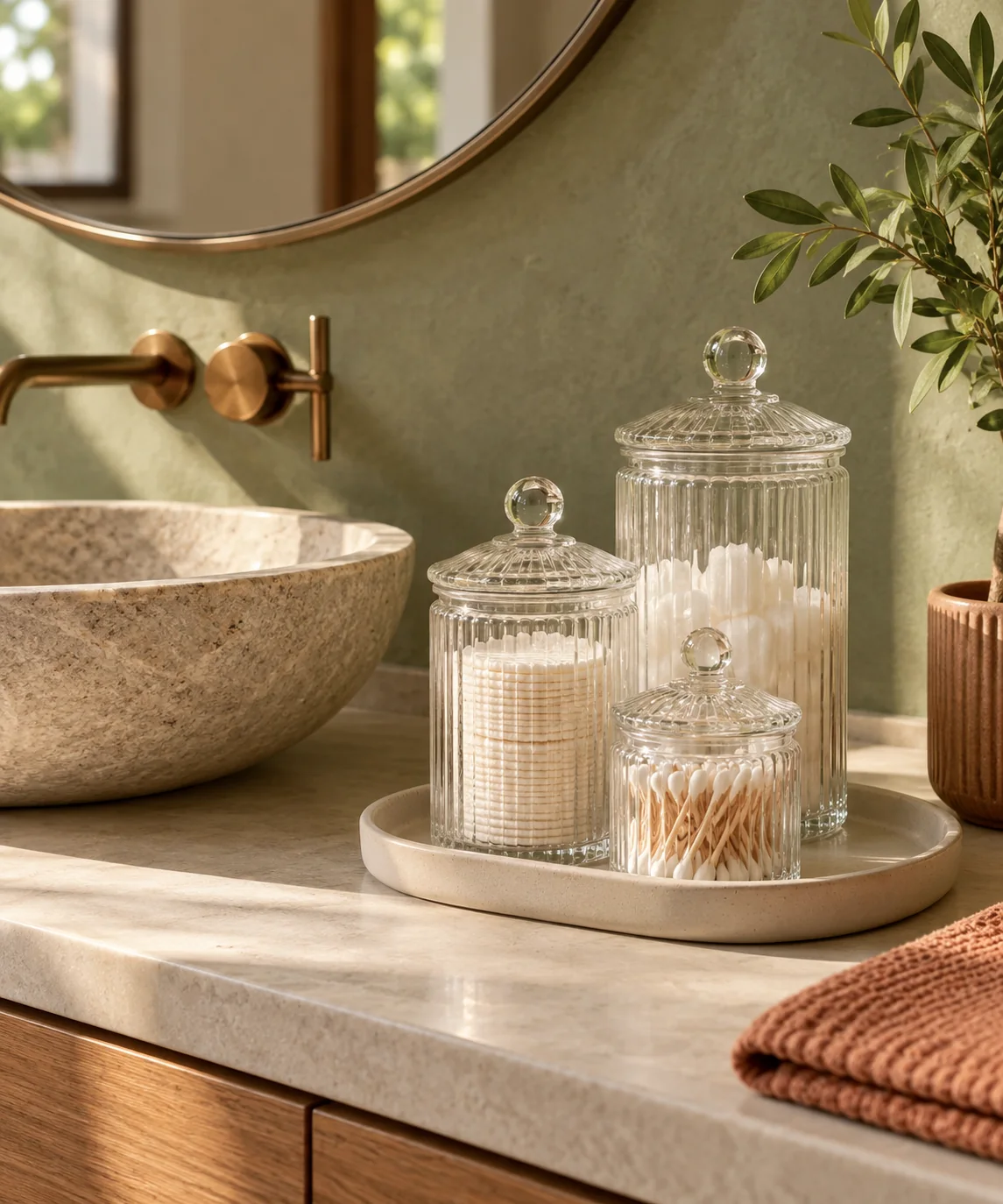
Sizing the Ceramic Tray to Counter Proportions
Selecting an appropriately scaled tray helps manage vanity clutter without obstructing daily sink use. On compact bathroom counters, look for a shallow ceramic tray whose dimensions leave comfortable breathing room around faucet handles, soap dispensers, and the basin rim. Rather than relying on rigid dimensional rules, evaluate your specific counter depth and typical hand movement patterns during morning routines. Position the tray inward from vanity edges to reduce the likelihood of glancing contact when brushing past. Glazed ceramic provides moderate heft compared to lightweight plastic, but smooth glaze can still slide across polished stone or wet laminate if not fitted with slip-resistant pads beneath the base.
Varying Jar Heights for Easy Visual Access
Staggering apothecary jars creates an orderly arrangement where stored supplies remain visible and straightforward to reach. A grouping of three varied container heights generally works well: a taller jar for cotton swabs, an intermediate cylinder for flat cotton rounds, and a broader, low-profile vessel for bath salts or cosmetic sponges. Place the tallest vessel toward the rear or against an adjacent wall surface, keeping lower jars toward the front. This descending arrangement maintains clear sightlines and allows you to remove glass lids without striking adjacent container rims or fumbling in tight counter quarters.
Protecting Countertop Finishes and Jar Bases
Resting hard glass directly on glazed ceramic or polished stone creates friction points that can lead to scratches, chipping, or distracting scraping noises. Placing discreet silicone bumper feet or non-marring rubber pads beneath the ceramic tray elevates it slightly, protecting the vanity surface and reducing sliding on slick surfaces. Check that the apothecary jars sit squarely within the interior boundary of the tray. If the inner ceramic surface is glossy or slightly convex, lining the tray bed with a removable silicone sheet or thin cork pad dampens sound and helps prevent glassware from shifting during daily lid removal.
Hygiene Protocols and Moisture Control
Because bathrooms experience significant humidity shifts from shower steam, select jars fitted with snug lids or flexible gaskets to shield dry cotton goods from ambient dampness. Storing porous items in unsealed vessels risks gradual moisture absorption. Avoid placing damp items into the containers or reaching in with wet hands, which can introduce water droplets into compacted cotton fibers. Establish a regular cleaning schedule: empty the glassware, wash containers and lids in warm water with mild detergent, and confirm every jar is completely dry before restocking supplies. Periodically wipe the ceramic tray to remove dust, soap residue, and standing droplets.
Managing Layout Limits in High-Splash Zones
Glass apothecary jars and ceramic trays perform best when kept within relatively dry zones away from faucet overspray. On very narrow or shallow vanities, routine handwashing frequently splatters water onto nearby glass surfaces, resulting in cloudy mineral buildup that requires frequent cleaning. If counter space is severely constrained, position the tray toward the counter corner opposite the dominant washing hand, or transition the grouping to an adjacent open wall shelf. Storing fragile glassware away from primary wash zones protects the vessels from accidental bumps while preserving clear, spot-free glass.
YOUR STARTING POINT
A little checklist.
Original editorial guidance. Images are AI-generated concepts, not photographs of completed projects. Our sources and approach.
Questions to consider
Are glass apothecary jars safe for a busy family bathroom?
In high-traffic bathrooms with young children, glass presents breakage risks if dropped. Consider shatterproof acrylic jars on a non-slip tray, or reserve glass apothecary containers for guest baths or adult master vanity counters.
How do I clean mineral water spots off clear glass jars?
Soak the jars in a mixture of warm water and mild dish detergent, then wipe dry immediately with a microfiber towel. Avoid abrasive sponges that could scratch decorative glass fluting or smooth surfaces.
Can I store bath salts directly in unsealed glass jars?
Bath salts absorb ambient moisture rapidly, which causes clumping. Only store salts in jars equipped with a tight silicone gasket seal to keep humid bathroom steam from dissolving or hardening the contents.