Small Balcony Layouts · THE GUIDE
Arrange Hanging Rail Troughs to Free Up Floor Area
Balcony railings offer an opportunity to position plants near eye level without using deck floor space, but elevated containers require careful planning and strict adherence to building rules. Rail-mounted containers and straddle-style planters place weight directly on perimeter barriers, making proper fit, weight management, and drip control essential. Many multifamily properties restrict or prohibit items mounted to railings due to safety considerations. By consulting building policies first, choosing appropriately sized containers, and using lightweight potting media, residents can evaluate whether railing planters are an allowable and practical option for their space.
Jump to the checklist ↓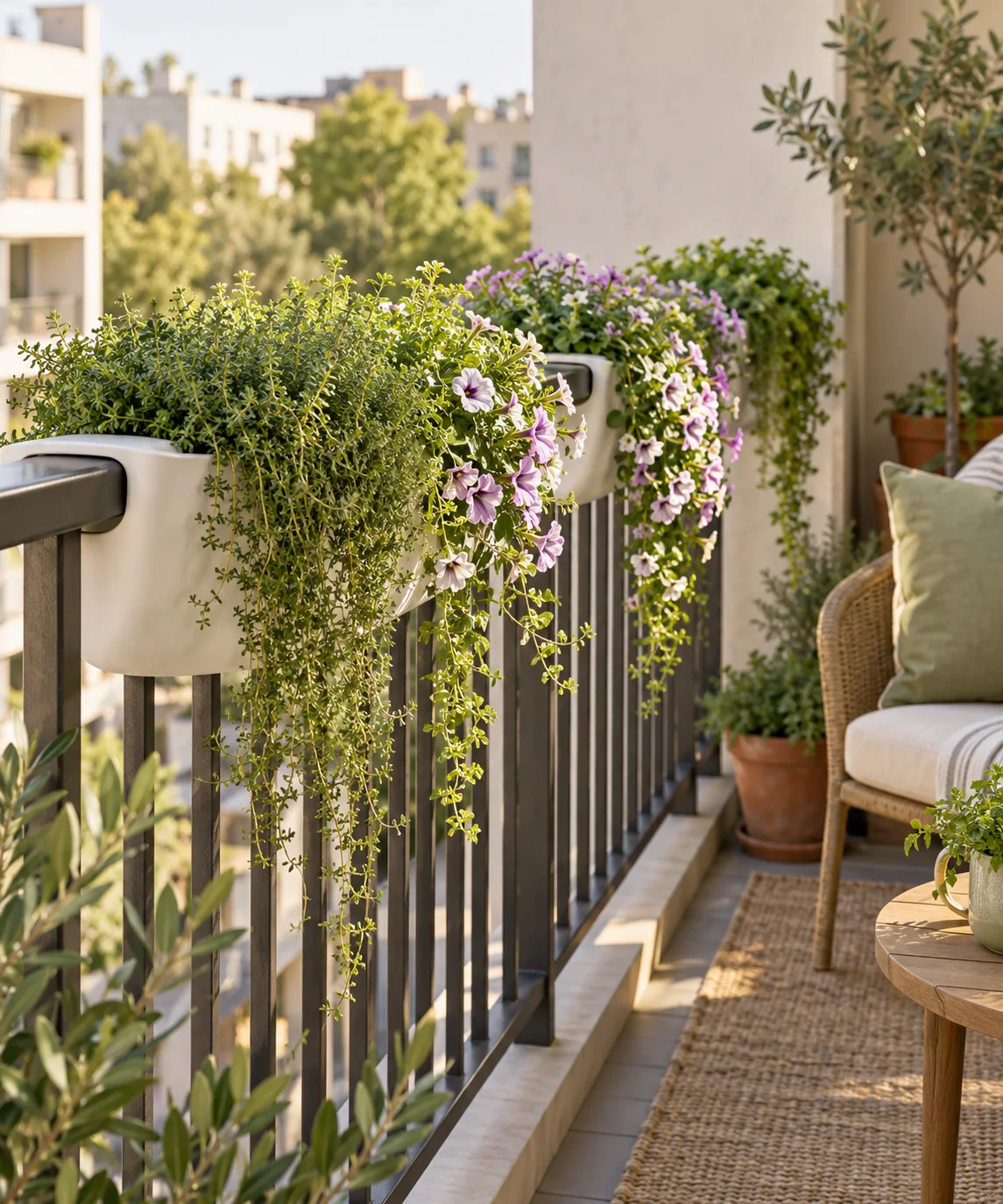
Reviewing Building Regulations First
Before considering any rail-mounted container, consult your property management, homeowners association guidelines, or municipal codes. Many residential buildings strictly ban items resting on or hanging from railings because of potential drop risks to areas below. Where railing planters are permitted, rules often specify approved mounting methods, allowable orientations (such as inward-facing only), or maximum dimensions. Securing proper authorization protects resident safety and avoids costly removal notices.
Assessing Railing Fit and Profile Compatibility
Railing designs vary substantially, ranging from flat timber caps to rounded metal pipes and composite extrusions. If using straddle planters, measure the exact width and cross-section of your top rail to ensure the container channel matches the manufacturer's specified dimensions. The unit should rest level and sit completely flush across the rail cap without forcing or rocking. Never attempt to force an incompatible planter over a railing that is too wide or awkwardly shaped.
Understanding Wet Soil Load and Rail Capacity
Soil, plant roots, and retained irrigation water create significant weight that exerts continuous pressure on railing hardware. Do not attempt to guess the structural capacity of your balcony railing; consult building guidelines regarding load limitations. To keep overall weight modest, use lightweight potting media amended with perlite or coir instead of heavy garden loam. Avoid overfilling planters, and monitor how your railing responds to ensure no loosening or displacement occurs.
Controlling Drainage Runoff and Dripping
Uncontrolled drainage from elevated containers is a frequent source of building disputes and exterior staining. Look for planters featuring integrated reservoirs or closed drainage trays that retain runoff rather than letting water cascade down building facades or onto balconies below. When watering, apply moisture slowly and check the reservoir indicator to prevent spills over the planter lip. Promptly empty or adjust trays during prolonged rain to prevent waterlogged soil.
Planning for High Winds and Severe Weather
Wind speeds increase significantly at upper floor levels, creating updrafts that can dislodge elevated containers. Straddle planters are not immune to strong wind gusts, regardless of design claims. When severe weather or seasonal storms are forecast, plan to lift and store rail containers down on the balcony floor or indoors. Keeping trailing foliage trimmed also reduces wind catch and helps ensure that the planter remains stable during normal weather.
YOUR STARTING POINT
A little checklist.
Original editorial guidance. Images are AI-generated concepts, not photographs of completed projects. Our sources and approach.
Questions to consider
Are straddle-style rail planters safe in gusty winds?
While straddle planters rest over the rail, strong wind gusts can still tip or shift them, especially on high floors. When wind advisories are issued, move rail planters down to the balcony floor or indoors to eliminate drop hazards.
What types of plants are suitable for railing containers?
Choose compact, low-growing annuals, herbs, or shallow-rooted greens that do not produce tall, sail-like foliage. Upright shrubs or large top-heavy plants catch crosswinds and increase the risk of shifting.
Can rail planters cause surface damage to handrails?
Moisture and organic matter trapped beneath plastic or resin planters can cause paint blistering, metal corrosion, or wood discoloration. Check beneath the planter periodically, clean the surface, and ensure water is not pooled directly against rail finishes.