Entryway Organization · THE GUIDE
Arrange Low Shoe Cubbies to Foster Toddler Independence
Entryway routines become significantly calmer when young children can manage their own footwear upon returning home. Standard coat racks and shoe benches cater to adult reach, forcing toddlers to rely on adult assistance or abandon shoes across walkways. Introducing a dedicated low-profile shoe cubby at toddler eye level establishes an intuitive boundary for footwear. By paring down choices and providing clearly defined resting spots for daily sneakers and boots, you encourage functional self-reliance. This approach keeps entry paths clear while turning the transition between outdoor play and indoor living into a predictable, repeatable routine.
Jump to the checklist ↓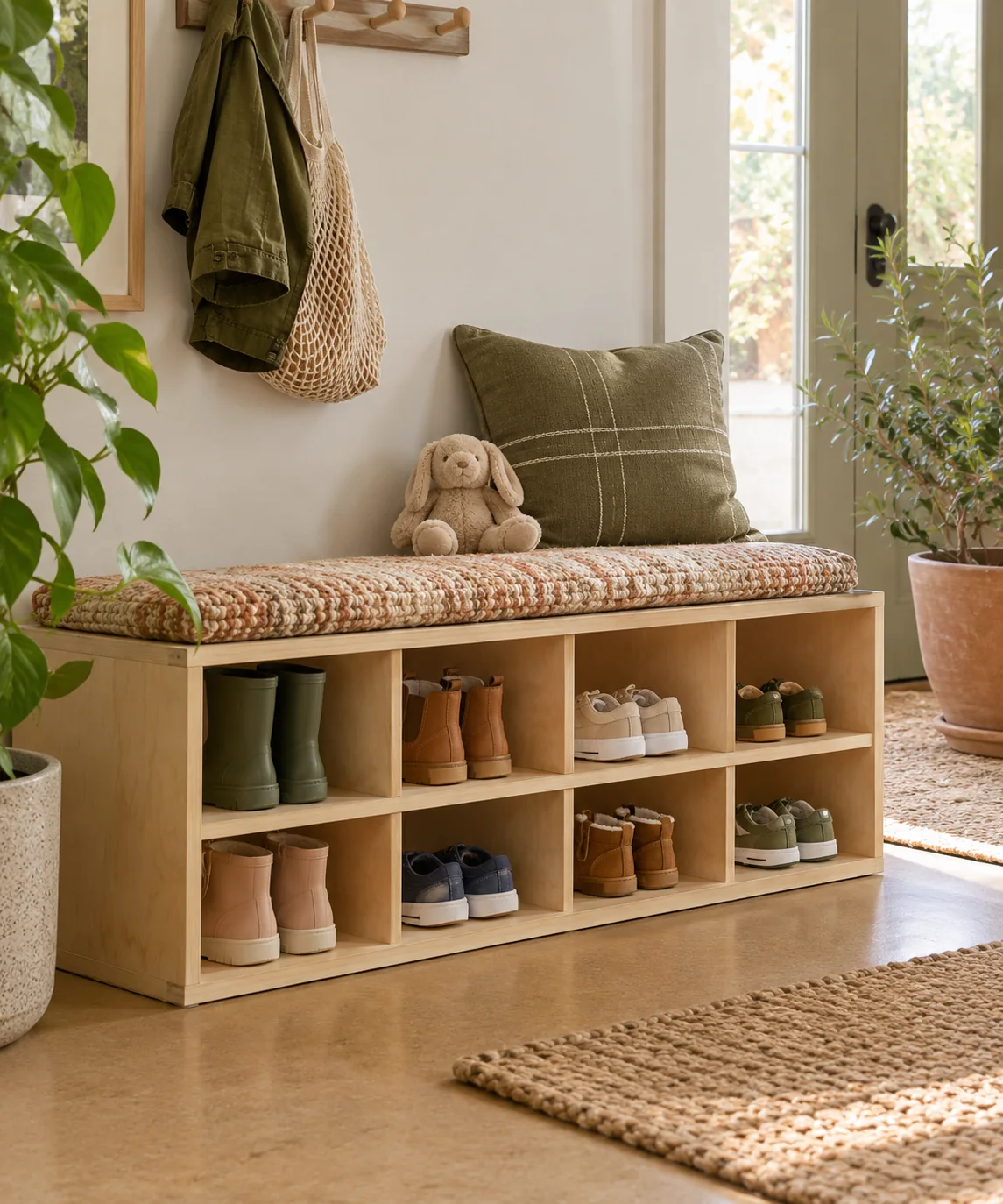
Selecting Proportional Low Storage Units
Fostering toddler independence begins with furniture scaled to a child's line of sight and reach. Choose a low-profile storage bench or cubby unit that allows the child to see inside the compartments without standing on tiptoes or climbing. While lower units have a lower center of gravity than tall shelving, children frequently lean or sit on furniture edges. Always check manufacturer stability guidelines, inspect base levelers, and securely anchor the unit to wall studs if recommended by the manufacturer to prevent unexpected movement or tipping.
Limiting Active Footwear Selections
Displaying an entire household shoe collection can overwhelm young children and clutter the entryway. Streamline the daily transition by keeping only two or three active, weather-appropriate pairs accessible in the cubby—such as daily sneakers and seasonal boots. Extra footwear, specialized sports shoes, and out-of-season items should remain in secondary storage. A limited selection simplifies decision-making, helping children quickly identify where their shoes belong upon entering the home.
Using Visual Indicators to Guide Placement
Visual markers offer intuitive guidance that reinforces where items belong without constant verbal reminders. Placing simple silhouette cutouts, colored tape outlines, or peel-and-stick shoe graphics on the base of each cubby slot provides an engaging reference point. When young children see an empty graphic target, matching their shoes to the designated space becomes a concrete task. Ensure labels or decals use non-damaging adhesives suitable for the cubby's surface finish.
Incorporating Stable Low Seating Nearby
Balancing on one foot while wrestling with shoes can cause toddlers to stumble or sit on cold walkways. Providing a low, stable footstool, firm floor cushion, or integrated bench seating directly beside the shoe unit gives children a steady surface for putting on and removing footwear. Ensure the seating area does not block entry door swings or primary walking paths, leaving adequate clearance for family members to move safely through the entrance.
Managing Moisture, Mud, and Routine Cleaning
Outdoor footwear routinely tracks in sand, water, and garden soil. Lining cubby shelves with trimmed silicone mats or washable boot trays protects furniture surfaces from trapped moisture and grit. These removable liners make cleaning straightforward, as accumulated dirt can be dumped outdoors or washed in a sink. Encouraging children to assist with wiping down their shelf with a damp cloth introduces basic household responsibility and keeps the entry zone clean.
YOUR STARTING POINT
A little checklist.
Original editorial guidance. Images are AI-generated concepts, not photographs of completed projects. Our sources and approach.
Questions to consider
At what stage can a child begin using their own shoe cubby?
Children can often begin participating as soon as they walk reliably and understand simple matching tasks, typically around early toddlerhood. Starting with simple open bins before moving to specific paired slots helps accommodate developing motor skills.
How should wet or muddy boots be stored in a children's cubby?
Use water-resistant, raised-edge tray liners inside the lower compartments to catch runoff. Allow heavily soiled footwear to dry partially on an exterior mat or wipe away excess mud before placing them into wooden furniture compartments.
How can I encourage a toddler to consistently put their shoes away?
Pair clear visual cues with a predictable routine upon arriving home. Consistently directing the child to sit down, unfasten shoes, and place them onto the matching graphic target builds familiarity over time through steady parental modeling.