Bookshelf Styling · THE GUIDE
Arrange Oversized Art Monographs Horizontally to Preserve Shelf Clearance
Large-format art monographs and architecture folios present a persistent challenge for standard bookcases. When shelved upright, their immense height often forces adjustable shelves into awkward, unusable spacings, while their sheer weight causes pages to sag forward and pull away from bindings. Laying wide volumes flat protects structural integrity while creating visually grounding platforms across your display. By stacking these substantial books horizontally in measured groupings, you preserve valuable vertical shelf clearance for regular novels, establish rhythm across the shelving unit, and maintain a protected, orderly home library collection.
Jump to the checklist ↓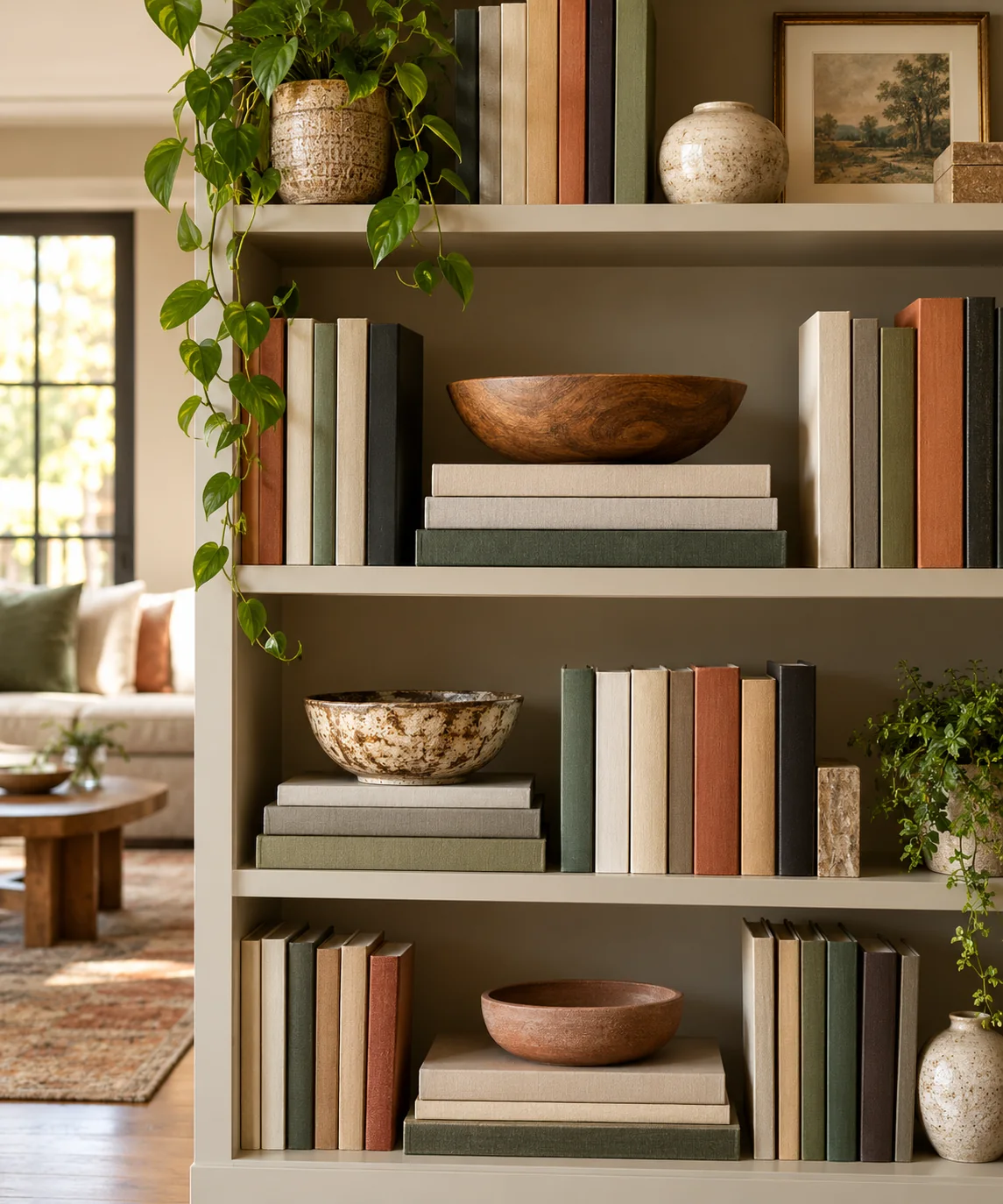
Protecting Bindings Through Horizontal Placement
Oversized monographs feature thick paper stock and substantial boards that place constant strain on cloth hinges when stored upright. Over time, gravity pulls the text block downward, tearing endpapers and bowing book spines. Stacking these volumes flat supports the entire weight of the leaves evenly across the shelf surface. This prevents structural sagging, preserves glue integrity, and keeps tall cloth bindings completely square without requiring custom tall shelving that wastes vertical storage space elsewhere on the unit.
Applying the Rule of Three for Stacks
Organize horizontal stacks into sets of three volumes to ensure both physical stability and easy everyday access. Measure the depth of the largest monograph to ensure its front board does not overhang the shelf edge, placing it flat as the base foundation. Top it with two progressively smaller books to create an intentional, stable stepped arrangement. Limiting stacks to three volumes keeps the overall pile light enough that you can lift the top books easily with one hand to access the bottom volume without scuffing covers.
Balancing Horizontal Stacks with Upright Rows
Break the visual uniformity of horizontal stacks by alternating them with vertical groupings of standard hardcovers. Position a trio of horizontal monographs on one side of a shelf, followed by a sturdy flat bookend supporting five to seven vertical novels on the opposite side. This compositional rhythm keeps the bookcase dynamic while utilizing the flat top of the monograph stack as an intentional perch for a single lightweight wooden bowl, maintaining balanced breathing room across the entire shelf plane.
Managing Shelf Load Limits and Placement
Art monographs are significantly denser than standard trade paperbacks and can exert substantial downward force on shelving boards. Always consult the bookcase manufacturer's published weight ratings and assembly specifications before loading large folios. To minimize the risk of shelf deflection or bracket failure, concentrate horizontal stacks on the lowest fixed shelf tier or directly adjacent to vertical support gables and central dividers where weight transfer is strongest. Avoid placing heavy piles along unsupported spans, and periodically inspect shelf pins and surfaces for signs of bowing.
Retrieval Practices and Long-Term Surface Care
Never yank a bottom monograph out from underneath a stack, as heavy surface friction can tear delicate dust jackets or fray matte cloth covers. Lift the upper volumes off entirely before retrieving or replacing the base book. Dust the exposed top surfaces of book stacks regularly using a dry, soft-bristled brush rather than a damp cloth, which can introduce moisture into paper edges. Ensure valuable art collections stay clear of direct sunlight to prevent uneven cover fading and binding degradation.
YOUR STARTING POINT
A little checklist.
Original editorial guidance. Images are AI-generated concepts, not photographs of completed projects. Our sources and approach.
Questions to consider
Will stacking books horizontally damage their dust jackets?
Stacking does not harm jackets if stacks remain limited to three books. Stacking too high produces excessive pressure, which can cause printed glossy coatings to stick together or create indentations from upper book edges over time.
Can I place decorative objects on top of art book stacks?
Yes, but restrict toppings to smooth, lightweight items like a small turned wooden bowl or paperweight. Avoid porous ceramics or heavy metal objects with unglazed bases that might scratch or compress the top book cover.
How do I align books of slightly different depths?
Align the spines of the three stacked books flush along the front view, allowing any variation in depth to recede toward the back panel. This creates a clean, intentional line across the face of the bookcase.