Pantry Organization · THE GUIDE
Arrange Rice and Grain Varieties with Color-Coded Ceramic Tins
Distinguishing between different white and brown grains stored in uniform containers can lead to confusion during meal prep, as varieties like jasmine, basmati, and arborio share similar shapes and textures. Using opaque ceramic canisters in distinct glaze tones offers an intuitive visual system for organizing bulk dry goods while shielding ingredients from direct light exposure. Solid ceramic walls provide a clean, orderly appearance on open pantry shelving and help maintain a consistent aesthetic across diverse bulk goods. By pairing recognizable color tones with specific grain profiles and establishing reliable handling practices, you can streamline cooking routines and keep pantry shelves neatly organized.
Jump to the checklist ↓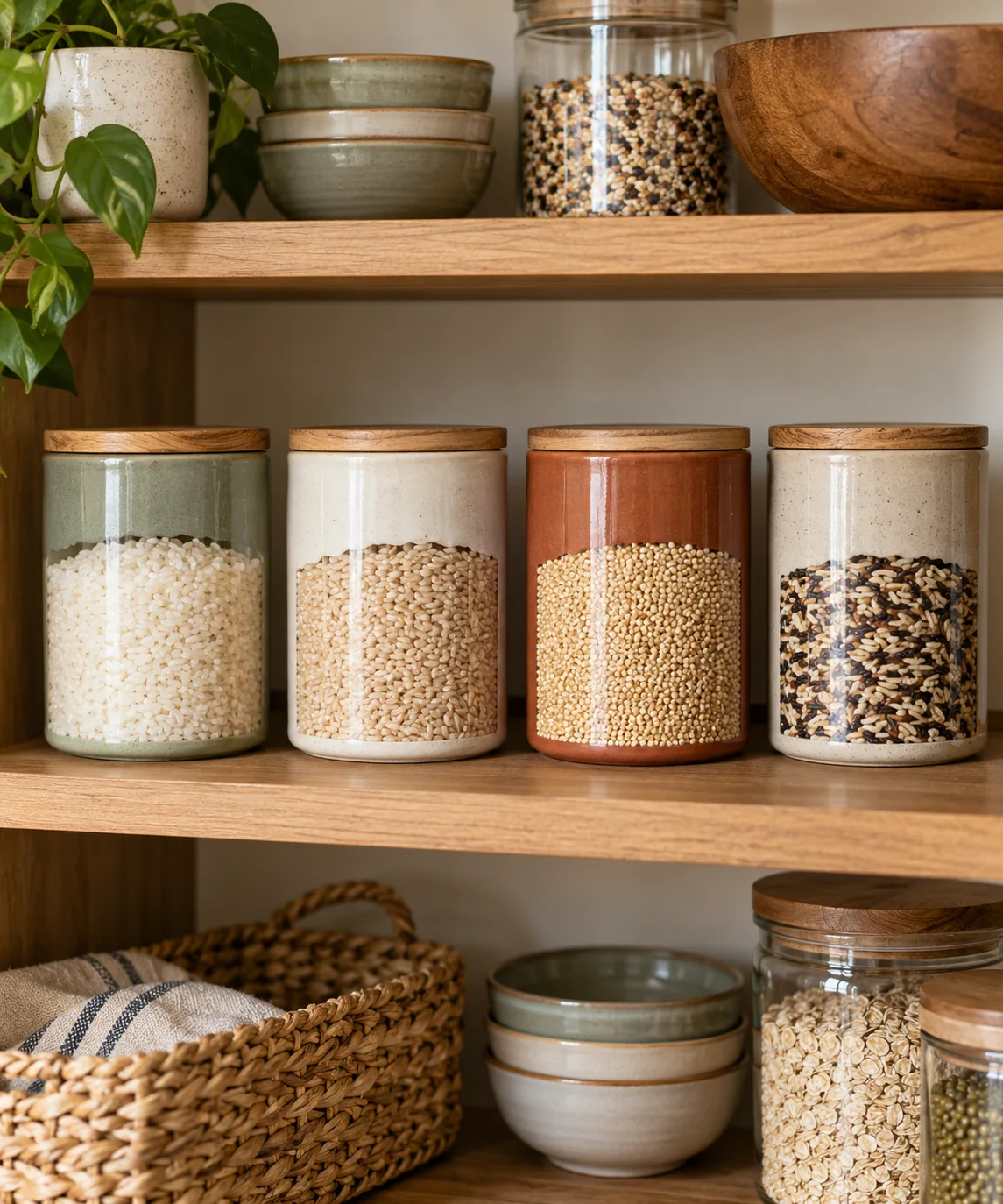
Establishing a Color Association System
Create a recognizable color framework that connects specific glaze shades with your household's staple grains. For example, assign pale ivory or white canisters to everyday long-grain rice varieties like jasmine or basmati. Reserve darker glazes, such as charcoal, slate, or navy, for distinctive whole grains like wild rice, forbidden black rice, or quinoa. Warm earth tones such as terracotta, olive, or ochre can signify short-grain arborio, sushi rice, or couscous. Keeping this visual association consistent allows household members to locate intended grains without inspecting every container.
Inspecting Canister Seals and Gaskets
Dry grains store best in cool, dry conditions with snug closures that protect against pantry pests and humidity. Look for ceramic canisters equipped with flexible silicone gaskets on their lids. When closing the container, press the lid down evenly along the perimeter so the gasket seats firmly against the ceramic rim. To verify the gasket seal, inspect the ring for cracks or deformation and test the lid fit while supporting the canister body on a counter; never attempt to lift a filled ceramic container by its lid alone, as the weight can break the seal and drop the vessel.
Evaluating Shelf Positioning and Weight Capacity
Ceramic canisters are inherently heavy, and filling them with several pounds of rice or grains adds substantial weight to your pantry shelving. Verify that shelves are securely mounted and rated to support the total load of your containers. Place heavy ceramic crocks on accessible waist- or chest-height shelves where you can reach them comfortably using two hands. Ensure adequate vertical clearance between the canister rim and the shelf above so you can easily remove lids or lift containers without scraping knuckles or bumping upper shelving.
Adding Discreet Cooking References
While color coding simplifies daily selection, maintaining clear reference notes for cooking ratios and dates supports consistent meal preparation. Apply removable labels, painter's tape, or erasable chalk tags to the rear or base of each canister. Note the specific grain variety, standard water-to-grain cooking ratio, and the date filled. Always ensure a container is completely emptied and swept clean before adding a fresh batch of grain to avoid burying older inventory under new supplies.
Washing and Thorough Drying Protocols
Glazed ceramic is non-porous and straightforward to clean, but handling moisture correctly is essential before filling containers with dry staples. Wash crocks and lids with mild dish soap and warm water between batch replenishments, removing the silicone gasket to wash away trapped starch dust. Trapped moisture inside a sealed container will spoil dry grains quickly. Set all components on a well-ventilated drying rack and ensure the ceramic interior, rim, and gasket are completely dry to the touch before restocking.
YOUR STARTING POINT
A little checklist.
Original editorial guidance. Images are AI-generated concepts, not photographs of completed projects. Our sources and approach.
Questions to consider
What are the advantages of ceramic canisters over clear glass for grain storage?
Opaque ceramic canisters block ambient light exposure and conceal variations in grain dust, providing a clean visual line on open pantry shelves. Solid color glazes also allow you to identify grain types instantly at a distance without reading labels.
How much dry rice can a typical ceramic canister hold?
A standard two-quart canister comfortably accommodates about three to four pounds of dry rice. If you regularly buy grains in five-pound bags, verify the container volume or plan to store the remaining quantity in an airtight bulk bin until the canister is depleted.
How should I safely check if a canister lid seal is working properly?
Keep the canister resting flat on the counter or shelf and gently press and seat the lid. Check that the gasket compresses evenly around the entire circumference without gaps or bunching. Never lift the canister off the surface by its lid to test suction, as the heavy vessel can release unexpectedly and shatter.