Warm Neutral Living Rooms · THE GUIDE
Arrange Textured Cushions in Linen, Wool, and Canvas Across the Sofa
Monochromatic, warm neutral living rooms can easily appear flat or clinical when surfaces lack physical variation. Rather than introducing busy graphic prints or bold colors, layering contrasting textiles provides rich visual depth while maintaining a serene atmosphere. Combining the rough weave of flax linen, the plush warmth of wool, and the sturdy structure of ribbed cotton canvas creates tactile interest that invites touch. This approach honors a pale, understated palette by letting shadows, fiber grain, and surface loft delineate individual pieces, resulting in a sofa arrangement that feels thoughtfully curated and comfortable.
Jump to the checklist ↓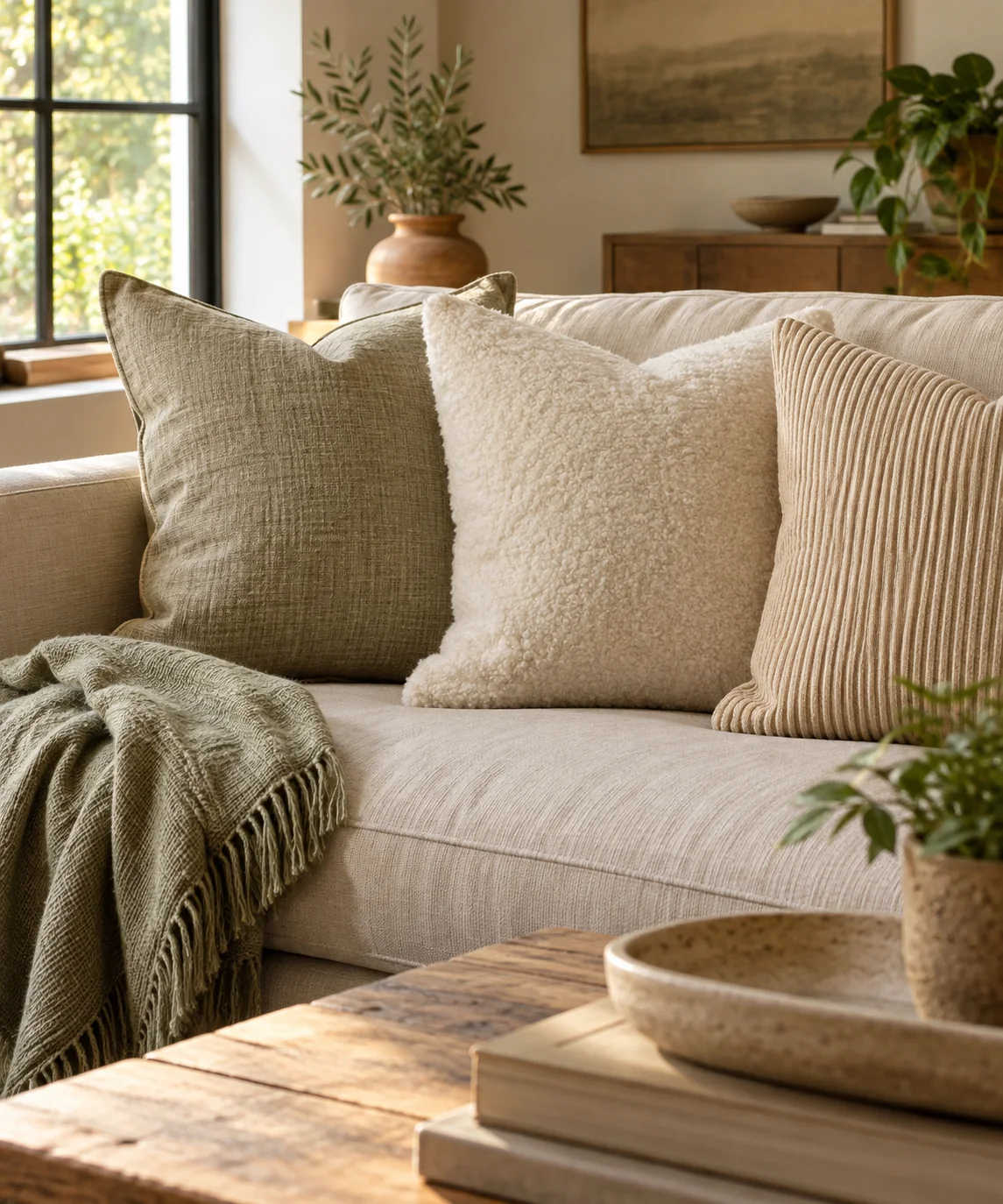
The Three-Fabric Tactile Strategy
Build your cushion palette around three distinct surface weights: heavy cotton canvas, mid-weight linen, and tactile wool. Cotton canvas serves as an architectural anchor with its dense weave and flat finish. Natural flax linen introduces organic slubs and relaxed creasing, softening the canvas's rigidity. Finally, boiled wool, knit yarns, or boucle add dimensional loft and cozy texture. Keeping all three in related tonal hues—such as ecru, oatmeal, and stone—ensures the display feels unified while the varied material sheens catch light differently throughout the day.
Sizing, Layering, and Spatial Proportion
Arrange cushions by graduated dimensions to create depth across sofa corners. Place larger twenty-two-inch canvas squares at the very back against the sofa cushions, as their structural firmness provides steady support. Layer medium twenty-inch linen covers in front, slightly overlapping the canvas base. Finish the cluster with an eighteen-inch square or a compact lumbar cushion clad in soft wool at the forefront. This stepping pattern showcases each textile's unique weave while preventing smaller accent pieces from slipping behind bulky back pillows.
Cushion Inserts and Structural Firmness
The interior cushion pad significantly influences how each fabric behaves and appears. Dense canvas requires a resilient feather-and-down insert or high-density wool fill that fills out square corners neatly. Linen thrives with a pliable feather insert that takes a relaxed chop and holds casual folds. Wool covers benefit from generous, firm stuffing to highlight their textured surface without sagging. Always choose inserts sized two inches larger than the cushion cover to ensure the pillow looks plump and maintains its shape under daily household use.
Rotating Fabrics for Comfort and Seasons
Modifying cushion placement lets your living room adapt comfortably between seasons without swapping your entire neutral palette. During warmer months, shift breathable linen and smooth canvas toward center seating where arms and legs rest, pushing heavier wool accents to the outer edges. In cooler weather, pull boiled wool and textured knits forward for immediate warmth. Rotating cushions every few weeks also distributes physical compression evenly, preventing premature wear on delicate woven covers and extending the lifespan of internal down cushions.
Fabric Friction, Pilling, and Spot Maintenance
Different fibers interact under daily movement, requiring thoughtful pairing to prevent premature wear. Placing rough, coarse-textured wool directly against loose slub linen can generate friction that causes pilling on linen threads. Keep canvas as an intermediate buffer when possible. Address dirt according to specific fiber requirements: shake out wool covers outdoors and brush lint gently rather than frequent washing. Spot-clean canvas and linen using mild water-damped sponges. Always inspect individual care tags, as machine washing structured wool or canvas can alter cover dimensions.
YOUR STARTING POINT
A little checklist.
Original editorial guidance. Images are AI-generated concepts, not photographs of completed projects. Our sources and approach.
Questions to consider
How do I keep neutral cushions from looking boring without patterns?
Focus on varied tactile weaves and subtle tonal shifts. Combining smooth canvas, rough slub linen, and deep wool creates light-and-shadow contrast across pale surfaces, adding sophisticated depth without relying on high-contrast prints.
What size cushions work best on a standard three-seater sofa?
Use two twenty-two-inch canvas cushions, two twenty-inch linen covers, and one central eighteen-inch wool lumbar pillow. This five-cushion combination fills the width comfortably without crowding seating space or requiring constant rearrangement by guests.
Can I wash wool cushion covers in a standard machine?
Most wool covers require dry cleaning or spot cleaning with cool water. Machine agitation and heat cause wool fibers to shrink and felt, ruining the cover's dimensions and soft hand-feel. Always check manufacturer labels first.