Small Bedroom Layouts · THE GUIDE
Arranging a Bedroom Plant Corner Beside Window Trim
Placing greenery in a compact bedroom requires maximizing vertical space while preserving essential perimeter pathways. A tight window corner often presents unused architectural space, framed by wall jambs and interior window casings. By introducing a slender, vertical tiered stand, you can arrange foliage upward rather than outward across valuable flooring. This planning strategy protects natural pathways between the bedside and doorway while grouping plants near ambient daylight. Careful measuring ensures the stand settles naturally beside window moldings without pinching curtain drapes or hindering the operation of adjacent window sashes and blinds.
Jump to the checklist ↓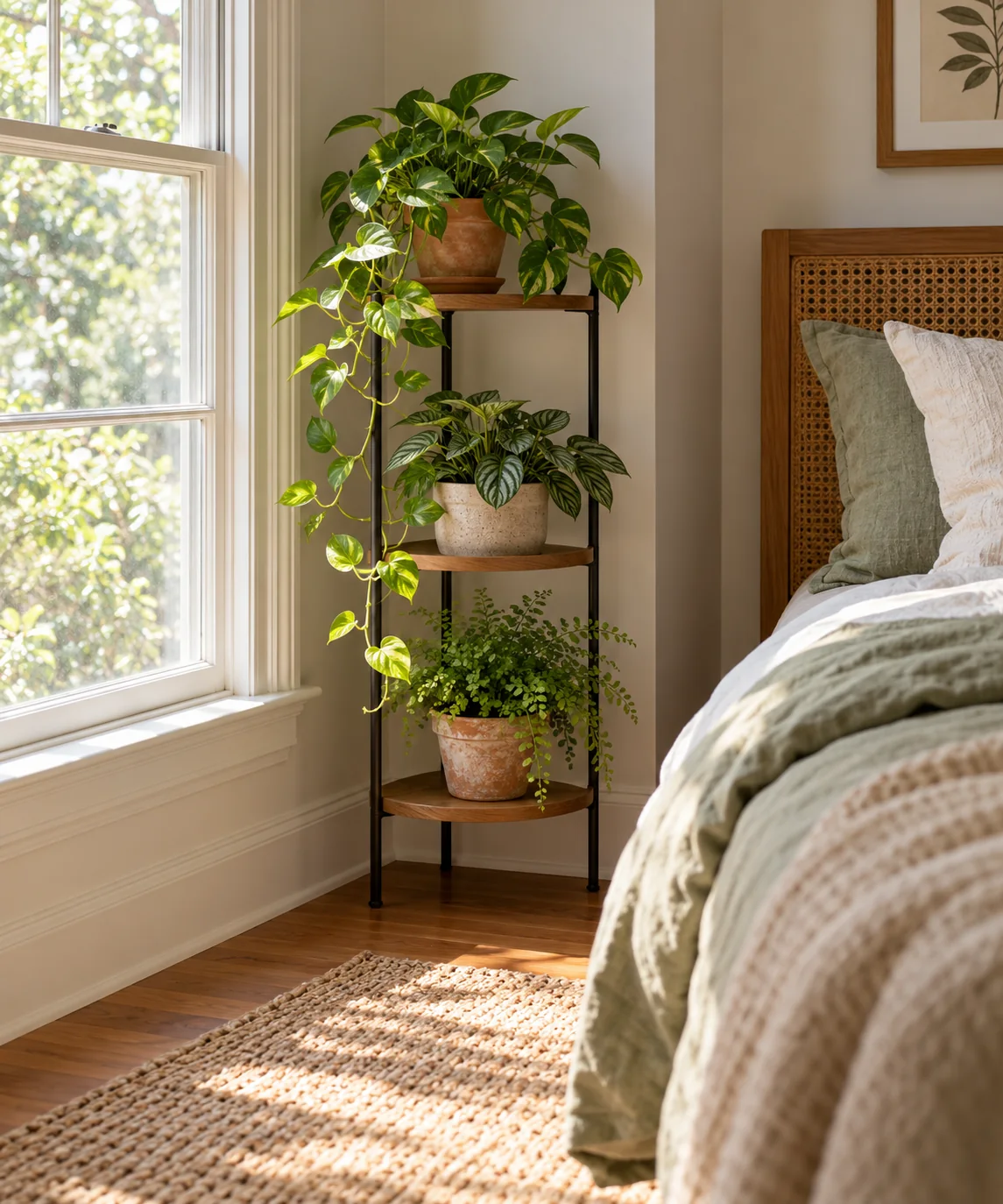
Corner Footprint and Walkway Clearances
Begin by measuring the open floor area between the window frame and nearby furniture edges. Walkway comfort depends on room scale and daily traffic patterns, so ensure the route between the bedside and doorway remains comfortable to navigate in dim light. Choose a plant stand with a compact triangular or rounded footprint that stays within the corner recess. Testing the placement with a cardboard template helps confirm that opening doors, dresser drawers, and bed coverings clear the stand easily during routine movement.
Tier Selection and Weight Distribution
A tiered vertical plant stand organizes foliage upward without consuming broad floor areas. Place larger, heavier containers—such as glazed ceramic or terracotta pots—on the lowest shelf to lower the center of gravity and improve overall stability. Reserve upper tiers for smaller, lightweight nursery containers housed in slim cachepots. Stacking containers vertically keeps foliage above carpet level, utilizing ambient vertical space while leaving walkways unobstructed.
Managing Window Trim and Window Coverings
Position the stand so window coverings can open and close freely without dragging across leaves or catching on pot edges. Maintaining a practical buffer between the stand and window woodwork protects painted casings from moisture buildup and leaves adequate room to operate window latches or blinds. Avoid arranging spreading foliage directly where curtain pleats bunch when drapes are opened fully during the day.
Moisture Protection and Tray Alignment
Arranging indoor plants close to painted window trim and wood or carpeted bedroom flooring requires careful water management. Pair every container with a watertight saucer or non-porous drip tray to capture excess drainage before it reaches flooring or adjacent millwork. Empty drainage saucers after watering so containers do not sit in standing water, and consider placing cork or felt pads beneath saucers to prevent surface scuffs and condensation marks on the stand.
Light Distribution and Foliage Observation
Window corners produce localized microclimates based on window orientation, exterior shade, and wall depth. Upper tiers generally receive brighter exposure, while bottom shelves may sit partially shaded by the window sill or adjacent furnishings. Select plant varieties suited to the light intensity of each tier rather than assuming uniform illumination throughout the stand. Monitor foliage over several weeks for signs of leaning or scorch, and rotate containers periodically to encourage balanced growth.
YOUR STARTING POINT
A little checklist.
Original editorial guidance. Images are AI-generated concepts, not photographs of completed projects. Our sources and approach.
Questions to consider
How close can a plant stand sit to window trim?
Leave sufficient space so curtains glide freely, window latches remain easily reachable, and damp pots do not contact painted woodwork. Adjust the distance based on the depth of your window trim and curtain folds.
Will a multi-tier stand overcrowd a small bedroom corner?
An open-frame vertical stand utilizes vertical wall height rather than floor area, which often keeps a compact bedroom feeling open while still accommodating several small plants.
Where should trailing plants be placed on a tiered stand?
Trailing foliage works best on middle or upper tiers where vines can cascade without touching the floor or spreading into adjacent walkway paths.