Small Bedroom Layouts · THE GUIDE
Arranging a Daybed Against the Long Wall for Office Flexibility
Dual-purpose guest rooms and home offices often struggle to balance daytime productivity with occasional hosting needs. Centering a traditional bed in the room splits available floor space into awkward perimeter slivers, leaving little room for a comfortable workstation. By positioning a tailored daybed lengthwise against the room’s longest wall, the furniture footprint functions like a deep sofa by day and a standard bed by night. This perimeter-aligned orientation frees up the opposite wall, establishing ample clearance for a dedicated writing desk, task seating, and smooth office circulation without compromising room utility.
Jump to the checklist ↓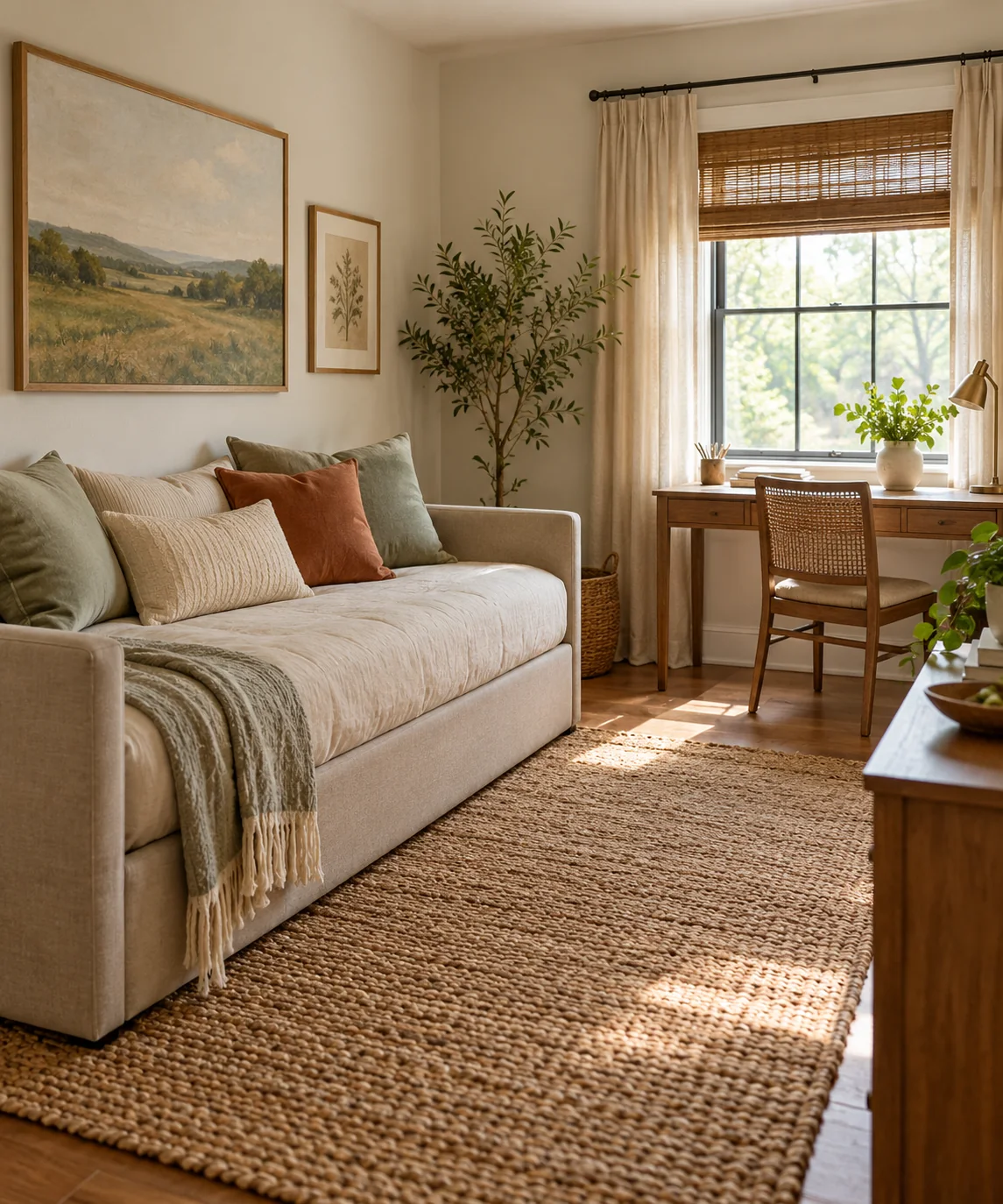
Allocating Floor Span Along the Long Wall
A standard twin daybed requires a wall footprint of roughly 80 inches long and 40 inches deep, including frame allowances. Aligning this long side flush against the primary wall preserves the central corridor of the room. Before locking in placement, confirm the frame does not clip heating baseboards, low window sills, or room entry sightlines. This boundary positioning establishes a clear linear divide, leaving the entire opposing span open for dedicated work surfaces and office storage.
Calibrating Clearance for the Opposite Desk
To sustain a practical home office, prioritize ergonomic walkways between the daybed and the desk across the room. A standard writing desk extends 24 to 30 inches from the opposing wall, while an office task chair requires approximately 36 inches of operating depth. Maintain a minimum walkway clearance of at least 36 inches between the pulled-out desk chair and the edge of the daybed. This generous corridor ensures effortless movement without bumping furniture during routine workdays.
Styling the Daybed for Daytime Seating
Because a twin mattress measures 38 inches deep, standard seating postures feel unsupported without intentional backrest padding. Line the back edge of the daybed with firm euro-sham pillows, dense bolster cushions, or a tailored upholstered wedge. These additions reduce the usable sitting depth to a comfortable 20 to 24 inches, transforming the mattress into a functional lounge couch for reading or reviewing documents during breaks, while allowing quick removal when hosting overnight guests.
Integrating Low-Profile Under-Bed Storage
Capitalize on the long footprint of the daybed by utilizing the generous storage zone beneath the mattress frame. Choose low-profile, lidded rolling containers to house office archives, spare printer supplies, or guest bedding. Because the daybed faces directly into the open room, opt for tailored fabric bed skirts or integrated wooden drawer fronts that conceal stored items seamlessly. This maintains a professional visual backdrop during video calls while keeping everyday office essentials out of sight.
Managing Cable Routing and Workflow Zones
Separating rest and work zones across the room prevents equipment cords from encroaching on the sleeping area. Position your desk close to wall electrical outlets to avoid running extension cords across the central walkway. Use adhesive cord clips along desk legs and baseboard perimeters to manage power strips cleanly. Keeping technology and charging cords isolated to the desk wall preserves the daybed as a clean, restful retreat completely free of office clutter.
YOUR STARTING POINT
A little checklist.
Original editorial guidance. Images are AI-generated concepts, not photographs of completed projects. Our sources and approach.
Questions to consider
Can I use a trundle daybed in a home office layout?
Yes, provided you account for the extra 38 to 40 inches of floor space required when the trundle pulls out. Simply slide the desk chair beneath the desk before expanding the guest trundle.
How do I choose the right desk depth for this arrangement?
A desk measuring 20 to 24 inches deep is ideal for small dual-purpose rooms. It supports laptop screens and writing tasks comfortably while maximizing the walkway between the desk and the daybed.
Will a daybed feel too casual for professional video calls?
Tailoring the daybed with neutral fitted covers, structured cushions, and a clean bed skirt creates the look of an executive sofa. This provides a tidy, professional background on camera during remote meetings.