Small Bedroom Layouts · THE GUIDE
Arranging a Diagonal Corner Bed to Improve Awkward Flow
Asymmetrical bedrooms often feature competing door swings, tight closet corners, and low window jambs that make placing a bed flat against a wall impractical. Angling the bed diagonally into a corner can liberate tight entry clearances and prevent a headboard from partially blocking window glass. While this layout introduces dead space behind the headboard, it creates symmetrical walkways along both mattress edges. Before shifting heavy furniture, evaluate your room dimensions, swing paths, and triangular dead zone practicalities to see if a diagonal orientation will resolve traffic bottlenecks or merely consume valuable floor space.
Jump to the checklist ↓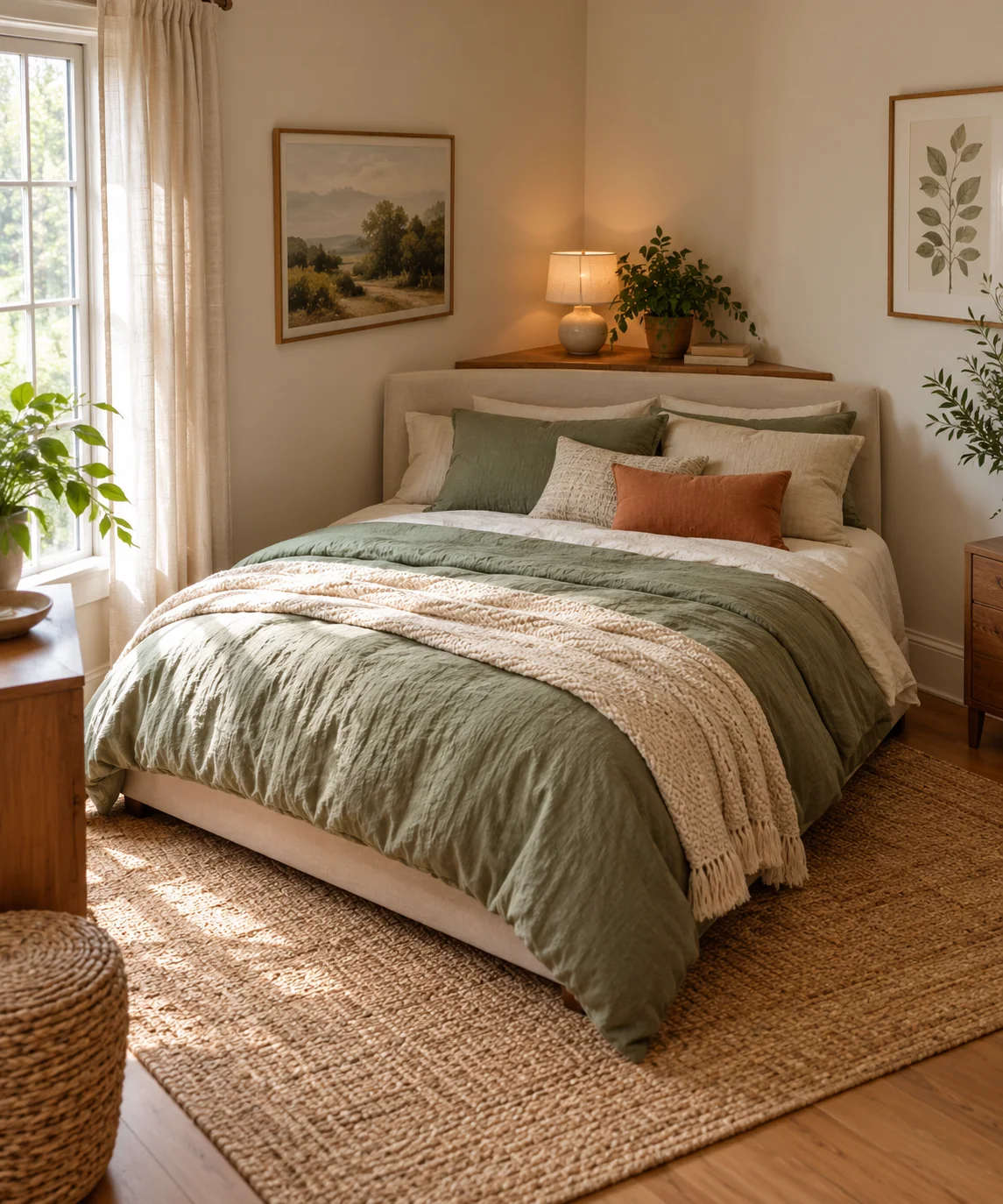
Mapping Door Swings and Clearance Arcs
Measure entry door arcs, closet doors, and casement windows before angling the frame. A bed set flat against a wall might collide with an open bedroom door or project over baseboard heaters. Angling the headboard across a 90-degree corner pulls the primary sleeping area forward, leaving unobstructed pathways flanking the sides. Use painter's tape on the flooring to trace the outer mattress perimeter at a 45-degree angle. Check that you retain a minimum walkway width of twenty-four to thirty inches on either side of the mattress.
Managing the Triangular Headboard Void
Placing a flat rectangular headboard across a right-angle corner leaves a triangular footprint behind it. This space can trap dust, dropped pillows, or trailing cords if left unmanaged. Position a freestanding corner shelving unit or a custom triangular wood console level with the top of the mattress behind the headboard. This surface stabilizes the bed against accidental shifting, prevents pillows from tumbling into the void, and offers an accessible spot for a compact reading lamp or alarm clock without requiring detached bedside tables.
Choosing Frame Styles and Under-Bed Accessibility
A diagonal bed works best with streamlined, low-profile bed frames that lack bulky posts or wide footboards. Heavy corner posts exaggerate the diagonal footprint and narrow peripheral walking space. Solid platform bases or slim tubular metal frames minimize spatial intrusion while maintaining structural stability. Be aware that accessing storage beneath an angled bed becomes harder toward the wedge corner. Reserve the accessible front edge for shallow rollout bins, and leave the deepest triangular under-bed section clear for routine vacuuming.
Managing Lighting and Power Cords Safely
Corner arrangements can complicate access to standard electrical wall outlets. If the angled headboard obscures an outlet, plug in a surge-protected extension cord before sliding the bed into position. Route cords cleanly along baseboards using non-damaging adhesive cord clips rather than running cords beneath the mattress or through high-traffic walking paths. Mount clamp-on reading lights directly onto the headboard or position a slim arc floor lamp within the triangular rear recess to avoid encroaching on narrow walkway space beside the bed.
Assessing Daily Drawbacks and Spatial Trade-offs
While diagonal positioning eases door collisions, it consumes more total square footage than a wall-aligned setup. In square rooms under ten feet across, an angled queen mattress may push the footboard uncomfortably close to the center of the room, compressing the dressing area. Additionally, tucking fitted sheets requires reaching behind the angled headboard, which can be physically awkward in tight corners. Test this layout for two weeks before committing permanently, confirming that the improved traffic flow offsets the sacrificed floor area.
YOUR STARTING POINT
A little checklist.
Original editorial guidance. Images are AI-generated concepts, not photographs of completed projects. Our sources and approach.
Questions to consider
How do I stop pillows from falling behind an angled headboard?
Install a triangular wedge cushion between the mattress and wall, or set a level, freestanding corner table directly behind the headboard. This blocks the opening, keeps bedding supported, and provides a reachable surface for nighttime essentials.
Does a diagonal bed make a small room feel larger or smaller?
It improves functional flow by freeing jammed doorways and window trims, but it takes up more central floor area. In tight rooms, the protruding footboard can dominate the space unless side clearances remain completely unobstructed.
Can I place standard nightstands beside an angled corner bed?
Traditional nightstands rarely fit cleanly against angled beds without blocking pathways. Instead, use the triangular shelf behind the headboard, wall-mounted floating ledges, or narrow clip-on bedside trays attached directly to the bed frame rails.