Small Bedroom Layouts · THE GUIDE
Arranging a Petite Sewing or Craft Table in a Bedroom Nook
Integrating creative hobbies into a small bedroom requires thoughtful boundary management so creative projects do not spill over onto sleeping surfaces. Architectural jogs, shallow wall recesses, and alcoves created by closets or chimney breasts provide ideal boundaries for a petite craft station. Setting up an ultra-compact folding table inside an unused nook isolates tools, threads, and paper goods from the rest of the room. By matching table dimensions to your alcove depth and establishing clear pack-down routines, you can pursue crafting comfortably without compromising bedroom restfulness.
Jump to the checklist ↓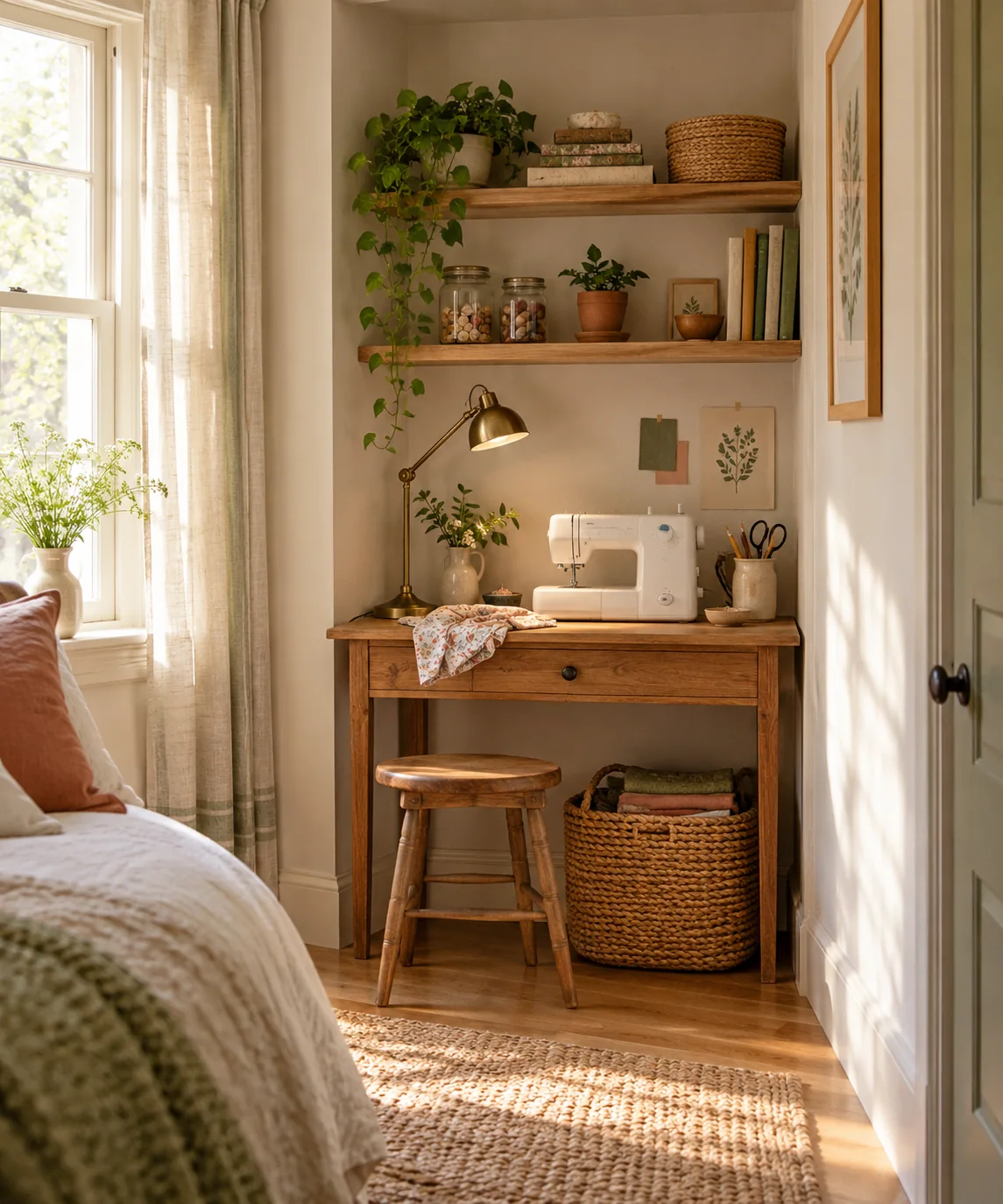
Assessing the Architectural Recess
Before sourcing a folding table, measure the architectural jog's exact width, depth, and skirting board clearance. Many bedroom nooks measure between 80 and 120 centimeters across, which accommodates a modest drop-leaf or narrow task table. Ensure the table sits comfortably within the recess without protruding past the corner boundary into primary walkways. Aligning the front edge of the tabletop flush with the surrounding wall plane maintains clean visual sightlines and preserves the open feeling of the bedroom.
Clearances for Sitting and Standing
A compact hobby nook requires sufficient clearance behind the work surface so you can pull out a chair without hitting adjacent furniture. Aim for 75 to 90 centimeters of open floor behind the table edge for seated comfort and safe egress. Choose a stool or backless chair that slides completely underneath the table frame when work concludes. This eliminates chair legs obstructing walkways during sleeping hours and keeps the petite station looking tidy from the bed.
Folding Mechanisms and Table Stability
Sewing machines and craft cutting mats generate movement and vibrations, making structural stability essential for compact tables. Avoid flimsy tray tables; instead, select a sturdier wooden drop-leaf or fold-down leg unit with solid hinge hardware. Ensure the support legs lock securely in place when extended. When working, position heavier equipment like sewing machines directly over the main structural supports rather than the outer cantilevered leaf tips to prevent wobbling or unintended tipping during delicate craft tasks.
Storing Tools and Fabric Off the Bed
Without dedicated storage, hobby supplies inevitably migrate onto bedspreads and nightstands. Utilize the vertical zone beneath your compact table by tucking a covered storage box or a rigid basket between the table legs. Keep pins, measuring tapes, scissors, and fabrics organized in labeled, lidded containers inside the basket. By establishing this rule—supplies return immediately to under-table storage—you protect your bedding from stray pins, fabric dust, and misplaced craft components.
Session Teardown and Visual Boundaries
Because the crafting nook sits in full view of your sleeping quarters, an unfinished project can create mental distraction at night. Establish a five-minute pack-down habit at the end of every creative session. Fold the table leaf down, slip your task stool beneath the frame, and stow current work-in-progress materials in a designated canvas tote. Returning the alcove to its compact resting state re-establishes quiet order, allowing your bedroom to feel like a peaceful sanctuary.
YOUR STARTING POINT
A little checklist.
Original editorial guidance. Images are AI-generated concepts, not photographs of completed projects. Our sources and approach.
Questions to consider
What size craft table fits best in a small bedroom alcove?
A table measuring 70 to 90 centimeters wide and 40 to 50 centimeters deep provides sufficient space for sewing or crafting while remaining compact enough to tuck into typical bedroom wall recesses.
How can I reduce sewing machine vibration on a folding table?
Place a dense silicone or felt dampening mat beneath the machine base. Additionally, position the machine directly above the table's fixed structural legs rather than near folding extension edges for maximum stability.
Where should I store projects between crafting sessions?
Use a lidded container or dedicated fabric tote stored directly underneath the table. Stashing ongoing work out of sight prevents visual clutter and protects bedroom textiles from loose threads and stray craft debris.