Small Bedroom Layouts · THE GUIDE
Arranging a Small Bedroom Around an Off-Center Window
When a bedroom window sits off-center on the primary wall, arranging furniture can feel counterintuitive. Centering the bed under an asymmetrical window often cramps circulation paths or cuts off entryways. Conversely, centering the bed on the overall wall highlights the uneven architectural alignment. A practical resolution uses visual weight rather than structural changes. By centering the bed along the room's natural architectural axis and spanning drapery across both the glass and adjacent drywall, you establish an illusion of symmetry. This approach preserves necessary walking clearances while transforming an awkward architectural feature into a cohesive headboard backdrop.
Jump to the checklist ↓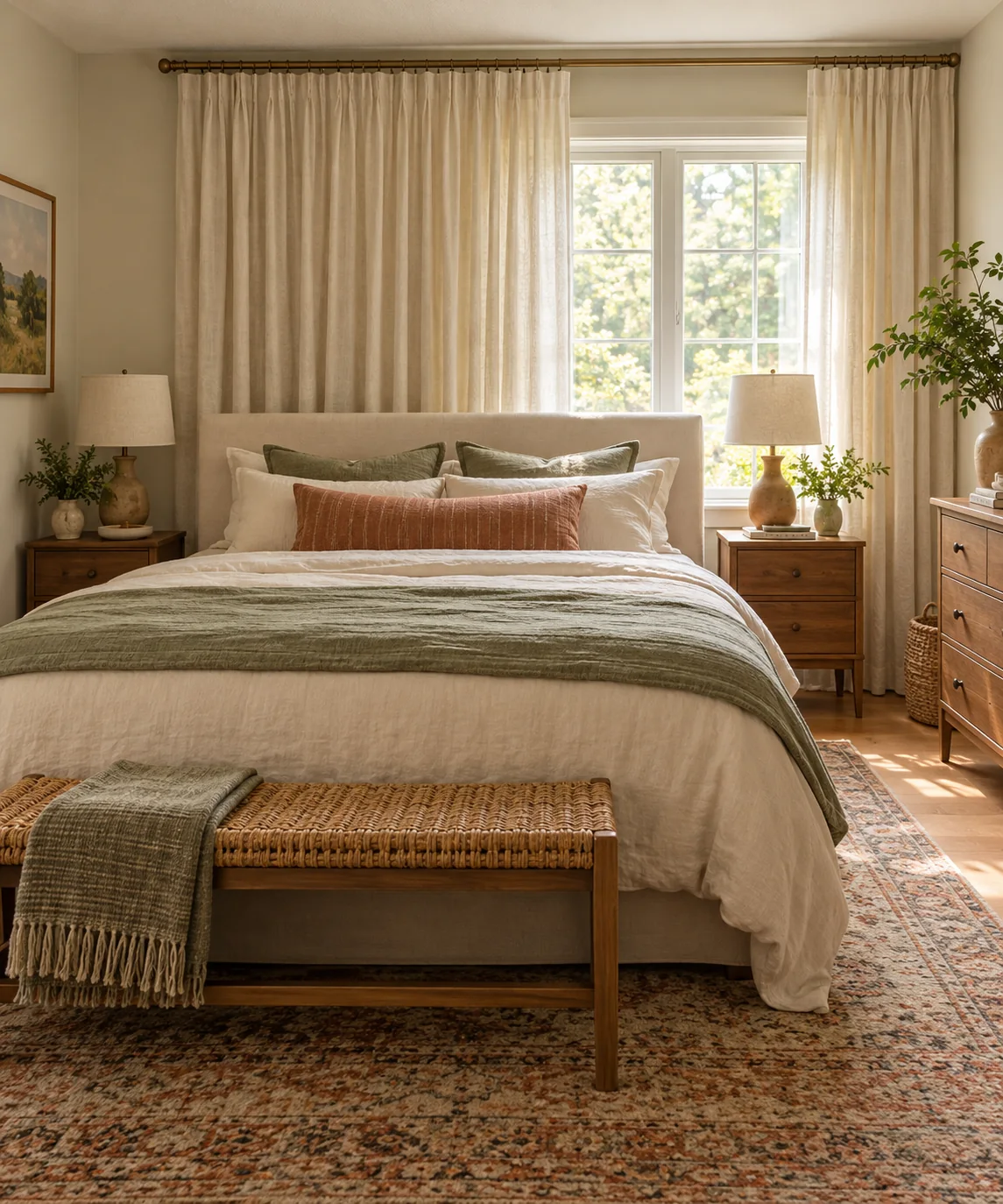
Determining the Primary Axis
Functional bedroom layouts prioritize clear circulation paths between the door, the closet, and both sides of the bed. Instead of skewing the bed frame solely to center it under an off-center window opening, test alignments based on the overall wall or the room's main entrance view. Marking the mattress footprint on the floor with painter's tape helps visualize how the placement interacts with walking routes, closet door swings, and architectural features before lifting heavy furniture.
Extending the Curtain Rod
To visually balance an asymmetrical window, select a curtain rod that spans across the headboard area and extends past the window casing toward the opposite wall. Hanging the rod relatively close to the ceiling line draws the eye upward and establishes a continuous horizontal reference line. Measuring the expanse from each outer bracket location to the bed's center axis helps create an even, symmetrical drapery frame across the entire wall section.
Balancing Fabric Stacks
Hang drapery panels so that one side frames the window glazing while the opposing side gathers over the adjoining drywall area. During daylight hours, stacking fabric over the bare wall mirrors the appearance of the curtain resting beside the window. This arrangement gives the visual impression of a unified, wider window opening or a dedicated textile backdrop behind the headboard while still permitting full daylight to enter through the uncovered glass.
Nightstand Scale and Symmetry
Attempting to force identical, heavy bedside tables under uneven wall architecture can emphasize asymmetrical conditions. Choosing tables that balance visual weight rather than matching dimensions often yields a calmer result. For instance, placing a more open, slender table on the window side preserves light transmission, while a slightly more solid nightstand on the blank wall grounds the layout. Low-profile, coordinated lamps help unify the two sides at eye level.
Managing Drapery and Heater Clearances
Careful coordination between drapery length and perimeter heating equipment is essential. Curtains must never hang directly over or within the clearance zones specified by baseboard heater or radiator manufacturers, as fabrics placed too close to heat sources present a serious fire hazard and obstruct warm air circulation. Ensure drapery stops well clear of any heating unit per equipment instructions, and allow a slight offset between the bed frame and the wall so textiles hang freely without being pinched.
YOUR STARTING POINT
A little checklist.
Original editorial guidance. Images are AI-generated concepts, not photographs of completed projects. Our sources and approach.
Questions to consider
Should the headboard sit directly against the curtain fabric?
Leaving a small gap between the headboard and the wall prevents the fabric from getting crushed, allows curtains to draw smoothly, and reduces abrasive wear on both the textile and the headboard finish.
What curtain opacity works best for balancing an off-center window?
Medium-weight or lined drapery fabrics work best because they conceal the high-contrast transition between the window glass and the solid wall behind them, whereas sheer textiles reveal the asymmetry.
How do I safely handle curtains if a heater sits under the window?
Always consult the heater manufacturer's clearance specifications. If an electric baseboard heater or radiator sits under the window, keep drapery hemmed well above the minimum clearance threshold or use an alternative window treatment like inside-mount Roman shades.