Small Bedroom Layouts · THE GUIDE
Arranging a Square Bedroom Around a Central Area Rug
Square bedrooms frequently challenge homeowners because their equal wall dimensions can make furniture placement feel disjointed or off-center. Centering a queen bed on the primary focal wall and anchoring it with a proportional area rug brings structural balance to the room. The rug serves as an intentional visual boundary, defining equal walking paths along the sides and foot of the bed. By delineating clear circulation margins and keeping traffic paths unobstructed, this balanced setup creates a cohesive layout. Strategic rug sizing makes a modest square bedroom feel deliberate, grounded, and noticeably more spacious.
Jump to the checklist ↓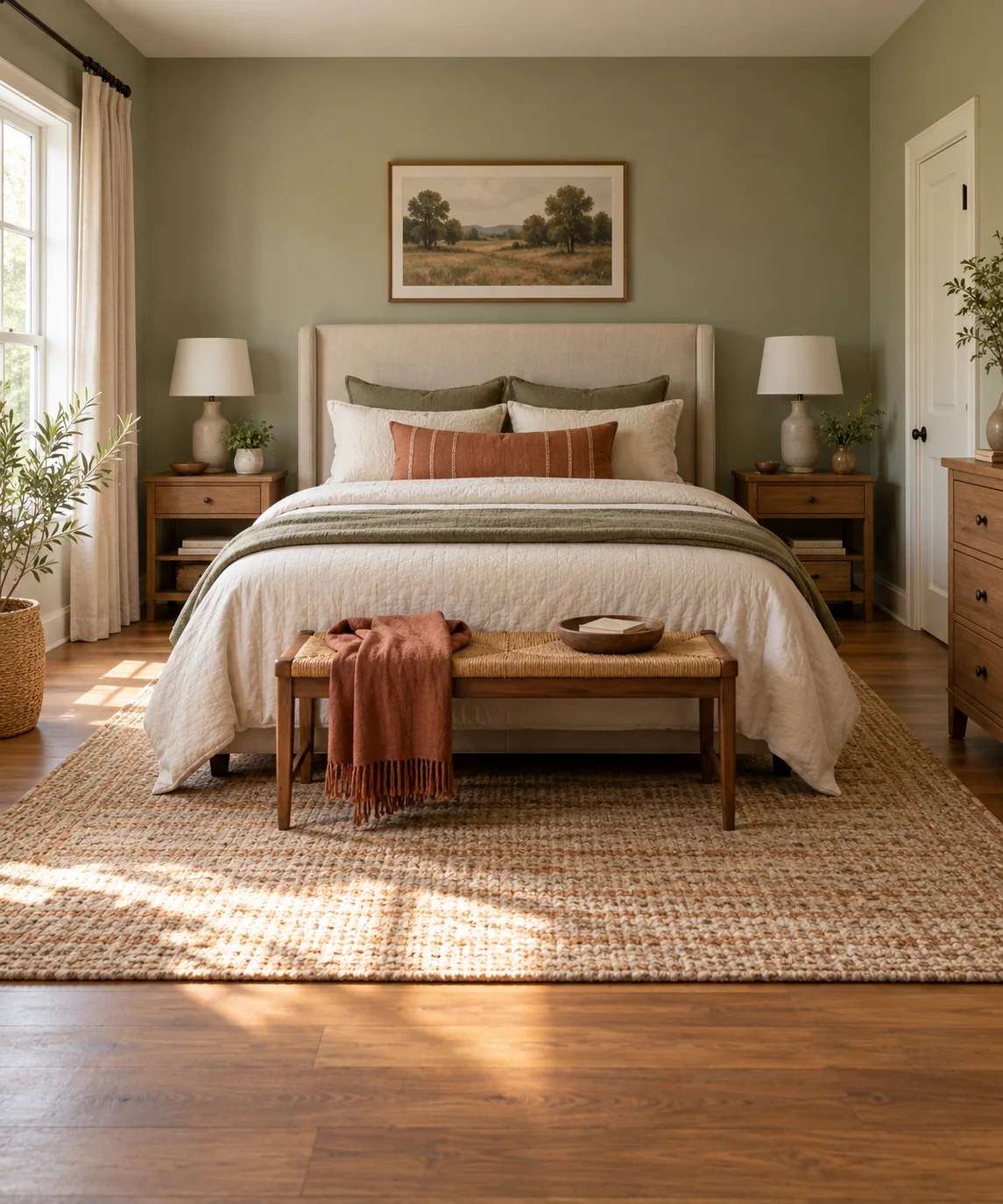
Determining Proportional Rug Dimensions
Selecting the right rug size prevents a square room from appearing cramped or fragmented. For a standard sixty-by-eighty-inch queen bed in a small square room, an eight-by-ten-foot rug generally provides balanced proportions. When oriented with the ten-foot edge running across the room perpendicular to the mattress, the rug extends approximately thirty inches beyond each side of the bed frame, offering ample cushioned footing upon waking. If oriented with the eight-foot edge spanning the width, side margins narrow to roughly eighteen inches, which still accommodates comfortable bedside circulation while leaving more exposed perimeter flooring. Avoid rugs smaller than six by nine feet beneath a queen bed, as narrower dimensions leave little stepping surface along the sides and fail to establish cohesive walkways.
Positioning the Bed Relative to Rug Edges
A centered bed placement typically functions best when the rug begins just forward of your bedside tables rather than running fully to the headboard wall. Placing the front two-thirds of the queen bed on the rug allows nightstands to rest entirely on bare flooring, eliminating wobbly furniture legs caused by resting half on the pile. This positioning extends the rug past the foot of the bed by several feet, creating a grounded landing zone that anchors the center of the room while highlighting symmetrical floor borders. It also preserves floor space near electrical outlets often located behind nightstands.
Balancing Walking Margins and Perimeter Flow
In square layouts, symmetry relies on equal clearances between the rug border and perimeter walls. Aim for twelve to eighteen inches of visible bare floor around the entire outer perimeter of the rug, adjusting according to the specific dimensions of your room. This exposed margin preserves room proportions and prevents floor coverings from bunching against baseboards, covering heating registers, or obstructing swinging closet doors. Maintaining balanced walkway widths on both open sides of the bed ensures fluid circulation, making navigation straightforward even in rooms with tighter spatial constraints.
Simulating Floor Borders with Painter Tape
Before purchasing or unrolling a heavy area rug, map proposed dimensions onto your bare floor using low-tack painter tape. Lay tape outlines indicating both eight-by-ten and alternative dimensions around your centered bed frame. Walk the perimeter pathways to evaluate foot clearance and confirm that room doors and closet panels swing freely without catching on the planned pile height. This hands-on simulation confirms that bedside pathways feel practical rather than pinched, preventing sizing errors and awkward returns before finalizing your purchase.
Vacuuming Access and Edge Curl Management
Managing a large rug in tight quarters requires attention to floor care and tripping hazards. Use a thin, non-slip felt rug pad trimmed roughly two inches shorter than the rug edge to prevent shifting without adding excessive bulk underfoot. In small rooms, ensure adequate perimeter clearance for vacuum cleaner heads to glide smoothly between rug edges, furniture legs, and adjacent walls. Inspect rug corners regularly for curling, using manufacturer-approved carpet tape or corner grippers to keep edges flat and maintain smooth, uninterrupted footpaths around the bed.
YOUR STARTING POINT
A little checklist.
Original editorial guidance. Images are AI-generated concepts, not photographs of completed projects. Our sources and approach.
Questions to consider
Should bedside nightstands sit completely on the rug?
In small bedrooms, it is best to position nightstands entirely on bare flooring. Starting the rug just forward of bedside tables avoids wobbly furniture legs and extends more rug surface toward the foot of the bed.
How much floor margin should show around the rug edges?
Aim for ten to eighteen inches of exposed flooring between the rug perimeter and bedroom walls. This border establishes visual breathing room, keeps walkways defined, and ensures the rug does not collide with perimeter baseboards.
Can I center a bed and rug if the bedroom window is off-center?
Yes. Centering the bed and rug on the room's main axis creates foundational harmony. Balance off-center windows using ceiling-height drapery panels extending across the wall to create an illusion of symmetry behind the bed frame.