Sage and Cream Interiors · THE GUIDE
Assemble a Rolling Living Room Caddy for Portable Craft Projects
A portable crafting caddy allows you to transport active knitting, embroidery, or mending projects between a living room sofa and a storage closet without leaving clutter on tables. By designating a compact three-tiered utility cart for handcrafts, you keep delicate fibers clean, tools organized, and surfaces clear. Selecting neutral cream metalware fitted with muted sage or linen organizer bins preserves a serene interior aesthetic while supplying functional utility. Proper weight distribution and intentional categorization ensure the caddy moves smoothly across floor transitions while keeping essential notions right at your fingertips.
Jump to the checklist ↓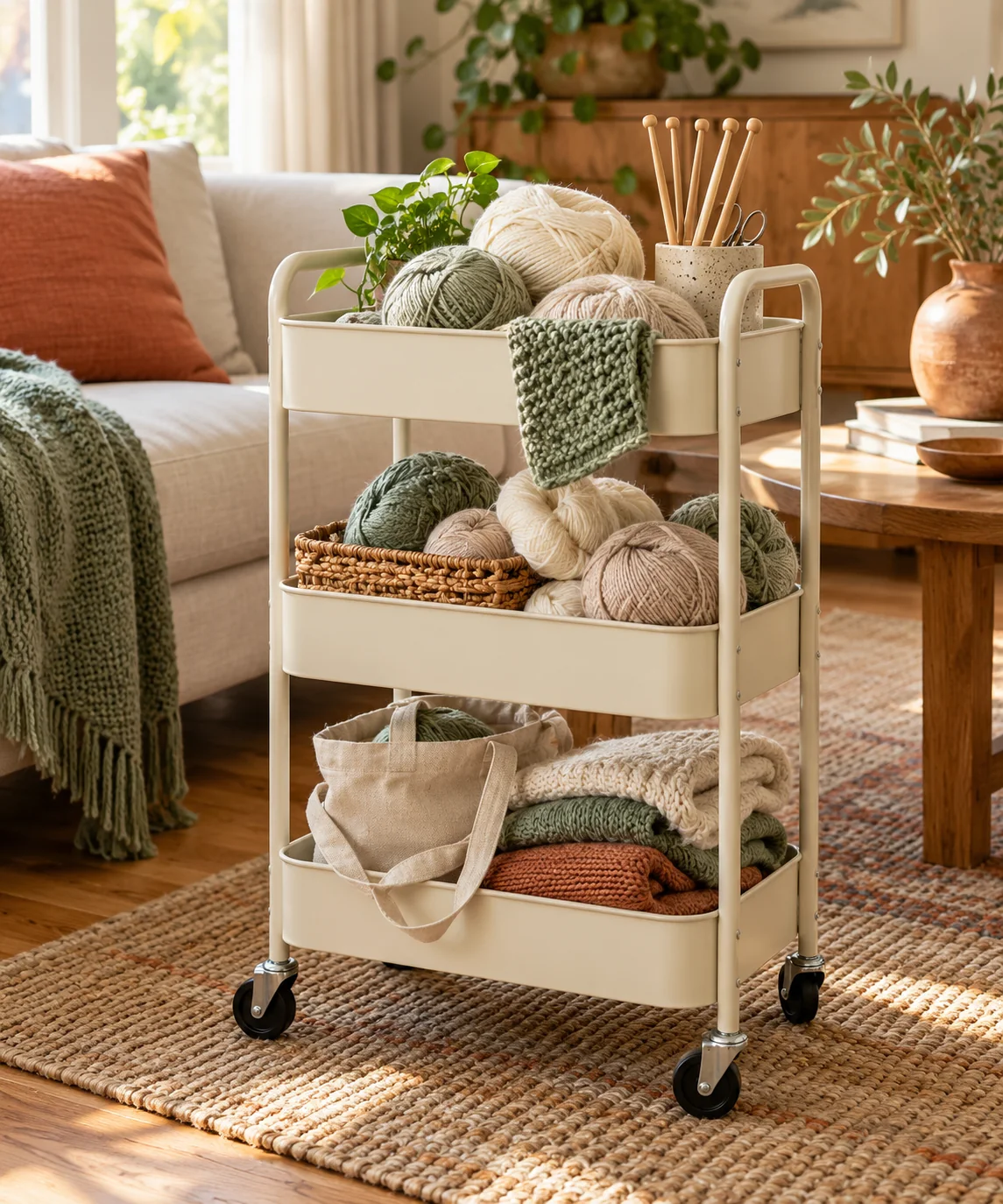
Assessing Clearance and Storage Paths
Before loading your caddy, map its intended path between your favorite seating area and its resting location inside a closet or corner alcove. Check doorway widths and verify that area rugs or threshold transitions do not catch smaller caster wheels. Ensure the overall cart dimensions slip neatly under end tables or closet shelves when stored away. Testing the cart empty across rugs reveals whether you need to lift or push it gently, avoiding spilled bins or tipping hazards during transit.
Distributing Weight Across Three Shelves
Place your heaviest items on the bottom shelf to establish a low center of gravity. Store reference books, spare fabric bundles, and heavy storage boxes at the base to prevent the unit from wobbling. Reserve the middle shelf for medium-weight essentials such as active project bags or skein winders. Keep the top tier light and accessible for active projects, yarn cakes, and small accessories. This balanced tiering keeps navigation stable across varying flooring.
Dividing Tiers With Fitted Modular Bins
Open utility shelves can easily turn into messy catch-alls without internal division. Use small cream fabric cubes, open woven baskets, or removable drawer organizers to compartmentalize different crafting supplies. Dedicate one section exclusively to cutting tools, tapestry needles, and measuring tapes stored inside secure, lidded tins. Group fibers by weight or palette in fabric bins to stop yarns from tangling together or catching on metal joints when sliding the cart.
Managing Tall Tools and Loose Ends
Knitting needles, pattern charts, and long rulers require vertical stabilization so they do not fall out while rolling. Hang lightweight, clip-on caddies or slim fabric cups along the cart exterior to hold pointed implements upright with safety caps attached. Secure loose working threads and pattern papers using simple brass clips or cloth bags. Keeping fragile tools contained within perimeter bounds ensures they do not snag on upholstery, door frames, or passing clothing.
Routine Editing and Surface Maintenance
Wipe metal frames periodically with a dry microfiber cloth to remove dust and stray fiber lint that naturally sheds from yarn. Check the casters every few weeks to clear trapped floor threads or pet hair that could impede smooth rolling. Periodically return finished projects or idle tools to permanent craft storage rather than letting surplus materials pile up. Maintaining a lean inventory keeps the cart light, functional, and pleasant to move.
YOUR STARTING POINT
A little checklist.
Original editorial guidance. Images are AI-generated concepts, not photographs of completed projects. Our sources and approach.
Questions to consider
How do I prevent skeins of yarn from snagging on the metal cart?
Line the wire or metal shelves with smooth fabric bins, cloth napkins, or removable shelf liners. This barrier stops delicate wool and cotton fibers from rubbing against rough metal mesh or catching on corner hardware during retrieval.
Can I leave an active project unattended on the top shelf?
Yes, provided small notions like snips and needles are secured in lidded tins or protective sheaths. Place ongoing work inside a light cotton drawstring bag on the top tray to shield raw fibers from household dust and pets.
What should I do if the cart catches on thick carpet edges?
Gently tilt the cart backward slightly using the upper frame handle so the front casters lift over the rug edge. Avoid pulling abruptly, which can cause tall tools or loosely stacked craft materials to tumble out.