Small Balcony Layouts · THE GUIDE
Assemble a Stackable Strawberry Tower in the Sunniest Corner
Growing fruiting crops on an urban balcony requires smart management of sunlight and square footage. Strawberries demand at least six hours of direct sunlight daily to produce sweet berries, yet wide rectangular troughs quickly consume an entire deck floor. A stackable clover-leaf planter tower solves this conflict by arranging planting cups vertically in a compact column. Placed in an unobstructed sunny corner, this tiered arrangement keeps foliage elevated, provides ample air movement around developing fruit, and utilizes vertical space while leaving central balcony flooring clear for circulation.
Jump to the checklist ↓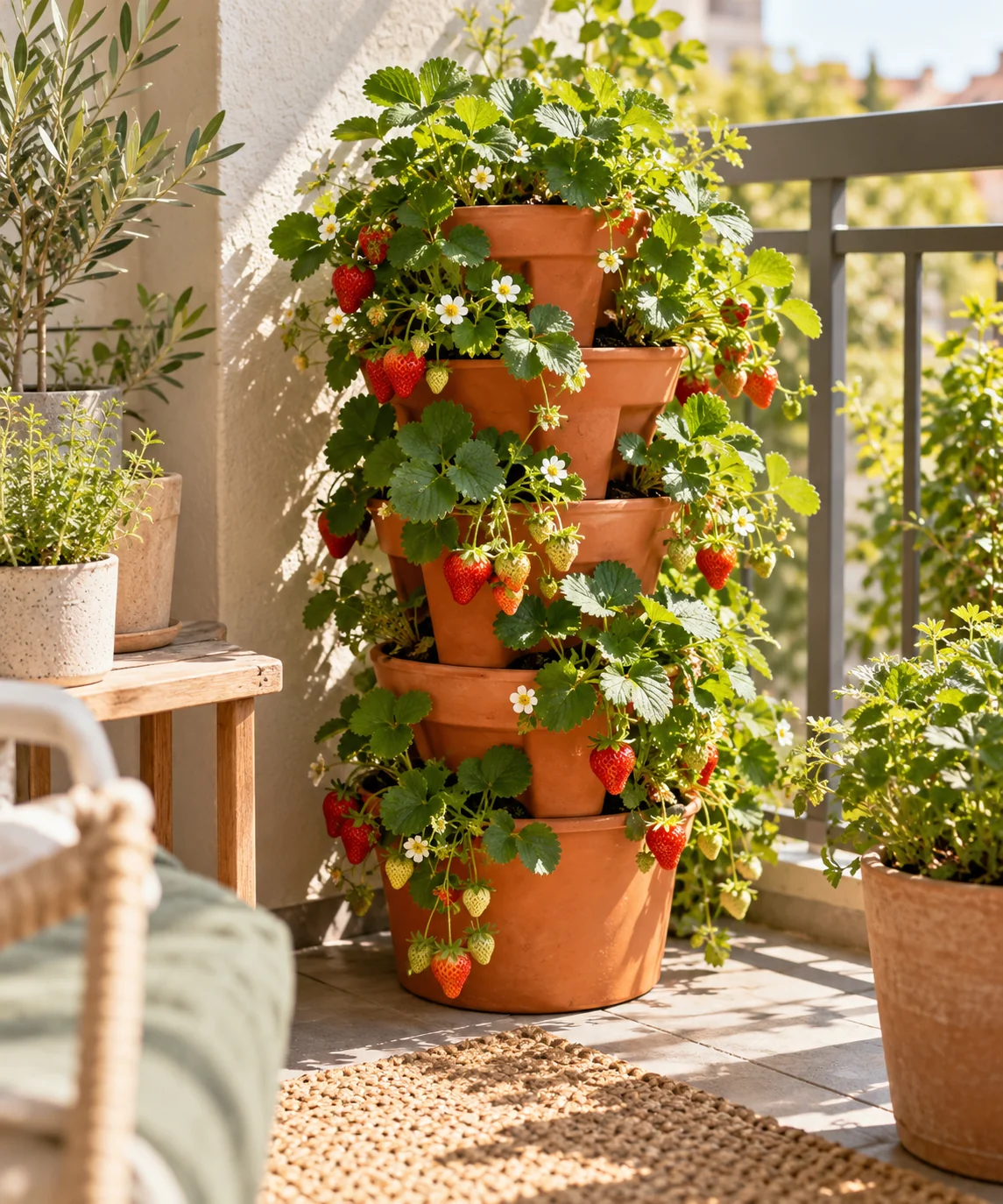
Assessing Balcony Exposure and Structural Limits
Before purchasing or filling vertical planters, confirm your building regulations and lease guidelines regarding balcony weight allowances and vertical containers. Saturated soil, mature plants, and accumulated water create substantial deadweight; never assume a corner position or lightweight planter eliminates structural load concerns. Contact property management or a qualified structural professional to verify permissible load limits for your deck. Track sunlight across the balcony floor to identify an area receiving at least six hours of direct light that remains clear of emergency access routes and door swings.
Selecting Potting Media and Managing Moisture Weight
Standard topsoil or mineral garden dirt compacts quickly and adds excessive weight when wet. Instead, select an outdoor container potting mix formulated with coconut coir, perlite, and well-aerated compost designed for container drainage. Do not add gravel or stones to container bottoms; this practice does not improve drainage and adds unnecessary mass. Fill tiers leaving adequate head space below each rim to prevent water runoff from washing soil onto the balcony floor, and monitor overall moisture retention carefully.
Stacking and Planting the Tiers
Assemble vertical planter tiers layer by layer directly in their designated location to avoid lifting heavy, fully planted assemblies. Set the base firmly on a heavy-duty catchment tray that prevents drainage runoff from pooling on the deck surface or dripping to lower balconies. Place healthy strawberry crowns level with the substrate surface, taking care not to bury the central crown where rot readily develops, nor leaving upper root strands exposed. Ensure interlocking tabs between tiers align according to the manufacturer instructions for stability.
Watering Mechanics and Runoff Control
Stacked planters drain sequentially from upper cups into lower tiers. Apply water gradually to the top reservoir and individual planting cups using a narrow-spout can, watching for downward percolation. Stop adding water when moisture appears in the bottom saucer to prevent root saturation and balcony staining. Upper tiers dry out significantly faster than shaded bottom sections due to exposure to sun and ambient airflow, so test individual pockets by touch before applying additional water.
Seasonal Care and Elevated Exposure
Vertical arrangements elevate plant roots above the thermal mass of the ground, leaving root systems susceptible to rapid temperature swings and winter freezing. In cold weather, strawberry roots in small vertical pockets can suffer freeze damage if left exposed. Move modular tiers to a sheltered, unheated indoor space or follow regional agricultural extension guidance for winter protection. Inspect the vertical stack periodically for tier shifting, drainage blockage, or pest presence, trimming spent foliage to maintain airflow.
YOUR STARTING POINT
A little checklist.
Original editorial guidance. Images are AI-generated concepts, not photographs of completed projects. Our sources and approach.
Questions to consider
Can everbearing strawberries thrive in a vertical stacker?
Yes, day-neutral and everbearing strawberry varieties can perform well in vertical containers because they yield fruit gradually over the growing season, which prevents heavy, dense foliage from overwhelming compact vertical pockets.
How do I prevent bottom planter tiers from becoming waterlogged?
Because vertical columns drain downward, lower tiers naturally retain more moisture than upper tiers. Test soil dampness with your finger at multiple tiers before watering, and apply water targeted directly to drier upper pockets.
How should vertical strawberry towers be protected in freezing weather?
Because small, elevated pockets lack the insulating mass of in-ground beds, root systems freeze faster during winter. Consult regional extension guidance to determine whether unstacking tiers and moving them to a sheltered indoor space or adding exterior insulation is suitable for your climate.