Entryway Organization · THE GUIDE
Assign Color-Coded Canvas Bins for Multi-Person Mudrooms
Shared mudrooms and entryway benches often become catchalls where knit hats, gloves, and scarves collect into an indistinguishable tangle. When several household members share a single storage zone, visual confusion slows down departures and creates daily friction. Color-coded canvas bins offer an adaptable sorting method that eliminates the need to decipher tiny labels in poor light. By allocating one specific hue to each resident, everyone instantly identifies their designated basket at a glance. This simple chromatic boundary streamlines entryway habits, limits misplaced winter accessories, and maintains an orderly aesthetic across open shelving units.
Jump to the checklist ↓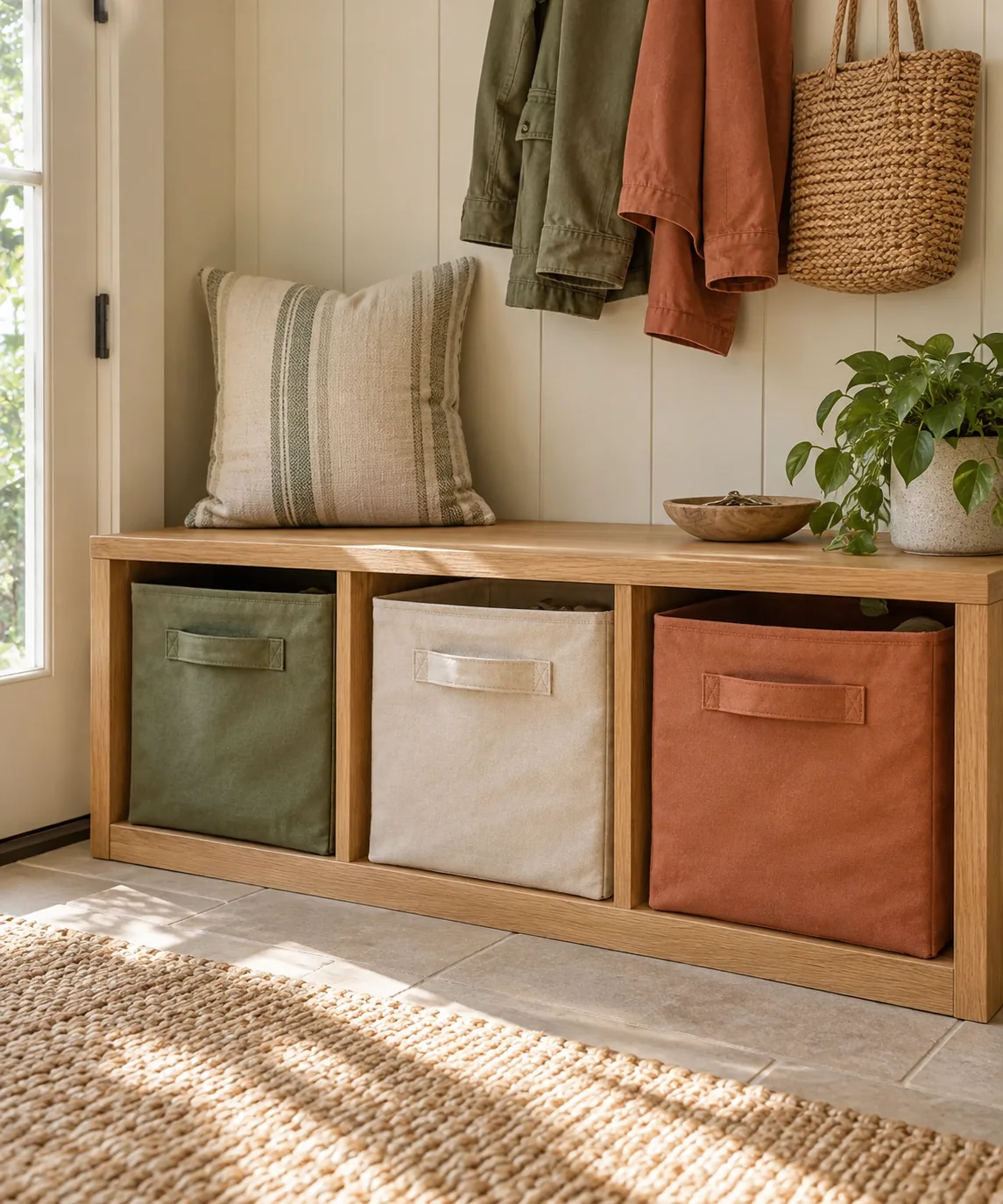
Selecting Differentiating Fabric Hues
Select bins with sufficient tonal contrast so household members can spot their assigned container instantly across the room. Rather than high-visibility primaries, consider earthy palettes such as slate grey, olive green, warm terracotta, and natural oatmeal to maintain visual coherence across open shelving. Ensure fabric dyes are colorfast by wiping a damp cloth over an inconspicuous seam. Solid colors work best; busy patterns complicate identification from a distance. If two people share similar preferences, opt for varying values of one hue, such as navy paired with sky blue.
Sizing Cubbies and Baskets Accurately
Measure the interior width, depth, and vertical clearance of each storage cubby before purchasing fabric bins. Allow at least one inch of horizontal clearance and two inches of overhead space to prevent bins from binding against shelf dividers during extraction. Heavy canvas with wire-rimmed frames provides necessary rigidity so sides do not sag when filled. Measure items typically stored inside, ensuring winter beanies, scarves, and extra mitten pairs fit without bulging beyond the rim. A structured bin keeps communal shelving neat while sliding smoothly.
Sorting Cold-Weather Essentials
Establish an inventory rule limiting each bin strictly to active, personal gear. Dedicate interior space to everyday items like a primary wool cap, two pairs of seasonal gloves, a neck warmer, and earmuffs. Bulky snow bibs, insulated ski pants, and spare guest accessories should reside in high-shelf backup baskets or secondary closets. Periodically empty each container to check for mismatched stray gloves and clean out accumulated outdoor grit. Keeping the capacity manageable prevents the common issue of buried accessories resting forgotten at the bottom.
Establishing Daily Drop Routines
Create an immediate landing pattern by positioning the color-coded containers within arm's reach of the primary entry bench. When arriving indoors, remove small accessories first and place them directly into the bin before unlacing footwear. If children struggle with reaching elevated cubbies, place their designated colors on bottom rows and assign upper levels to taller adults. Reversible placement allows you to reassign shelves as household dynamics shift. Consistent repetition of this drop routine turns frantic searches for matching gloves into an effortless departure habit.
Maintaining Canvas and Fabric Liners
Damp gear placed directly into unventilated cloth can harbor moisture and musty smells. Select canvas containers featuring removable, washable cotton liners, or allow wet woolens to air dry flat on a slatted bench surface before depositing them into the basket. Spot-clean outer canvas walls using a firm brush and mild soapy water, avoiding soaking structural fiberboard bases. At the end of the cold season, empty the bins completely, fold seasonal wool accessories away in breathable cotton bags, and vacuum bin interiors thoroughly.
YOUR STARTING POINT
A little checklist.
Original editorial guidance. Images are AI-generated concepts, not photographs of completed projects. Our sources and approach.
Questions to consider
How do I label bins if two people prefer the exact same color?
Keep the identical bin color but attach distinct leather or wooden luggage tags to the handles. Alternatively, assign different tonal shades within that color family, such as pairing deep forest green with a lighter sage hue.
Can damp wool gloves be put straight into canvas baskets?
Avoid storing saturated accessories directly in enclosed bins. Canvas absorbs moisture slowly, which can trap dampness and foster odors. Lay wet mittens across a bench surface to air-dry completely before tucking them away into bins.
What if an adult has too many winter accessories for one bin?
Institute a two-bin rotation or offload occasional ski gear into a high-shelf tote. Daily bins should contain only the two pairs of gloves and hats worn weekly, reserving secondary closets for surplus scarves and backup gear.