Small Bathroom Storage · THE GUIDE
Attach a Magnetic Strip Inside the Medicine Cabinet for Steel Tools
Small grooming instruments like stainless tweezers, nail clippers, and cuticle scissors frequently end up jumbled at the bottom of vanity cups or rolling loose inside drawers. In a compact medicine cabinet, every square inch of vertical surface offers organizing potential. Mounting a slender magnetic tool strip to an interior side wall or back panel keeps essential steel items upright, instantly visible, and ready to grab. This reversible organizational technique frees up shelf space for bottles, protects delicate tool cutting edges from dulling, and creates a streamlined, tidy cabinet interior.
Jump to the checklist ↓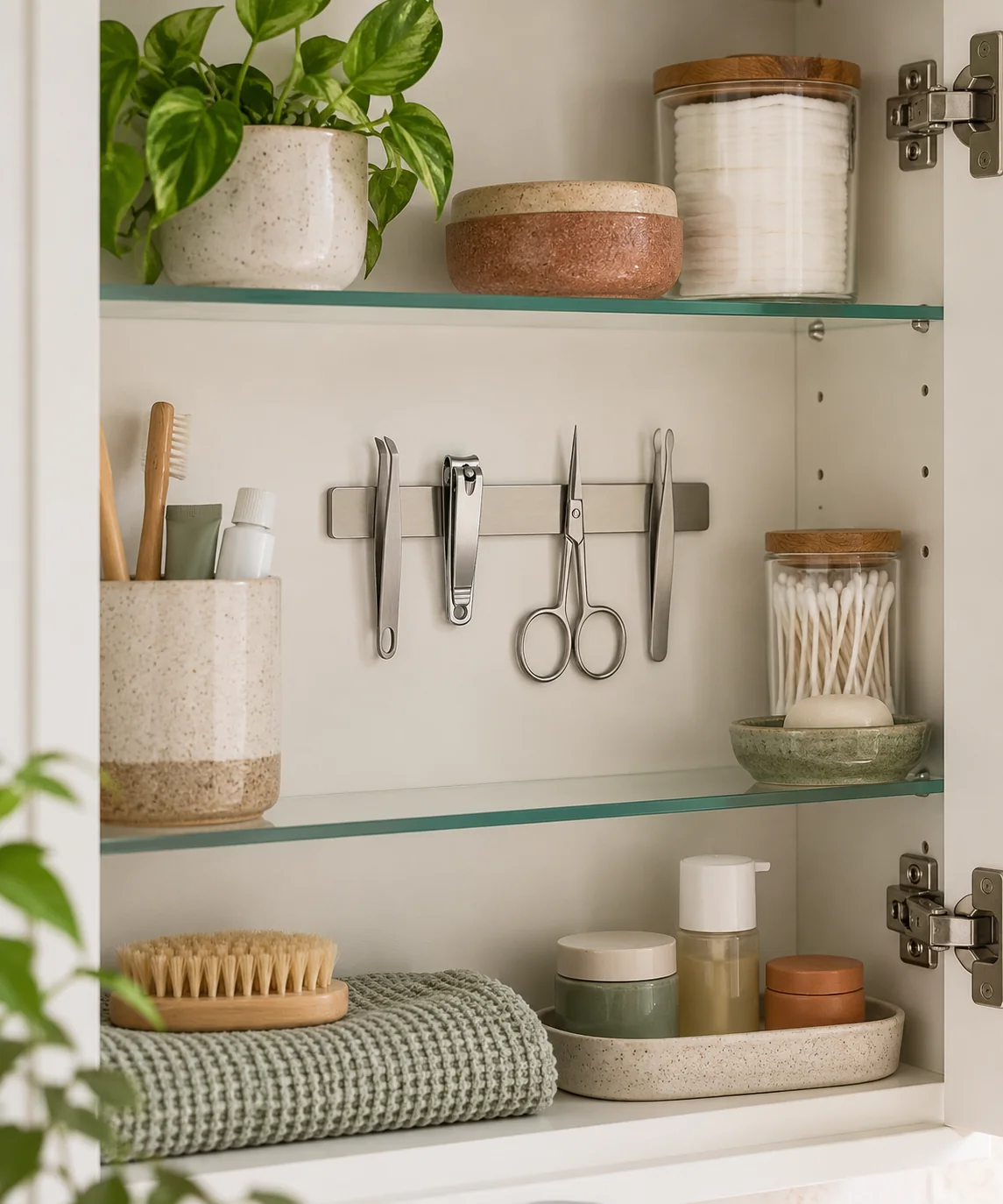
Testing Tool Metallurgy Before Placement
Not all bathroom grooming tools respond equally to magnets. While many scissors, precision tweezers, and nail clippers use steel alloys that grip firmly, certain stainless steels, coated implements, or brass and aluminum items show little to no magnetic pull. Before choosing a strip location, test each tool against a household magnet to verify whether it clings securely under its own weight. Sorting your magnetic items in advance helps determine the strip length you actually need and prevents items from unexpectedly slipping off once organized.
Evaluating Interior Cabinet Surfaces
Inspect the internal layout of your medicine cabinet to compare potential locations, such as the back wall, sidewall, or the inside face of the door. An interior sidewall often provides convenient storage while leaving shelf depths open for daily bottles and jars. If you consider the cabinet door, check the gap between the closed shelves and the door panel. Protruding clipper handles or scissor loops must clear shelf lips easily when the door swings shut, so holding tools in place by hand first confirms that the door will close without contact.
Selecting Reversible Mounting Adhesives
Using removable mounting strips or foam adhesives avoids drilling into metal, plastic, finished wood, or mirrored cabinet interiors. Review the adhesive manufacturer's surface compatibility and weight ratings before application, as high-humidity bathroom environments require moisture-resistant formulations. Clean the chosen area thoroughly with a mild degreaser or isopropyl alcohol to remove cosmetic dust, oils, and soap residue. Follow the adhesive manufacturer's guidance regarding pressure and dwell time before placing any metal tools onto the strip.
Arranging Implements for Safe Handling
Arranging metal items with practical spacing prevents handles from catching on adjacent tools when you reach into the cabinet. Giving each item sufficient room allows your fingers to grip tweezers or clippers without knocking neighboring pieces loose. Position pointed or sharp instruments, such as fine-tipped tweezers or cuticle nippers, with tips facing upward or enclosed in protective silicone caps. This orientation reduces the likelihood of accidental contact with sharp points during rushed morning routines.
Managing Moisture and Routine Maintenance
Bathroom grooming tools exposed to steam and damp hands can develop surface discoloration or mineral buildup if stowed while wet. Drying scissors, clippers, and tweezers thoroughly on a towel before placing them on the strip helps protect the metal finish. Wipe the magnetic bar periodically with a dry microfiber cloth to remove settled dust and bathroom humidity. Ensuring both the tools and the magnetic surface stay dry helps maintain clean contact surfaces and keeps the cabinet interior tidy.
YOUR STARTING POINT
A little checklist.
Original editorial guidance. Images are AI-generated concepts, not photographs of completed projects. Our sources and approach.
Questions to consider
Can I mount a magnetic strip on a mirrored cabinet door?
Removable adhesives compatible with glass can adhere to mirror backing, but you must verify the product weight rating and clean the surface thoroughly. Confirm that closed shelves provide adequate clearance for tool handles before committing to door placement.
Why do some tweezers slide down the magnetic strip?
Certain stainless steel alloys, non-ferrous metals, or thick protective coatings have minimal magnetic attraction. If an implement does not hold firmly on its own, store it on a flat shelf or in a small organizer cup instead of relying on magnetic hold.
How do I remove adhesive strips without damaging cabinet surfaces?
Follow the specific removal instructions provided by the adhesive manufacturer, which typically involve stretching the release tab slowly parallel to the surface rather than pulling outward, preventing surface peeling.