Patio Seating Ideas · THE GUIDE
Back-to-Back Conversation S-Bench for Terrace View Sharing
Designing a central patio spine often requires balancing social connection with independent relaxation. A back-to-back conversation S-bench, also known as a serpentine bench, achieves this balance by curving outward in opposite directions. Placed along an open terrace corridor, this configuration allows two sitters to share a singular piece of furniture while enjoying distinct vantage points. One person can face a vibrant flowering border while another overlooks an architectural facade or courtyard path. This layout preserves personal space for reading without building visual walls, offering a sculptural centerpiece that organizes circulation across the terrace surface safely and comfortably.
Jump to the checklist ↓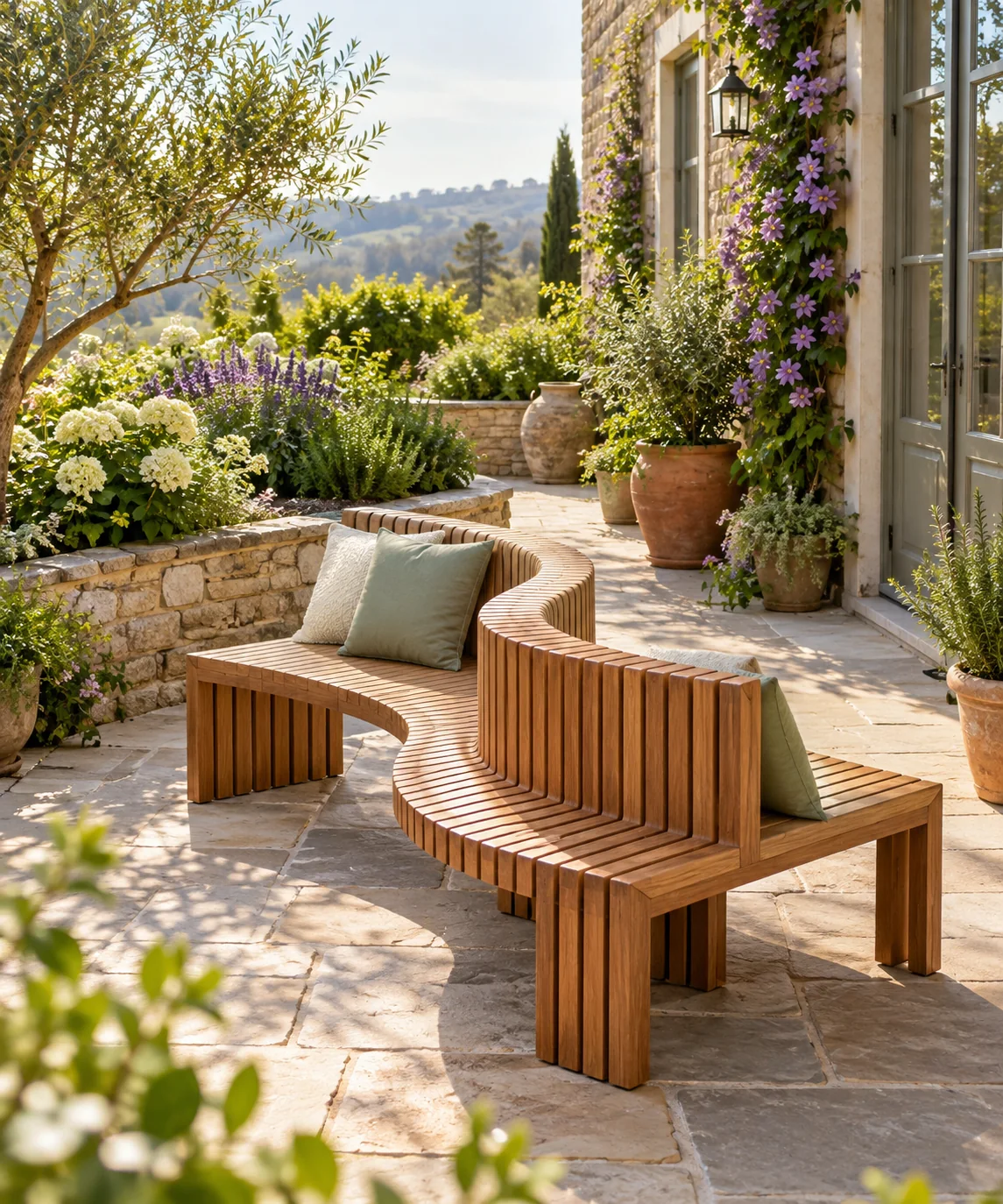
Central Spine Positioning and Clearances
Placing an S-bench requires deliberate mapping of surrounding terrace pathways. Position the central spine to allow at least thirty-six inches of unobstructed clearance on both concave sides. This perimeter permits individuals to pull out reading materials, stretch their legs, and walk past without disrupting whoever is seated opposite. Avoid placing the unit across primary exit routes from the house. By treating the bench as a free-standing island rather than perimeter seating, you establish organic, looping traffic lanes across the patio while clearly delineating two independent garden viewing zones.
Orientation to Sunlight and Aspect
Because the two seating curves face opposite directions, solar exposure differs significantly between them throughout the day. Align the spine along a north-south or northwest-southeast axis to balance light distribution. One seat will naturally catch morning warmth, making it ideal for early quiet reading, while the reverse seat benefits from afternoon shade or diffused light. Take note of prevailing wind paths across your terrace so that neither position traps leaf litter or exposes sitters to constant drafts, ensuring both sides remain practical throughout changing seasons.
Mock Layouts with Existing Furniture
Before purchasing or assembling a serpentine bench, test the orientation using two standard garden chairs placed back-to-back at an offset angle. Mark the proposed curved footprint onto your terrace pavers using chalk or low-tack painter's tape. Spend several days observing how family members navigate around the mock footprint during routine patio use. Ensure the sightlines actually capture desirable focal points rather than service zones like heat pump units or storage bins. This reversible layout test prevents costly spatial miscalculations on tight terraces.
Material Selection and Surface Leveling
A freestanding curved bench relies on stable ground contact across its entire base footprint. Dense hardwoods such as teak or eucalyptus provide durable exterior framing, while slatted seat construction allows rain to drain freely instead of pooling in curved joints. Ensure all foot glides or contact points sit squarely on flush pavers rather than bridging uneven flagstone joints, which can induce wobbling and frame stress. Periodically inspect assembly bolts and joinery hardware, as natural timber expansion and regular seasonal use can cause fasteners to loosen over time.
Cushion Storage and Functional Maintenance
Because S-benches feature non-standard curved seat profiles, standard rectangular outdoor cushions rarely fit neatly. Custom curved pads or independent round seat cushions with slip-resistant backings offer the cleanest aesthetic. Avoid leaving upholstered elements outdoors permanently where moisture can accumulate in the junction between opposing backrests. Store cushions in a dry, ventilated deck box when not in use. Clean the slatted timber twice yearly with water and mild detergent, wiping down the central junction where organic debris tends to collect unnoticed between the seats.
YOUR STARTING POINT
A little checklist.
Original editorial guidance. Images are AI-generated concepts, not photographs of completed projects. Our sources and approach.
Questions to consider
Can an S-bench work against a solid patio wall?
No, an S-bench requires open space on both sides. Placing one against a wall blocks the reverse curve, eliminating half the seating capacity and rendering the shared conversation design completely ineffective on your terrace.
What happens if one side receives excessive direct sun?
Adjust placement by angling the spine slightly or use a freestanding cantilever parasol. Alternatively, reserve the sunny side for morning use and switch to the shaded curve during intense midday or afternoon heat periods.
Can a timber S-bench be left unsecured in windy areas?
While solid timber benches are heavier than lightweight patio sets, exposed terraces and high wind conditions can still cause displacement. Consult manufacturer anchorage recommendations or move freestanding benches to sheltered positions prior to severe weather forecasts.