Kitchen Herb Gardens · THE GUIDE
Backsplash Rail Caddy for Culinary Snips and Pots
Countertop space around kitchen prep stations often competes with cutting boards, prep bowls, and small appliances. Utilizing a hanging rail system along the backsplash allows cooks to keep frequently harvested culinary herbs and dedicated trimming shears within arm's reach while preserving valuable counter area. Using suspended caddies paired with internal liner pots keeps tabletop garnishes like chives and parsley organized right by the work zone. Successful integration relies on assessing available vertical space, accounting for adequate lighting, and preventing water runoff, creating an orderly harvesting workflow while protecting kitchen tiles and food prep surfaces from soil and moisture.
Jump to the checklist ↓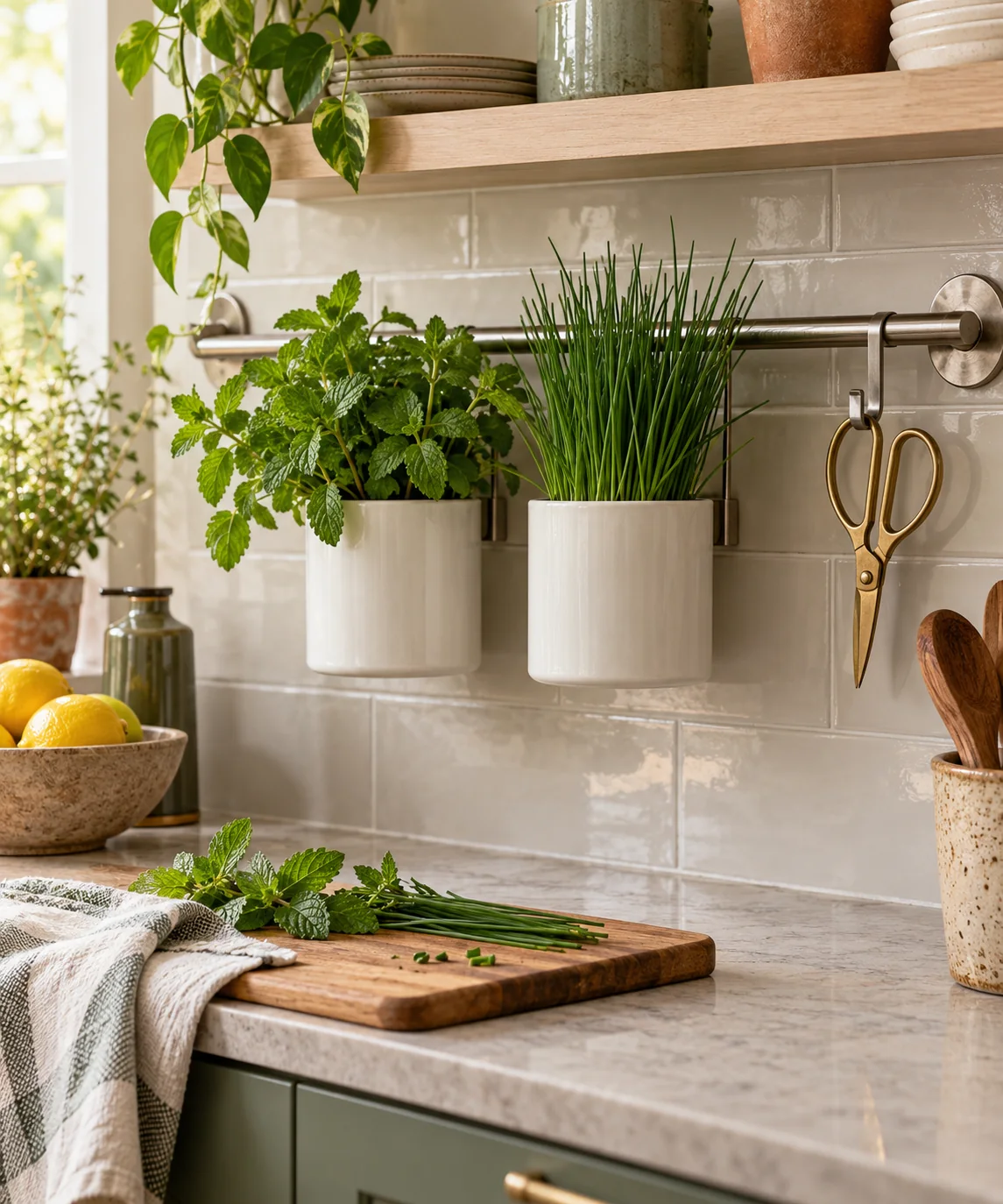
Workspace Clearances and Placement Planning
Planning where to position a backsplash caddy begins with evaluating working clearances above food preparation zones and under upper cabinets. Pots and suspended utensils should remain well clear of everyday kitchen tasks, allowing ample room for tall cutting boards, upright knives, and small appliances to maneuver freely without striking hanging hardware. In addition, select a wall location situated comfortably away from cooktops, steam vents, and oil splatter, as ambient grease and intense heat from simmering pans can quickly scorch delicate foliage or contaminate containers.
Light Assessment and Supplemental Fixtures
Backsplash areas beneath deep cabinetry frequently sit in shadow, presenting a distinct challenge for sun-loving culinary herbs. Before situating live plants against a backsplash, observe whether the wall receives consistent, bright daylight from nearby windows throughout the day. Where natural window light is obstructed or insufficient, integrate certified under-cabinet horticultural lighting or targeted LED grow strips. Herbs such as flat-leaf parsley, chives, and mint require sufficient light levels to produce robust foliage, maintain essential oils, and avoid pale, elongated stems.
Planter Selection and Drainage Management
When selecting hanging containers for food-prep zones, choose solid, non-porous outer canisters made of stainless steel, sealed ceramic, or powder-coated metal that lack open base holes. To maintain plant vitality without allowing water to drip onto food contact surfaces below, pair each canister with a slightly smaller plastic liner featuring standard drainage holes. During maintenance, lift the plastic pot out to water and fertilize at the kitchen sink. Allow all residual water to drain fully before returning the plant to its wall caddy, ensuring roots avoid waterlogging while countertops stay dry.
Culinary Snip Storage and Tool Hygiene
Keeping designated herb snips or kitchen shears suspended beside the herb pots streamlines rapid harvesting during meal preparation. Hang snips from dedicated S-hooks or magnetic brackets with cutting tips directed safely downward to prevent accidental cuts during quick reaches. Using dedicated pruning scissors rather than tearing foliage by hand produces clean stem cuts that heal faster and minimize tissue bruising. To maintain kitchen hygiene, wipe scissor blades clean and dry after each harvest to prevent sticky sap accumulation, surface oxidation, or cross-contamination between plants.
Ongoing Upkeep and Food Safety Protocols
Regular maintenance preserves both plant health and high standards of cleanliness across the kitchen prep station. Periodically verify that wall brackets and rail supports remain firmly seated against the wall surface, following manufacturer guidelines for weight distribution. Trim back trailing foliage so leaves do not drag across food preparation boards or lean against tile grout lines where ambient humidity can linger. Routine cleaning of the outer canisters and rail with mild soap and warm water removes dust and kitchen grease, keeping the assembly sanitary and visually tidy.
YOUR STARTING POINT
A little checklist.
Original editorial guidance. Images are AI-generated concepts, not photographs of completed projects. Our sources and approach.
Questions to consider
How should herbs hanging over a kitchen counter be watered?
Remove the inner plastic nursery pot from the outer wall canister and hydrate the soil over a sink. Let all excess water drain away completely before returning the pot to the backsplash caddy to protect food preparation surfaces from leaks.
Can culinary herbs be placed on a backsplash near a stovetop?
Positioning living herbs near a cooktop is not recommended. Heat plumes, airborne grease droplets, and steam from simmering pots can damage plant leaves, soil microbiology, and clean kitchen tools.
Which culinary herbs adapt best to compact hanging caddies?
Shallow-rooting and fast-regenerating culinary herbs like chives, curled parsley, and mint thrive in small modular pots, provided they receive sufficient daylight or dedicated horticultural lighting.