Indoor Plant Styling · THE GUIDE
Balance a Nightstand with Foliage and Bedside Essentials
A nightstand must primarily serve functional nighttime routines, accommodating a lamp, water vessel, and reading material within easy reach. Introducing a living houseplant softens hard bedroom edges and brings restorative texture to the sleeping space, but poor placement easily creates clutter or leads to midnight spills. Establishing an intentional layout relies on clear zoning, selecting non-intrusive container proportions, and protecting furniture surfaces from moisture. With thoughtful scaling and stable positioning, a single compact foliage plant can elevate your bedside table while preserving every inch of practical tabletop utility.
Jump to the checklist ↓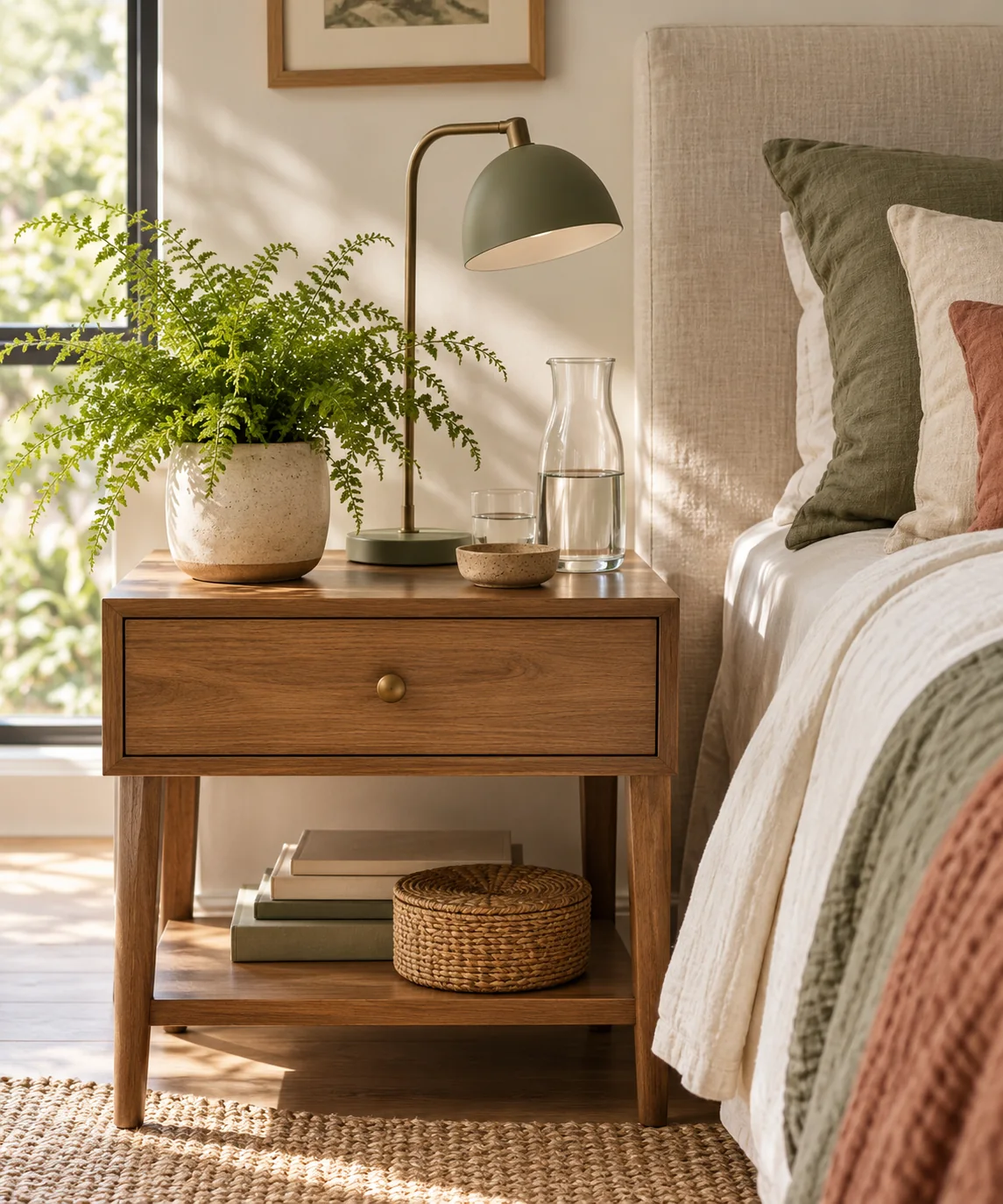
Establishing Functional Bedside Zones
Divide your nightstand surface into three distinct functional zones: immediate reach, task lighting, and background foliage. The front corner nearest the mattress belongs exclusively to your high-frequency essentials, such as a water carafe, reading glasses, or an open book. Place your reading lamp in the rear corner opposite the mattress to distribute visual weight. Position your potted plant in the remaining rear space, behind the carafe zone. This configuration ensures you can reach for water in the dark without accidentally knocking leaves.
Selecting Proportionate Containers and Silhouettes
Bedside tables rarely exceed eighteen to twenty inches in width, making oversized pots impractical. Limit your plant container to a maximum base diameter of four to five inches. Choose a vessel with a low center of gravity, such as a squat ceramic cylinder, to prevent accidental tipping when reaching for items at night. Select a plant with an arching, contained canopy—such as a small bird's nest fern, button fern, or compact peperomia—that will not shed loose debris onto your pillows.
Protecting Wood Surfaces from Moisture
Water rings and damp pot bottoms quickly degrade polished wood veneers and painted nightstands. Never place an unglazed terra-cotta pot or porous dish directly onto furniture. Use a fully glazed ceramic pot without an open bottom hole, functioning as a decorative cachepot. Rest your potted vessel on a thick leather, solid brass, or cork-backed coaster. When caring for the plant, carry the inner plastic nursery liner into another room to water, ensuring the pot exterior remains completely dry.
Light Assessment in Bedroom Corners
Bedside tables often sit in secondary or tertiary lighting zones several feet away from windows. Avoid sun-loving plants that grow spindly or drop foliage in low light. Instead, opt for shade-tolerant foliage specimens like cast-iron plants, small aglaonemas, or dwarf parlor palms that sustain steady growth under indirect bedroom lighting. Be realistic about your room's natural daylight: if heavy blackout curtains remain drawn throughout the day, the plant will require regular rotation to brighter windows to remain healthy.
Daily Maintenance and Clutter Control
Keep bedside styling disciplined by editing out excess decorative objects. A nightstand holding a plant, lamp, carafe, and single book is fully balanced; adding knickknacks quickly causes visual clutter. Dust plant leaves every couple of weeks with a damp microfiber cloth to keep foliage vibrant and free of household lint. Snip yellowing lower leaves at the stem base immediately to prevent organic debris from gathering around your bedside reading materials or charging cords.
YOUR STARTING POINT
A little checklist.
Original editorial guidance. Images are AI-generated concepts, not photographs of completed projects. Our sources and approach.
Questions to consider
How do I prevent accidentally knocking the plant over in the dark?
Keep the plant strictly in the rear quadrant of the nightstand, furthest from the bed edge. Pair it with a squat, heavy ceramic container featuring a broad, flat base that resists tipping if lightly brushed by an arm.
Can I grow culinary herbs on my bedroom nightstand?
No. Culinary herbs require intense direct sunlight and will quickly decline in the indirect, low light typical of bedroom nightstands. Stick to tolerant indoor foliage plants like small ferns, peperomias, or cast-iron plants instead.
What is the safest way to water a bedside plant?
Always remove the interior nursery pot and water it over a bathroom or kitchen sink. Let all excess water drain away completely before drying the pot bottom and returning the plant to its bedside decorative outer container.