Patio Seating Ideas · THE GUIDE
Balcony Railing Hanging Bar Perch with Folding High Stools
Urban balconies often have limited floor area where traditional dining sets can obstruct pathways and access doors. While elevated, narrow counter surfaces paired with folding tall stools can provide functional dining without occupying the center of the deck, planning such arrangements requires careful attention to building policies and safety limitations. Many multi-family properties and municipal building codes strictly prohibit mounting, clamping, or hanging any hardware from balcony railings due to fall hazards and structural liability. Where rail attachments are restricted, freestanding narrow console tables or folding furniture placed on the deck surface provide a practical, reversible alternative. Understanding property restrictions, clearance planning, and wind considerations helps create an efficient outdoor seating nook without compromising building safety.
Jump to the checklist ↓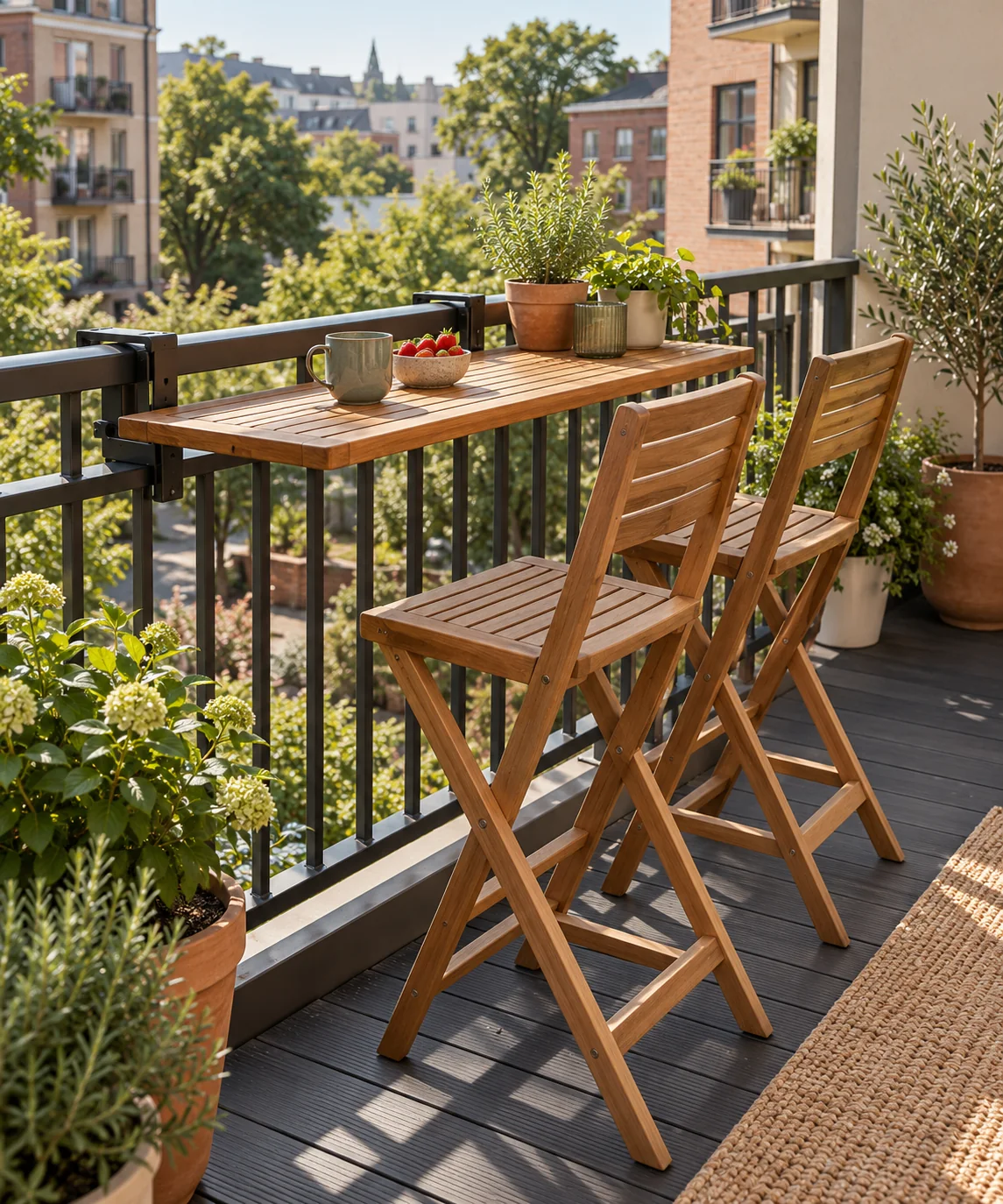
Checking Property Regulations and Railing Policies
Before considering any furniture for a balcony perimeter, consult your lease agreement, homeowners association rules, and local building regulations. Many residential communities forbid attaching, clamping, or suspending shelves, planters, or counters from guardrails to prevent dropped objects and avoid damaging protective finishes. Railings are engineered strictly for fall protection rather than supporting cantilevered accessory loads. If your building prohibits rail-mounted items, shift your focus to narrow, weighted freestanding console tables or folding high-top tables that rest directly on the deck floor. When permitted by property management, any commercial accessory must strictly follow manufacturer load ratings and remain completely within the interior balcony footprint.
Ergonomics and Circulation Planning
When selecting elevated counter surfaces and tall folding stools, measure the available floor space to ensure comfortable circulation. Counter heights commonly range from 36 to 42 inches, which pair naturally with seat heights around 26 to 30 inches. Rather than adhering to rigid formulas, test your balcony layout by marking the proposed table and stool positions with tape. Ensure that when stools are in use, seated individuals do not block essential egress routes or the swing of balcony doors. Leaving adequate walking space behind pulled-out seating ensures easy movement and prevents feeling cramped during casual outdoor meals.
Freestanding Consoles and Reversible Setups
Freestanding, slimline consoles designed for outdoor use offer the space-saving benefits of a perimeter counter without mechanical attachment to railings. Look for narrow tables with stable, weighted bases or wide feet that resist tipping. Drop-leaf freestanding consoles allow you to fold down the tabletop when not dining, immediately reclaiming the balcony floor area for plant care or lounging. Folding stools can be stored flat against an interior building wall or inside a weather-resistant storage bin. Reversible arrangements make seasonal transitions simple and avoid any risk of altering or scratching communal railing metalwork.
Material Performance and Weather Resistance
Outdoor balcony furnishings face intense environmental exposure, including direct sunlight, wind-driven moisture, and temperature swings. Select furnishings built from durable materials such as powder-coated aluminum, stainless steel hardware, or naturally dense hardwoods like teak or eucalyptus. Inspect protective finishes periodically, as moisture can penetrate through worn sealants or chipped coatings. Because balcony decks often experience strong wind drafts, verify that furniture parts fit together firmly without loose fasteners. Periodically check hinges, folding joints, and leveling feet to maintain stability and prevent wobbling on slightly sloped balcony pavers.
Wind Precautions and Perimeter Boundaries
High-elevation balconies frequently encounter turbulent winds and sudden gusts that behave differently from ground-level breezes. Never balance unsecured dinnerware, glasses, or lightweight items near the perimeter railing where gusts could dislodge them. Keep counter surfaces clear when unattended. During high wind warnings, severe weather watches, or winter storage periods, fold all collapsible tables and high stools and bring them indoors or secure them within an enclosed deck chest. Establishing a consistent habit of stowing lightweight outdoor furniture prevents wind displacement and protects neighbors and pedestrians below.
YOUR STARTING POINT
A little checklist.
Original editorial guidance. Images are AI-generated concepts, not photographs of completed projects. Our sources and approach.
Questions to consider
Why do many apartment complexes ban rail-mounted shelves and planters?
Property managers frequently restrict railing attachments to minimize the risk of objects falling onto lower balconies or street-level pedestrian walkways. Additionally, clamp mechanisms can scratch powder coatings or compromise metal paint, accelerating rust and creating maintenance liability for the building.
How can I create an elevated dining spot if railing clamps are prohibited?
A narrow, freestanding outdoor bar table or a weighted console placed against an interior wall provides the same elevated dining experience without touching the railing. Look for slender metal or teak console tables designed with slim footprints that fit easily along the balcony interior.
How do I choose stools that fit a compact balcony setup?
Select weather-resistant folding stools with built-in footrests and compact folded profiles. Measure your counter height first to ensure a comfortable distance between the seat and tabletop, and test that the folded stools store flat without obstructing doorways or storage boxes.