Kitchen Herb Gardens · THE GUIDE
Balcony Railing Planter Box Oriented to the Kitchen Window
When kitchen counter space is limited, shifting culinary herb cultivation to an adjacent balcony keeps fresh plants close at hand while preserving indoor prep surfaces. Orienting an exterior herb setup within view of the kitchen window provides visual reminders to harvest and tend your crops. However, placing containers in exterior environments introduces distinct challenges regarding building regulations, wind safety, drainage management, and balcony weight capacities. By focusing on reversible, freestanding setups, verifying property guidelines, and selecting wind-appropriate containers, you can enjoy outdoor herbs without creating safety hazards or building facade damage.
Jump to the checklist ↓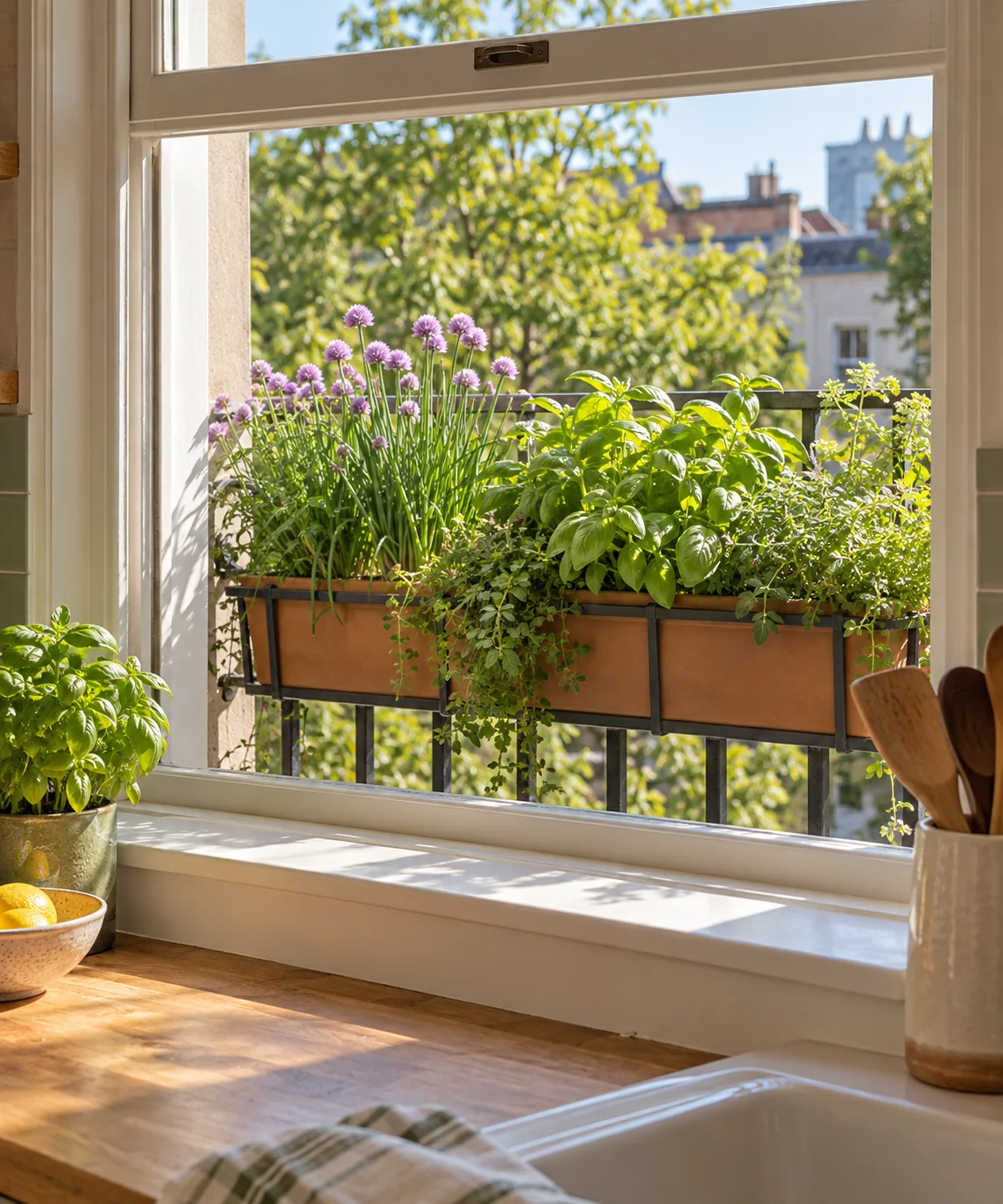
Sightline Planning from Interior Workspaces
Before arranging outdoor plants, observe your natural line of sight from the kitchen sink or prep counter through the window. Take note of the outdoor deck layout, the railing height, and where direct daylight falls during the day. Placing a sturdy, freestanding plant stand or low table on the balcony floor aligns your plants with the lower window pane without attaching fixtures to the building. This floor-based arrangement keeps herbs visible for mealtime harvesting while avoiding structural modifications to railings.
Balcony Guidelines and Structural Considerations
Never attach planter hardware or hang containers from balcony railings without explicit written permission from property management, your homeowners association, or local building authorities. Many residential multi-family buildings strictly prohibit hanging objects over or onto railings due to falling-hazard liabilities. Always confirm allowable load limits with building management or qualified structural professionals; never assume a balcony or railing can support saturated soil and heavy planters based on visual inspection alone. Keeping containers on the balcony deck is generally the most reversible, compliant choice.
Outdoor Daylight and Herb Growth Realities
Outdoor balcony spaces typically provide stronger, more consistent light than interior windowsills, which benefits sun-demanding herbs such as basil, chives, and thyme. However, outdoor microclimates also feature intensified heat reflection from brick or concrete walls and faster evaporation rates. Check the moisture level of your potting mix daily during midsummer heat. Provide partial afternoon shade if foliage shows signs of scorching, and position delicate herbs where solid walls offer shelter from intense sun exposure.
Managing Drainage Runoff and Facade Protection
Outdoor herb planters must have drainage openings to prevent saturated soil during rainstorms, but unmanaged runoff can cause significant issues. Water cascading off balconies can stain building facades, damage structural finishes, or spill onto lower neighboring units. Place deep, heavy-duty drainage trays beneath all containers and empty accumulated excess water after rain. Avoid relying on lightweight clip-on basins that can detach during strong winds, and ensure drainage trays sit securely on the balcony floor.
Managing High Winds and Seasonal Protection
Elevated balconies experience wind velocities significantly higher than ground-level gardens. Strong gusts can overturn tall planters, break tender herb stems, and rapidly desiccate foliage. Choose low-profile, wide-based floor containers rather than tall or narrow designs. In blustery conditions, position pots against an interior balcony wall where airflow is naturally reduced. If adverse weather or winter freezes threaten, plan to move portable containers indoors or harvest annual herbs before low temperatures and extreme winds cause damage.
YOUR STARTING POINT
A little checklist.
Original editorial guidance. Images are AI-generated concepts, not photographs of completed projects. Our sources and approach.
Questions to consider
Can planters be attached directly to balcony railings?
Attaching planters to railings is often restricted by building codes and lease agreements due to safety hazards. Always consult building management and product guidelines first; floor-standing planters on the deck are generally the safest and most compliant option.
How do outdoor balcony herbs handle strong winds?
Wind speeds increase with elevation and can quickly dry out soil or snap stems. Use heavy, low-profile containers placed directly on the balcony deck, preferably clustered near a sheltered interior wall to reduce wind stress.
What is the best way to handle planter drainage on a balcony?
Use solid drip trays beneath floor pots to catch drainage before it reaches the balcony edge or stains the floor. Empty saucers after heavy rainfall so roots do not remain waterlogged and excess water does not overflow onto neighboring spaces.