Kitchen Herb Gardens · THE GUIDE
Banquette Seating Top Ledge Planter for Dining Nooks
The horizontal capping rail along a built-in banquette backrest can offer convenient surface space in compact dining areas, provided it is planned with diner ergonomics in mind. When located near consistent natural daylight, an existing architectural ledge can host low-profile containers of culinary mints, which generally tolerate indoor conditions better than light-hungry woody herbs. Integrating live plants behind seating requires evaluating actual head clearance, protecting painted or varnished woodwork from moisture, and choosing stable vessels that will not shift when diners sit down or stand up. Mindful placement keeps fresh garnishes within reach while maintaining dining comfort.
Jump to the checklist ↓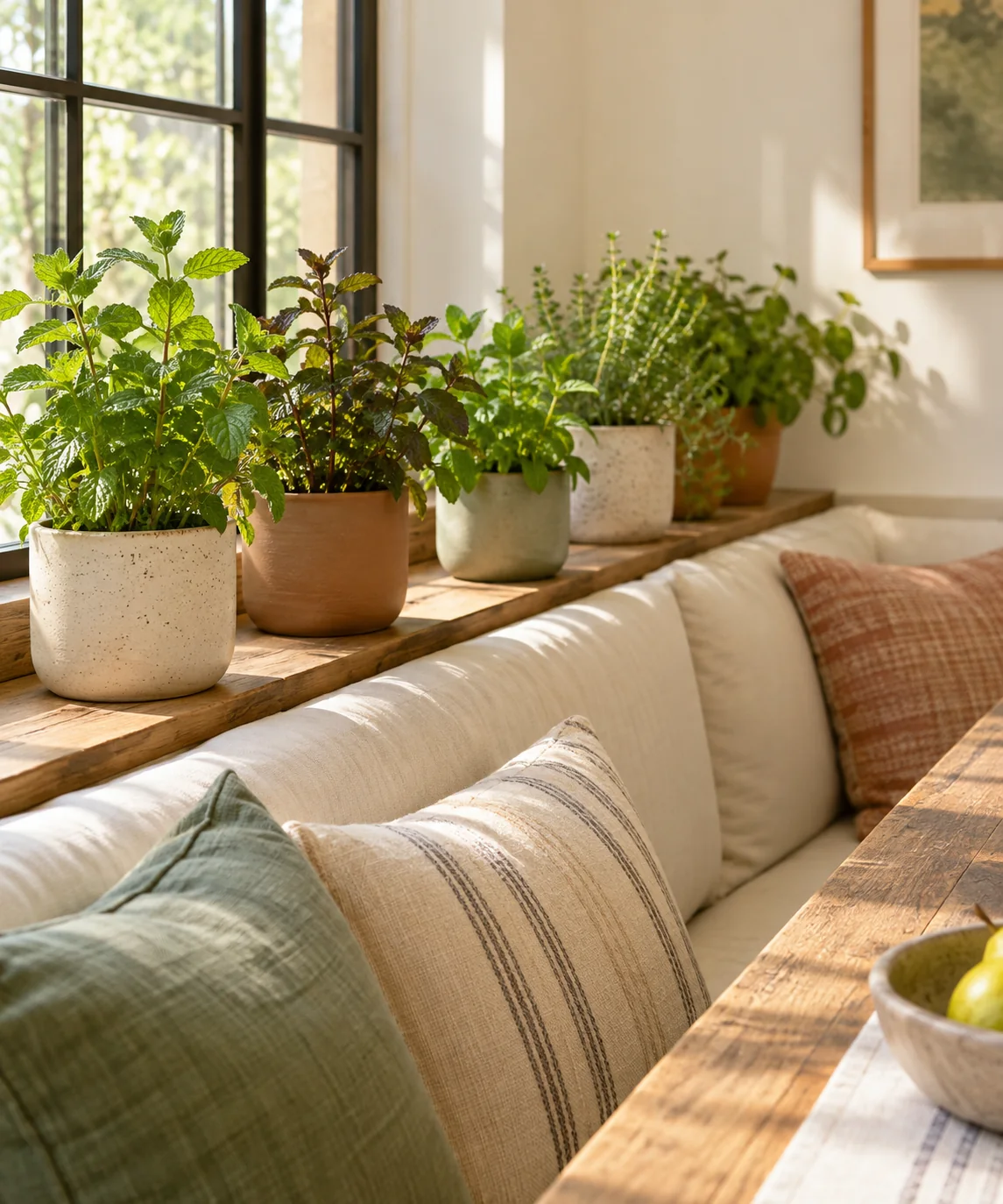
Assessing Ledge Depth and Seated Comfort
Before placing any planter behind a dining bench, observe how household members and guests interact with the seating. Seated diners often shift, lean back, or rest their arms along the top rail, which can bring shoulders or hair close to whatever sits on the ledge. Planters should feature low profiles and sit comfortably within the boundaries of the rail with no overhang. Test clearance while people of various heights are seated to confirm that foliage does not brush against backs or heads. If space is tight, reserve the ledge for narrow, low-growing herbs rather than tall upright species.
Evaluating Natural Light Availability
While culinary mint varieties tolerate partial shade better than Mediterranean herbs like thyme or oregano, they still require adequate ambient light to maintain sturdy stems. Light levels near dining windows vary significantly depending on building orientation, exterior trees, roof overhangs, and window glazes. Monitor the banquette area across different times of day to ensure the chosen spot receives strong indirect daylight. If stems begin stretching noticeably toward the glass or dropping lower leaves, rotate the containers periodically or relocate them to a brighter window sill between dining occasions.
Moisture Protection for Woodwork
Water penetration poses a significant risk to painted, stained, or clear-finished timber capping rails. Porous planters such as unglazed terracotta allow moisture to migrate through their walls, leading to finish clouding, water rings, or wood swelling. Rest all containers inside a solid, non-porous drip tray made of glazed ceramic, powder-coated metal, or heavy-duty acrylic. Adding discrete silicone or felt pads beneath the tray creates a small air gap that prevents trapped moisture from damaging the woodwork. Always wipe spills immediately with a dry cloth.
Stability and Vibration Management
Banquette seating experiences repeated movement, vibrations, and shifting weight as diners slide in and out of the nook. Lightweight plastic pots or top-heavy arrangements can easily topple if the backrest flexes. Choose wide, flat-bottomed planters that carry their weight low to the surface. Lining the base of your drip tray with a thin, textured non-slip mat helps keep individual pots from sliding. Ensuring containers fit snugly within the tray walls provides an extra mechanical safeguard against accidental contact during busy mealtimes.
Growth Management and Seasonal Pruning
Mint species spread vigorously via lateral runners that readily drape over container rims. In a dining nook setting, trailing stems can catch on clothing, brush against diners, or shed spent leaves onto seat cushions. Regularly trim back extending runners just above a leaf node to encourage compact, bushy growth rather than sprawling vines. Harvest foliage frequently from top shoots for kitchen use. When roots eventually fill the container, divide the root ball or repot with fresh potting medium to sustain healthy growth in a confined space.
YOUR STARTING POINT
A little checklist.
Original editorial guidance. Images are AI-generated concepts, not photographs of completed projects. Our sources and approach.
Questions to consider
Can mint thrive permanently on an indoor banquette ledge?
Mint can perform well indoors if it receives bright indirect daylight for several hours each day. If the banquette is set back in a dim corner, the plant may grow leggy and weak, in which case moving it periodically to a sunnier window helps maintain vigor.
How should herbs on a dining banquette be watered without spilling?
To protect dining cushions and wood finishes, avoid pouring water directly onto plants while they sit on the banquette. Move the containers to a kitchen sink or counter to water them, let all excess moisture drain fully, and wipe the pot bottoms dry before returning them.
What types of planters are most practical behind dining seating?
Low-profile, broad-based planters with smooth exteriors work best. Containers that remain lower than typical head height reduce visual clutter, keep the center of gravity stable, and minimize the risk of catching hair or clothing as diners move.