Household Reset Routines · THE GUIDE
Breakfast Nook Crumb Sweep and Table Runner Reset
Built-in corner breakfast nooks make efficient use of compact kitchen footprints, but bench crevices and horizontal table surfaces attract constant daily debris. Crumbs migrate behind seat cushions, while table runners gather wrinkles, salt grains, and stray paperwork. A dedicated reset routine restores calm to this high-traffic dining spot without requiring permanent changes. By lifting bench cushions, systematically sweeping perimeter joints, wiping flat surfaces, and re-centering a single natural textile, you maintain a hygienic space ready for everyday meals while preventing seat upholstery from wearing prematurely against trapped grit.
Jump to the checklist ↓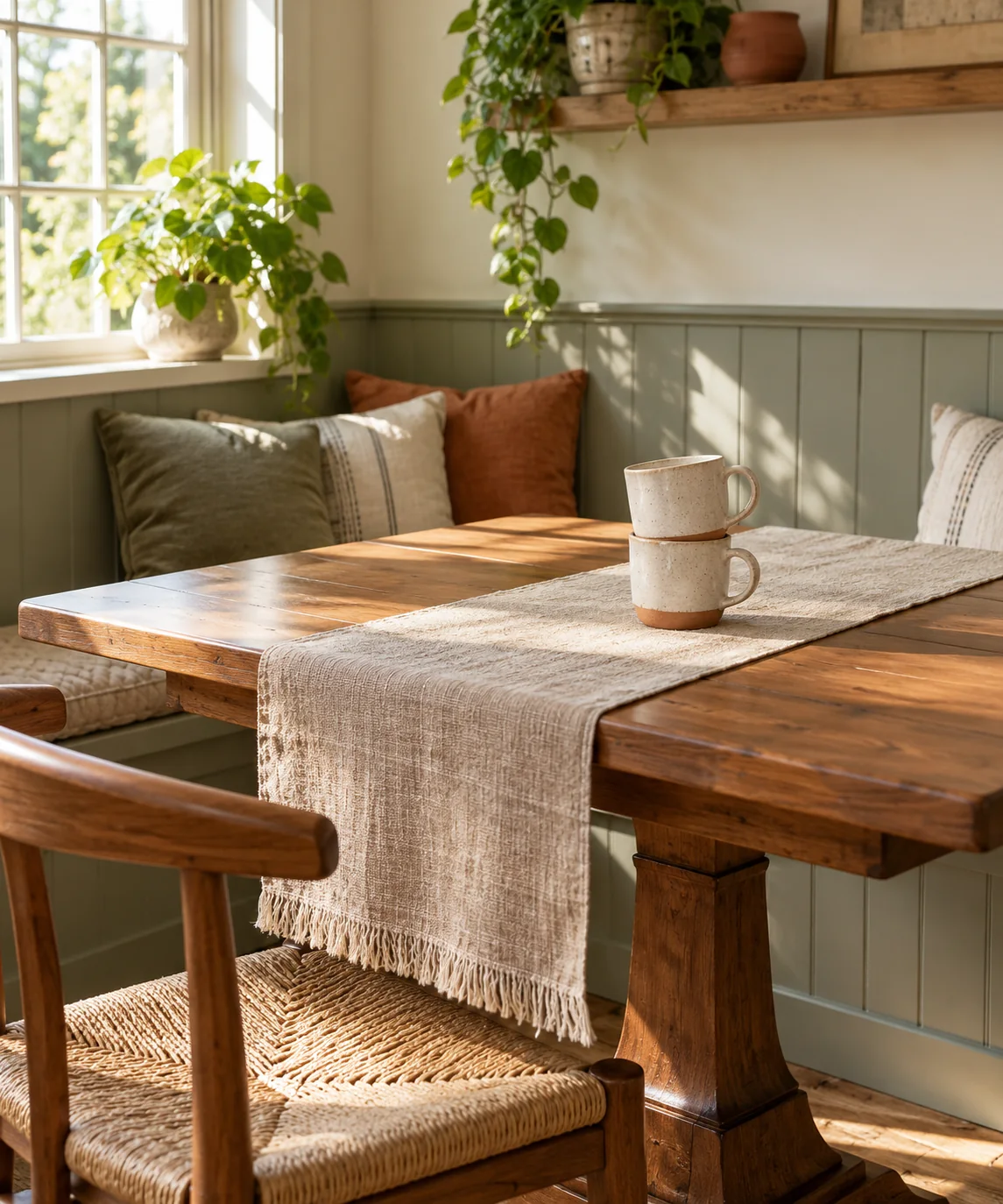
Clearing the Table Surface and Bench Pads
Start by removing all objects from the table surface, including runners, condiment caddies, and mugs. Lift the bench cushions entirely away from the seating base and set them aside on clean chairs. Often, small dining nooks accumulate mail, homework, or craft supplies across flat benches; sort these items into their proper rooms before beginning cleaning. Stripping the nook down to bare wood or laminate exposes all corner seams where dry food debris naturally collects during busy morning meals.
Extracting Crumbs from Corner Crevices
Inspect the joints where built-in benches meet the wall and where horizontal bench planks join the backrest. Use a handheld dry brush with stiff natural bristles or a narrow vacuum crevice attachment to sweep out accumulated breadcrumbs, seeds, and lint. Work systematically from the outermost edge toward the interior corner seam. Gathering dry grit before applying any liquid prevents crumbs from turning into paste against wood joins, protecting painted millwork or clear wood coats from moisture damage.
Spot-Cleaning Wood and Upholstery Materials
Wipe the bare table surface and wooden bench seats using a well-wrung cloth dampened with warm water and a drop of mild dish detergent. Dry the surfaces immediately with a clean cotton towel to prevent standing water marks. For upholstered bench pads, inspect fabric covers for visible food spots. Spot-treat minor stains using a dry foam upholstery cleaner or a dab of soapy water, blotting gently with a clean rag rather than scrubbing to preserve fabric texture.
Straightening Cushions and Checking Skid Grip
Inspect the non-skid mesh or rubberized pads placed between the smooth wooden bench top and fabric seat cushions. Dust particles reduce friction over time, allowing cushions to slide forward when family members slide in and out of the booth. Wipe the grip pads with a damp cloth to restore tackiness, or realign them flush against the rear bench edge. Return the dry cushions firmly into position, pushing them deep into the corner seams for uniform alignment.
Dressing the Runner and Setting Minimal Accents
Shake out the table runner over an outdoor porch or sink to remove loose crumbs, pressing out soft wrinkles with your hands. Center the runner along the longitudinal axis of the table, ensuring equal fabric overhang on both ends. Restrict table accents to minimal, practical items such as two stacked ceramic mugs or a small ceramic salt cellar. Keeping table centers open encourages practical daily dining while deterring clutter from reclaiming the newly reset dining nook.
YOUR STARTING POINT
A little checklist.
Original editorial guidance. Images are AI-generated concepts, not photographs of completed projects. Our sources and approach.
Questions to consider
How do I keep bench cushions from sliding forward?
Lay thin rubberized open-weave rug gripper pads directly beneath the cushions. The textured surface creates friction against polished wood benches, preventing cushions from slipping forward as people slide into the booth.
What is the best table runner length for a nook?
Choose a runner that extends roughly six inches past each end of the tabletop. In tight corner nooks, longer drops catch on knees or drag against wall-mounted bench backs when diners slide inward.
How often should a breakfast nook receive a deep sweep?
Perform a surface wipe daily, but lift cushions for a thorough crevice sweep once a week. Regular removal prevents hard crumbs from abrading cushion undersides and wood finish over time.