Laundry Space Organization · THE GUIDE
Bridge Appliance Plumbing with a Narrow Bridging Shelf
The awkward gap behind front-loading laundry machines often swallows stray socks, detergent caps, and lint brushes while leaving unsightly drainage hoses and shutoff valves exposed. Installing a narrow bridging shelf across this divide creates a neat, continuous work surface that keeps everyday supplies within arm's reach. Because appliance hookups must remain instantly accessible, the ideal shelf is a freestanding or resting fixture rather than a permanent structural alteration. With careful depth planning and vibration buffers, you can bridge this utility void securely while retaining smooth, unhindered access to mechanical connections.
Jump to the checklist ↓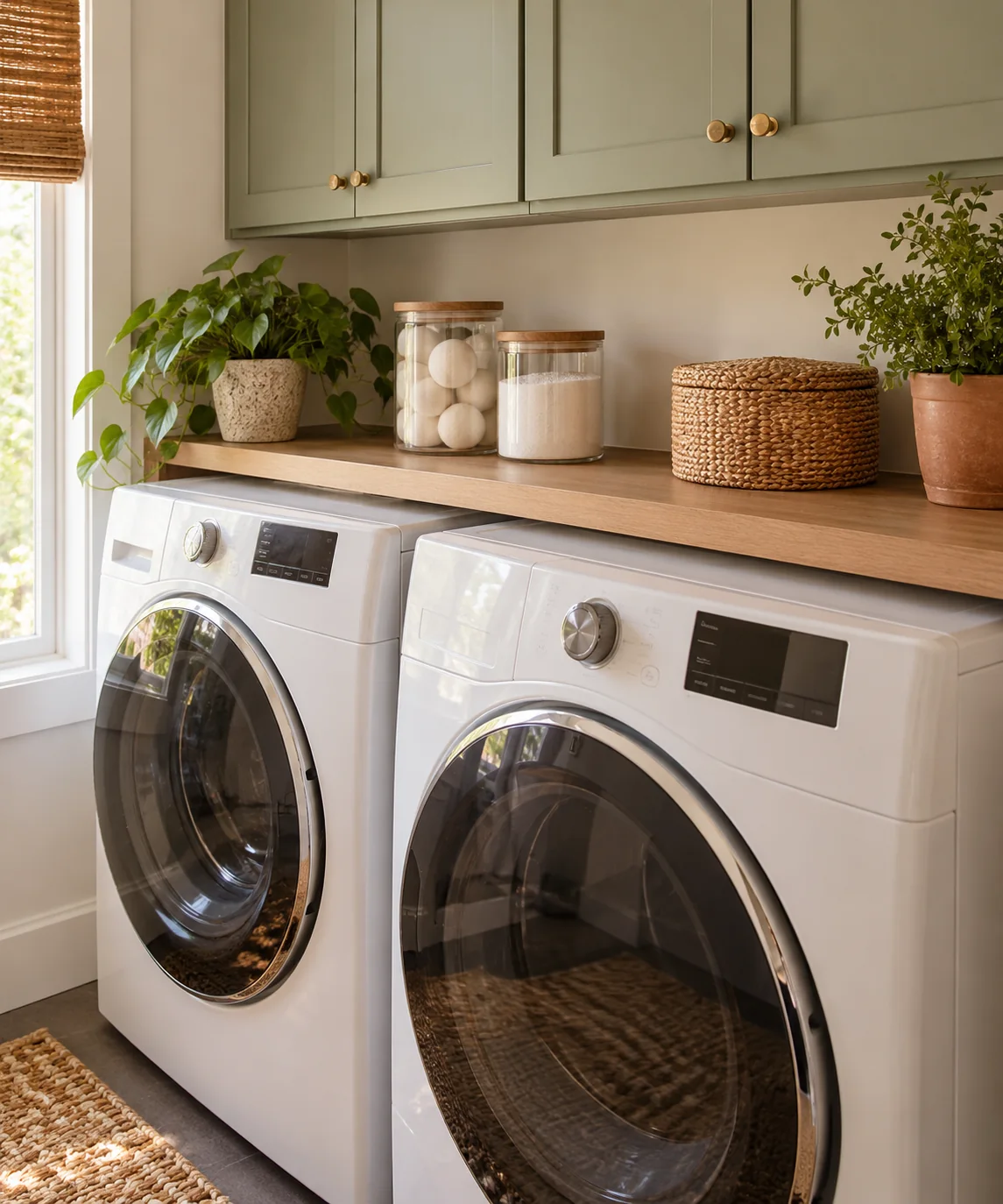
Measuring Rear Clearances and Utility Access
Accurate planning ensures a bridging shelf rests safely without crowding appliance connections or pushing machines out of alignment. Measure the gap between the finished wall and the rear edge of the machine chassis, accounting for supply lines, standpipes, and electrical connections. Always review the appliance manual for required rear and top ventilation clearances before planning any cover. Ensure the shelf dimensions allow full, unrestricted clearance around utility hoses and electrical cords without pinching or compressing flexible lines.
Selecting Stable and Moisture-Resistant Materials
Utility areas experience ambient warmth, changing humidity, and occasional water splashes from sink or wash cycles. Proper material choice prevents warping or moisture absorption. Sealed solid hardwoods, moisture-resistant plywood, or high-pressure laminate with sealed edges perform well in laundry environments. Ensure all surfaces, including cut edges and the underside, are treated with a moisture-resistant finish such as water-resistant polyurethane or hardwax oil to guard against ambient humidity and spills.
Buffering Machine Vibration and Movement
Washing machines naturally produce micro-vibrations and movement during high-speed extraction cycles. If a rigid board rests directly on bare metal appliance casings, it can chatter, rattle, or scuff surfaces. Placing dense silicone pads or non-abrasive neoprene strips along contact surfaces absorbs movement and prevents surface abrasion. Keeping the shelf entirely unattached to the wall structure prevents vibrational noise from transferring into surrounding framing.
Maintaining Immediate Shutoff and Service Accessibility
Any surface spanning behind appliances must remain fully removable for immediate utility access and regular inspection. Water shutoff valves, emergency power disconnects, and drain connections must remain readily accessible without requiring tools or moving heavy structures. Design the shelf as an unfastened, lightweight cover that lifts away instantly in an emergency. If plumbing fixtures sit higher than machine tops, plan dimensions or factory-finished contours that preserve clear sightlines and easy hand access to shutoff levers.
Practical Storage Limits and Low-Profile Staging
A narrow bridging shelf serves best for lightweight, non-breakable laundry dry goods rather than heavy bulk supplies. Use the space for wool dryer balls, measuring scoops, or low-profile cloth containers. Avoid storing heavy detergent jugs, open liquids, or delicate glassware on the shelf, as ongoing machine spin vibrations can cause tall or heavy items to migrate over time. Keeping the surface lightly loaded preserves easy lift-off access whenever routine maintenance or shutoff is needed.
YOUR STARTING POINT
A little checklist.
Original editorial guidance. Images are AI-generated concepts, not photographs of completed projects. Our sources and approach.
Questions to consider
Should a bridging shelf be anchored to the wall studs?
No. Keeping the shelf freestanding or resting on cushioned supports ensures it can be lifted away immediately during an emergency shutoff or when appliances require servicing.
How can I prevent items on the shelf from vibrating off during the spin cycle?
Use low-profile, non-breakable containers, stick to lightweight supplies, and place non-slip silicone pads beneath both the shelf and any storage caddies to dampen vibration.
What should I do if water shutoff valves protrude above the washing machine?
Plan a shelf depth that stops forward of high-standing valves, or select a modular layout that leaves valve handles completely open and unhindered for two-second emergency shutoff.